How do I maintain the leather of my horse tack?
How often should I maintain my leather at the yard?
It is wise to maintain your leather at all times. This can already be done with small actions, such as removing sand and sweat after riding or using saddle soap. Greasing, for example the saddle, is not necessary every week. This depends on how often the leather is used, but always make sure the leather does not become hard due to drying out. You can easily keep an eye on this by regularly feeling the parts that come into contact with sweat, such as stirrup leathers and bridle straps.
Is it also necessary to grease the leather?
If so, make sure all straps are loosened, but remember carefully which strap belongs where. When the straps are loosened, you can easily reach all areas and the leather can be properly cared for everywhere. It is best to grease the leather one day before use. This way, the leather grease or leather oil has enough time to be absorbed. Below you can read which steps you can best follow to make your leather items last as long as possible.
Step 1: Removing dirt
First of all, it is important that there is no dirt, such as sand or sweat, on the leather. If this is present, it can cause bacteria to settle on the leather. In addition, the salt in sweat causes leather to dry out. Wipe the leather items with a dry cloth or a soft brush until they are free of sand and sweat. Also do this on the inside of your riding boots after riding, meaning the side that comes into contact with the horse.
Step 2: Saddle soap
Next, invisible dirt is removed, such as dried sweat. Do this using saddle soap and a damp sponge or cloth. Make sure the water is not hot, as this can also make the leather stiff and cause it to crack. Try to avoid getting saddle soap on the stitching of the saddle, bridle and similar items as much as possible, as this can cause them to wear out more quickly. A handy product is the Sectolin Saddle Soap Spray. This is a spray that you can apply directly to the leather, making cleaning even quicker.
When maintaining your riding boots, it is not advisable to use saddle soap, as it may cause discolouration. Of course, you can always test it on a small area first and wait to see the result.
Step 3: Leather oil or leather grease
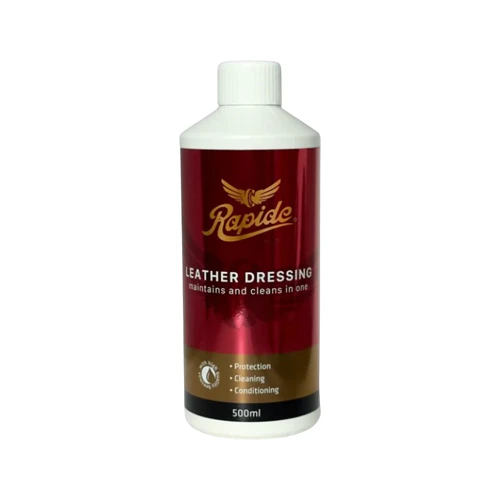
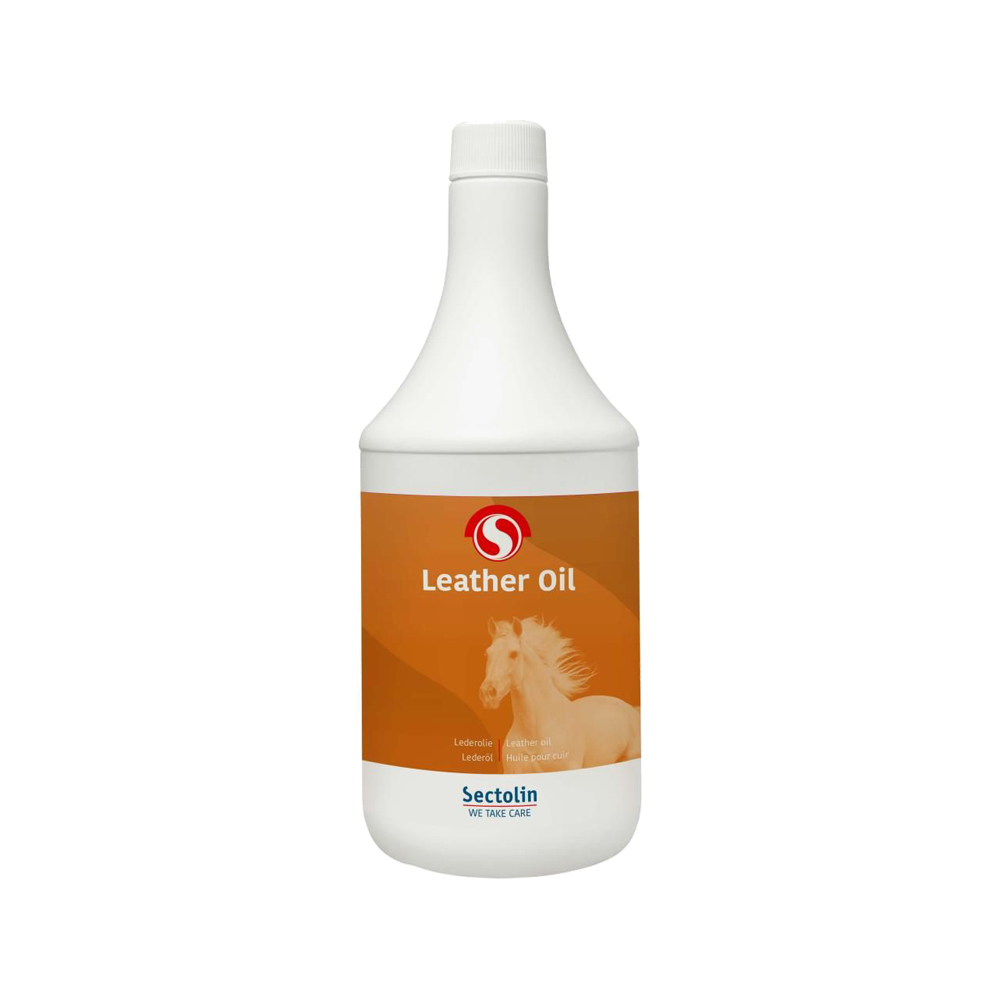
When carrying out a major maintenance session for your leather, leather oil or leather grease is also part of the process. It is important to know which type of leather you want to maintain. Leather oil helps to make leather supple again, for example stirrup leathers. Leather grease helps to keep leather supple. For both products, it is important to apply thin layers. If the oil or grease is absorbed quickly, another thin layer can be applied. Would you like to grease your saddle in the same colour? This is possible with Rapide Leather Grease, which is available in clear, brown and black. For greasing boots, Grand National Leather Conditioner is very suitable.
Please note:
Never let your leather dry near a heater. The heat causes the leather to become stiff again, meaning you will have to start the maintenance process all over.
When using leather oil on boots, the oil may soak into the lining. This can cause the glue between the leather and the inside of the boot to come loose.
Step 4: Finishing touch
Finally, wipe the leather with a dry cloth to remove excess grease or oil. Do this the day after greasing, so the leather has had enough time to absorb the product properly. After this, all straps should of course be reattached, so you can get back to work with your horse.
Would you like even more shine?
Then use Effax Speedy Leather Shine. This is a sponge with leather care that makes your leather look even more beautiful. Ideal for use before an inspection or competition.
Tips for maintaining your horse leather
To keep your leather looking great for even longer.
- After riding, do not place the girth directly on the saddle. If it is sweaty, this can soak into the saddle.
- Even better is to wipe it down immediately with a cloth. This applies to dirt on all used leather.
- Also clean your stirrups with a stiff brush. Any remaining sand could otherwise end up on the saddle when putting the stirrups up.
- After riding or lunging, always remove the saddle pad from under the saddle or lunge girth. Sweat can soak into the panels, which may cause the
- filling to clump together.
- Always clean the bit. This helps prevent bacteria from transferring to the leather.
- Has something become very hard? Let it soak in leather oil for a short while.
- Use boot trees to prevent creases in your leather riding boots.