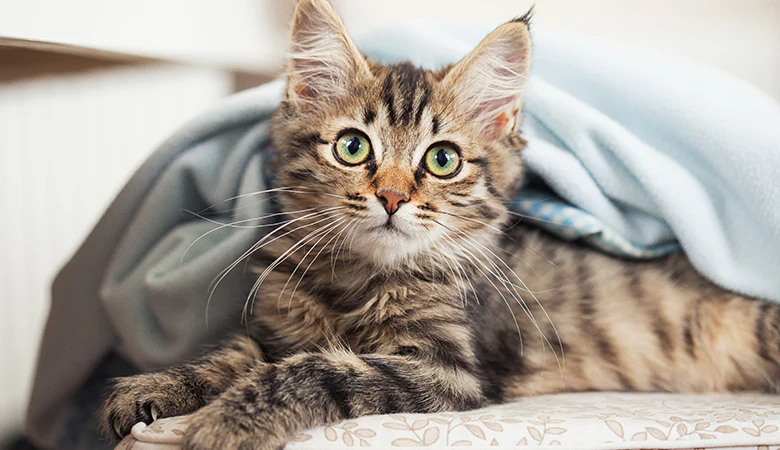
Growling: A clear warning
Growling is a low, threatening sound that cats use to indicate that they are uncomfortable. It may occur when your cat is frightened, in pain, defending their territory or feeling threatened by another animal. Some cats also growl when they have a toy or prey that they do not want to give up.
As with hissing, it is important to give your cat space. Try to identify what is causing the tension and prevent your cat from feeling cornered. Does your cat suddenly growl when you touch a particular part of their body? This may indicate pain. In this case, have your cat examined by a vet.
Screaming, yowling or howling
A loud, drawn-out and sometimes almost human-like scream can sound quite alarming. Cats may make this sound during a confrontation with another cat, when they are extremely frightened or when they are in pain. Female cats in season may also call remarkably loudly and persistently. Unneutered male cats can likewise be very vocal when there is a female cat in season nearby. If your cat suddenly starts making these sounds for no apparent reason, contact your vet.
Why does my cat meow at night?
Are you regularly kept awake by your meowing cat? Cats are naturally most active around dawn and dusk. However, night-time meowing can have several causes:
- Hunger or a need for attention
- Boredom or insufficient stimulation during the day
- Stress or changes in the home
- Being in season
- Disorientation in older cats
- Pain or an underlying medical condition
Try to provide plenty of opportunities for play during the day and consider playing with your cat shortly before going to bed. A small meal after playtime can fit in with their natural pattern of hunting, eating and resting.
In older cats, night-time meowing may be associated with cognitive decline, reduced vision or hearing, an overactive thyroid gland or another medical condition. Have your cat examined if night-time meowing is a new behaviour.
Why is my cat so vocal?
Some cats are simply more talkative than others. However, excessive meowing may also mean that your cat’s needs are not being met or that they are feeling uncomfortable. Provide plenty of stimulation, daily playtime, comfortable resting places, scratching opportunities and a predictable routine. An elevated resting place or a scratching post can also give your cat a greater sense of security.
Is your cat sensitive to changes or easily stressed? In addition to adapting their living environment, you may wish to use a supportive product, such as Zylkene, Telizen or Dr. Ann’s Stress Reduction.
My cat suddenly meows differently or has stopped meowing altogether
Have your cat’s vocalisations suddenly changed? Does their meow sound hoarse, raspy or quieter than usual? This may be due to irritation or a condition affecting the throat or respiratory tract. It is also important to pay attention if your cat suddenly becomes much more or less vocal. After all, you know your cat best and are often the first to notice changes in their behaviour. Contact your vet if these changes persist.
Learn to understand your cat’s language
Whether your cat is a real chatterbox or only makes the occasional sound, every sound can tell you something. By listening carefully and paying attention to their body language at the same time, you can learn to understand your cat better. This allows you to respond more effectively to their needs and contribute to a relaxed, healthy and comfortable living environment.
Do you have any questions about your cat’s behaviour or products that may provide support? Please feel free to contact our veterinary team at veterinarian@vetsend.co.uk. We are happy to offer advice!