Service
Basket
Menu
Great savings in our Summer Deals! Read more

Pig

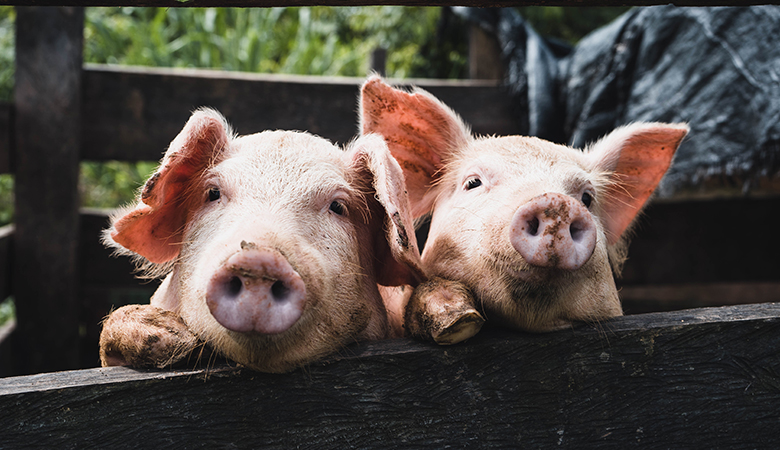
The pig is an intelligent and social farm animal that has been kept by humans for thousands of years. The pig originally descends from the wild boar. Today, pigs are kept on farms, petting farms and increasingly often as hobby animals. There are different breeds that vary in size, colour and character. Pigs are very curious animals that like to root, play and have contact with other pigs. For good health, they need enough space and a suitable living environment.

pig

Characteristics

Country of origin: Europe and Asia
Body build: Sturdy body with a broad snout, short legs and cloven hooves.
Colours and coat types: Pink, black, brown, white, spotted or piebald, with a thin to bristly coat.
Weight: 50 - 350 kg, depending on the breed
Height: 40 - 90 cm
Life Expectancy: 10 - 15 years
Health risks: Prone to obesity, hoof problems, parasites, skin problems and heat stress.

Character profile

Social behaviour towards other pigs
Human-oriented nature
Care requirements
Space requirements
Exercise needs
Suitable for beginners

Popular products for your yard

Living environment

Pigs feel most comfortable in a spacious and safe environment where they can root, explore and rest. They need a covered shelter that protects them from rain, wind and sun. A mud wallow or puddle is also important, as pigs cannot sweat and can use this to cool down on warm days. Enough space and variety prevent boredom and encourage natural behaviour. Pigs are true group animals and must therefore not be kept alone. They like living with one or more other pigs.

Nutrition

Pigs are omnivores and need a varied diet. The basis consists of complete pig feed, tailored to the age and life stage of the animal. This can be supplemented with small amounts of vegetables, fruit and other plant-based feed. It is important to be careful with supplementary feed, as pigs can quickly become overweight. Fresh drinking water must always be available.

Behaviour and handling

Pigs are clever, curious and eager to learn. They like to explore their surroundings with their snout and therefore spend a lot of time rooting. Within a group of pigs, a clear hierarchy often develops, which can sometimes lead to minor conflicts. With a calm and consistent approach, pigs can become tame and build a strong bond with their carer. It is important to provide enough variety and enrichment to prevent boredom.

Reproduction & breeding

Pigs give birth to live young, called piglets. The gestation period of a sow is about 114 days and a sow usually has several piglets. Shortly after birth, the piglets drink milk from their mother, which is important for a good start. During the first few weeks, enough warmth, rest and good care are very important. Around the time of birth, extra checks are needed to recognise problems in good time.

All about the pig

What do pigs eat?

Pigs are omnivores. The basis of their diet consists of complete pig feed, supplemented with small amounts of vegetables, fruit or other suitable plant-based feed. Fresh drinking water must always be available.

How old does a pig get?

Pigs live to an average age of 10 to 15 years. With good care, suitable nutrition and enough exercise, some hobby pigs can live even longer.

Why do pigs roll in mud?

Pigs roll in mud to cool down and protect their skin from the sun and insects. Because pigs cannot sweat, a mud bath helps them maintain their body temperature.

Can pigs be kept alone?

No, pigs are social animals that need other pigs. It is therefore important to keep at least two pigs together.

Do pigs need a lot of space?

Yes, pigs need a lot of space to move, root and display natural behaviour. They also need a dry shelter and a place where they can cool down during warm weather.

Are pigs intelligent animals?

Yes, pigs are among the most intelligent farm animals. They can learn well, remember where food is located and recognise their surroundings. They also understand simple problems and can learn new things. Because of their curious and intelligent nature, pigs need enough challenge and variety to prevent boredom.

Use, care and points of attention

Pigs are increasingly kept as hobby animals. Thanks to their intelligent and curious nature, they can become tame and build a strong bond with their carer.

The daily care of pigs requires regularity. It is very important to keep the living environment clean and dry, provide enough feed and drinking water and check their health regularly. Pay close attention to their condition, hooves and skin.

The seasons also play an important role. In summer, pigs need enough shade and a mud wallow or puddle to cool down. In winter, they need a dry, draught-free shelter to protect them from rain and cold.

Also read our other blogs

More tips