Service
Basket
Menu
Enjoy 15% off on Trovet this week Read more

Found a young blackbird? Here’s what you should (and shouldn’t) do!

Written by Astrid | Paraveterinair |

In spring and early summer, many young blackbirds are found in gardens, parks and on the streets. They are often sitting on the ground, cannot yet fly well and may look helpless. Many people therefore assume the chick has fallen from the nest and needs help. However, this is often not the case. In this blog you can read how blackbirds raise their young, why young blackbirds are often found on the ground, and when you should (or should not) intervene.
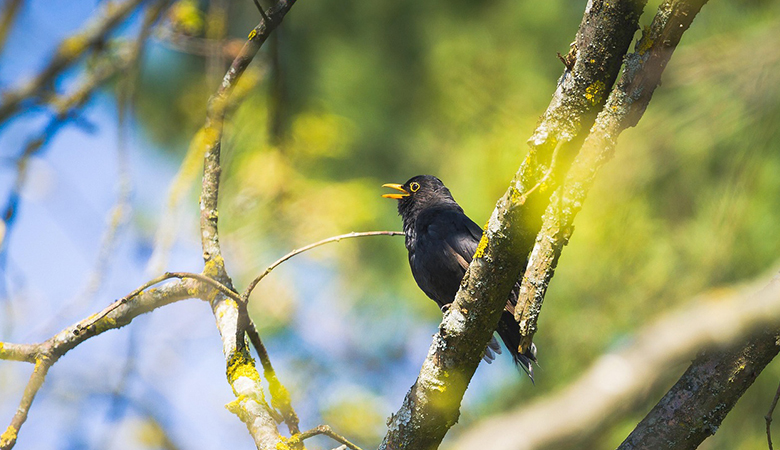
Blackbird

You have probably seen a young blackbird sitting on the ground before. It can look a bit sad, but in many cases nothing is wrong. Young blackbirds actually leave the nest before they are able to fly properly. While they hop around on the ground or in low shrubs, their parents remain nearby to feed and protect them.
How blackbirds raise their young

Blackbirds often start breeding early in spring, sometimes as early as March. The female builds a nest in shrubs, trees, ivy or other sheltered places. She usually lays 3 to 5 eggs, which are incubated for about two weeks. When the chicks hatch, they are still naked and completely dependent on their parents. Both the male and the female bring food to the nest, usually consisting of worms, insects, larvae and other small invertebrates that are rich in protein and important for their growth.

After about 12 to 15 days, the young blackbirds leave the nest. However, this does not mean they can already fly well. During this period, also called the fledgling stage, the young birds often sit on the ground, in shrubs or on low branches while they practice using their wings and grow stronger. Meanwhile, the parents continue to care for and feed them. They bring food regularly, often every 10 to 20 minutes, which can amount to dozens of feeding visits per day. Even after the chicks have left the nest, the parents usually continue feeding them for another one to two weeks while the young blackbirds learn to fly and slowly start searching for food on their own. It may sometimes seem as if a chick is alone, but in most cases the parents are nearby. They are either watching their young from a distance or briefly away looking for food.

Because of this, it may sometimes look a little sad: a young blackbird sitting quietly on the ground, softly chirping or fluttering around somewhat clumsily. However, this is a normal stage in their development, during which the parents usually keep a close eye on their young.

When should you not intervene?

In most cases it is best to leave a young blackbird alone. This applies when:

  • The bird already has feathers and looks healthy
  • It is alert and responds to sounds or movement
  • It tries to hop or flutter
  • The parents are still nearby

At this stage, young blackbirds often sit on the ground or in low shrubs. The parents will continue feeding them until they are able to fly independently.

What you can do is help protect the chick from danger. Is it sitting in the middle of a busy path or on the road? You can gently move it a few metres to a nearby shrub or another safe place.

When should you intervene?

Sometimes a young blackbird really does need help. For example when:

  • The chick is still naked or almost naked (a nestling)
  • The bird is visibly injured
  • The chick appears very weak or does not respond
  • The parents do not return for a long time
  • The chick has been caught by a cat

In these situations, it is best to contact a wildlife rescue centre, animal ambulance service or your veterinarian. They know exactly how to safely care for young birds.

It is usually not advisable to try raising a young blackbird yourself. Young birds require specific food and care that are difficult to replicate.

How can you temporarily help a young blackbird?

If it turns out that a young blackbird really needs help, for example because it is injured, very weak or has been caught by a cat, you can temporarily keep it safe until it can be taken to a wildlife rescue centre or veterinarian. Place the bird in a small box with air holes, such as a shoebox, with a soft cloth or kitchen paper at the bottom. Put the box in a quiet, warm and dark place so the bird experiences as little stress as possible.

It is usually best not to start feeding the bird yourself immediately, as young birds need specialised food. If it is absolutely necessary before help is available, you may offer a small amount of soaked cat or dog food, mealworms or small insects. Never give milk, bread or seeds, as these are not suitable for young blackbirds and may even be harmful. Also ensure the bird has plenty of rest and prevent people or pets from constantly looking at it.

Contact a wildlife rescue centre, animal ambulance service or wildlife rehabilitation centre as soon as possible. They have the proper knowledge and resources to care for young birds and, when possible, release them back into the wild.

Finally

A young blackbird on the ground can sometimes look helpless, but in most cases this is a normal part of growing up. The parents are often nearby and continue to care for their chick while it learns to fly. By observing first and only intervening when it is truly necessary, you give young blackbirds the best chance to grow up healthy in the wild.

Astrid-Klein

About the author

Astrid, veterinary nurse at Vetsend

Astrid is a veterinary nurse and works at Medpets as a content specialist, where she uses her many years of hands-on experience to provide pet owners with clear and reliable information. She specializes in rabbit behaviour and enjoys contributing ideas for innovative products and blog posts that meet the needs of both pets and their owners.

Read more about Astrid