Service
Basket
Menu
Up to 30% off during the Spring Deals Read more

Hamsterscaping: everything you need to know

Written by Kelsey | Content Specialist |

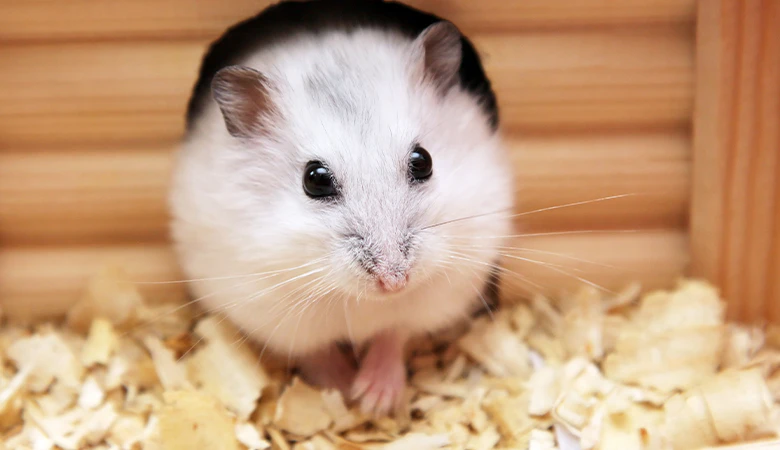
Hamsterscaping is becoming increasingly popular among hamster owners. With hamsterscaping, the focus is on setting up your hamster enclosure as naturally as possible. The aim is to create a living environment in which a hamster can display natural behaviour, such as digging, hiding, foraging and moving around. In this blog, you can read everything you need to know about hamsterscaping.
What is hamsterscaping?

Hamsterscaping means setting up your hamster enclosure as naturally as possible. You do this by dividing the enclosure into different zones, each with its own function. Think of a resting area where your hamster can sleep, a digging area, tunnels and an exercise wheel, a sand bath and places where your hamster can search for food.

Hamsterscaping for beginners

To start hamsterscaping, it is important to begin with a good foundation before adding decoration. A hamster needs plenty of space, deep bedding, hiding places and safe routes to move around. To get started with hamsterscaping, you need the following:

  • Deep bedding
  • A sturdy house or multi chamber house
  • A sand bath
  • An exercise wheel
  • Tunnels

From this foundation, you can later expand the enclosure further with decoration such as cork, little bridges, grapevines or moss.


Everything for a good foundation

Different zones in a hamsterscape

Digging area

Hamsters are natural diggers. In the wild, they build tunnel systems where they hide, sleep and store food. That is why a deep layer of bedding is very important. For dwarf hamsters, at least 20 centimetres of bedding is recommended. For Syrian hamsters, often even more depth is needed, because they make larger tunnels than dwarf hamsters.

Resting and sleeping area

Hamsters need several hiding places where they can sleep and rest. You can choose a sturdy house or a multi chamber house. Place the hiding places in a quiet spot in the enclosure and disturb them as little as possible during cleaning.

Sand bath area

A sand bath with bathing sand is an important part of your hamsterscape. Hamsters use bathing sand to keep their coat clean and free from grease. Place the sand bath in a stable and easy to reach spot. Always use suitable hamster sand and avoid sharp or dusty sand.

Exercise wheel area

An exercise wheel is important to make sure your hamster gets enough exercise. The wheel must stand securely and be large enough. Your hamster should be able to run with a straight back. For dwarf hamsters, a minimum diameter of 20 centimetres is advised and for Syrian hamsters at least 28 centimetres. Choose an exercise wheel with a solid running surface to help prevent injuries to the paws.

Routes to move around

Using tunnels, pieces of cork and little bridges, you can create sheltered routes in your hamster enclosure. This helps your hamster feel safer while exploring. Hamsters like to walk along the edges of the enclosure or under cover rather than through open spaces.

Foraging area

Foraging means that a hamster has to actively search for food. Instead of offering food only in a bowl, you can scatter part of the food around the enclosure. You can also use herbs, seeds, dried flowers and insects.

Hamster food

Nesting material

Also add nesting material to the hamster enclosure to help your hamster make a comfortable nest. Examples of suitable nesting material are:

  • Hay
  • Unscented toilet paper or kitchen roll
  • Small pieces of cardboard
  • Special hamster nesting material

Always choose safe material that is suitable for hamsters and avoid materials that can wrap tightly around the paws, such as cotton wool or fluffy nesting material.

Hamsterscaping with real plants

For more advanced hamsterscapers, you can also choose an enclosure with real plants. Only use plants that are safe for hamsters and completely free from pesticides and fertilisers. Plants from a garden centre are usually not suitable, and plants from outdoors can also contain harmful substances, insects or parasites.

How big should a hamster enclosure be?

For a hamsterscape, you need a spacious enclosure with a large surface area. A hamster needs space for the different zones and a deep digging layer. For dwarf hamsters, a minimum of 100 x 50 cm is often used, and for Syrian hamsters a minimum of 120 x 50 cm. Make sure there is enough room for all zones.

How often should you clean a hamsterscape?

With hamsterscaping, you do not need to empty the enclosure completely to clean it. You can clean your hamsterscape partially. This is also called spot cleaning. This mainly involves removing dirty areas, wet bedding, old food remains and residue in the sand bath. Because you do not replace everything at once, the enclosure keeps a familiar scent and your hamster experiences less stress.

Sign up for our newsletter!