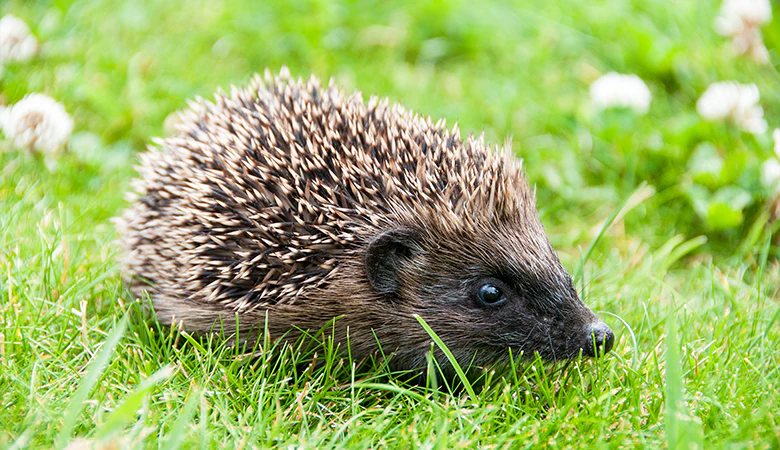
How does a hedgehog’s hibernation progress?
During hibernation, the hedgehog’s body slows down significantly. Its body temperature drops, and its breathing and heart rate also decrease, so that as little energy as possible is used. Hedgehogs do not sleep continuously. They may wake up in between, for example during milder weather.
During hibernation, hedgehogs lose a considerable part of their body weight. When they wake up in spring, they are often thin and immediately start looking for food to regain their strength.
Where does a hedgehog sleep in winter?
Hedgehogs look for a safe and sheltered place to spend their hibernation. This may be under a pile of leaves, branches, shrubs or in a hole in the ground. Gardens are also important places where hedgehogs make a winter nest.
During gardening work in winter, hedgehogs are sometimes found by accident. They may feel cold, be stiff and barely move. This can make it seem as though the hedgehog is dead, while it is actually hibernating.
Found a hedgehog in winter: what should you do?
If you find a hedgehog that is not moving or feels cold, do not immediately assume that the animal is dead. A hibernating hedgehog breathes slowly and irregularly and may look lifeless.
Leave the hedgehog alone and, if necessary, carefully cover it again with leaves or other natural material. If a hedgehog is disturbed during hibernation, it may sometimes wake up briefly. You can then put out some water and a little food.
A hedgehog needs help if it is visibly weak or ill, or if it is active during the day and looks undernourished. In that case, it is wise to contact an animal ambulance or a hedgehog rescue centre.
What can you do for hedgehogs in your garden?
You can help hedgehogs by making your garden hedgehog-friendly. Provide sheltered spots where hedgehogs can make a nest, such as piles of leaves, branches or a quiet corner with vegetation. A hedgehog house can also offer a suitable hiding place, provided it is dry and well sheltered.
You can also support hedgehogs by putting out water and small, hard cat biscuits. Make sure hedgehogs are not given milk. Mealworms are also unsuitable, as they can disrupt the balance of nutrients.
An accessible garden helps hedgehogs find food. Openings under fences allow hedgehogs to move between gardens. Avoid using pesticides, as these reduce the food supply. Also make sure you do not use a robotic lawn mower at night, as hedgehogs are active then.
Help hedgehogs get through hibernation safely
Would you like to support hedgehogs in your garden during winter? Then provide enough food, fresh water and safe hiding places where they can overwinter undisturbed. By making your garden natural and accessible, you increase the chances of hedgehogs getting through the winter well.