Colic in horses
Colic is a phenomenon that many horse owners fear. You can read all about it in our veterinary article here.
The Friesian horse is an ancient Dutch breed originating from Friesland, known for its black coat, long mane and tail, and elegant, high-stepping movement. This breed is often used as a riding horse, carriage horse and show horse thanks to its strength, refined appearance and stable temperament. Friesian horses are intelligent, sensitive and loyal, but they can also have an independent nature. For this reason, consistent handling, regular training and early socialisation are essential. With the right guidance, Friesian horses develop into versatile and reliable companions that excel in dressage, leisure riding and carriage driving. Their majestic appearance and impressive movement also make them popular at shows and parades. For active riders and equestrian enthusiasts, the Friesian horse is an ideal choice.

The Friesian Horse is one of the oldest horse breeds in the Netherlands and originated in the province of Friesland. Originally, this powerful and elegant breed was used as a working and war horse, thanks to its stamina and reliability. Over the centuries, it developed into a noble carriage horse, admired at royal courts for its graceful movement and striking appearance. The breed has retained its purely Dutch character and has hardly been influenced by other bloodlines, which is why it has preserved its recognisable black coat, full mane and tail, and elegant build. Today, the Friesian Horse is a worldwide symbol of strength, beauty and tradition, and is widely used for dressage, carriage driving and leisure riding.
The Friesian Horse is known for its friendly, reliable and willing nature. This breed is naturally gentle and people-oriented, which makes it an ideal partner for both leisure riders and professional carriage drivers. Friesians are intelligent and sensitive, meaning they learn quickly and respond strongly to their rider’s mood and guidance. Despite their powerful appearance, Friesian horses are generally calm, sociable and well-balanced, with a strong desire to work together. They have a steady temperament, which makes them suitable for various disciplines, from dressage to carriage driving. Some Friesians can be a little sensitive, especially when faced with new stimuli, but with consistent and kind training they thrive. The character of the Friesian Horse is therefore the perfect combination of strength, elegance and loyalty, which is why this breed is loved worldwide for its reliability, presence and charming personality.
The Friesian horse is an elegant and powerful Dutch horse breed with a completely black coat. The breed is known for its long, flowing mane and tail and the characteristic feathering on the lower legs. The body is muscular and compact, with a high-set neck and expressive, elevated movement. Thanks to this stately appearance and fluid motion, the Friesian horse is popular in dressage, carriage driving and shows, and is admired worldwide as a symbol of strength and elegance.
A Friesian horse lives on average 20 to 25 years, as it belongs to the larger horse breeds. While the average life expectancy for many horses is between 25 and 30 years, and ponies can even reach 30 to 40 years, for larger breeds such as the Friesian, 20 to 25 years is considered normal. Good care, nutrition and veterinary attention help to extend this lifespan.
The price of a Friesian horse varies widely, usually ranging from £4,250 to £12,750, but it can rise to £42,500 or even more, depending on factors such as pedigree, age, performance, and training. A young horse without specific training is less expensive, while an experienced sport horse with a strong lineage can cost considerably more.
A Friesian horse is beautiful, but it requires care and attention to stay healthy. Common health issues include colic, laminitis, gastric ulcers, skin conditions such as mud fever and sweet itch, and respiratory problems. Good care starts with a balanced diet, sufficient exercise and a clean, well-ventilated stable.
Regularly check your horse’s hooves and skin and provide protection against insects during the summer months. Pay attention to signs such as reduced appetite, lameness or coughing, and contact a veterinarian immediately if you have any concerns.
With the right care, nutrition and attention, your Friesian horse can enjoy a healthy and happy life. Regular check-ups by a veterinarian and farrier are essential.
When buying a Friesian horse, pay attention to the following: its health (especially hereditary conditions such as dwarfism and hydrocephalus), a reputable breeder, and the horse’s quality (such as breed type, conformation, limbs and hooves, and basic movement). Check the studbook papers and have the horse examined by a veterinarian. As it is a pedigree breed, it is also important to choose a horse that suits your experience level and your goals.
The Friesian horse is one of the oldest and most recognisable horse breeds in the Netherlands. With its glossy black coat, full mane and tail, and graceful movement, the breed is loved worldwide. Originally bred in Friesland as a working and riding horse, the Friesian horse has developed into a versatile breed that combines strength, elegance and a friendly nature. Today, it stands out in sport as well as in shows, carriage driving and leisure riding.
Activities where the Friesian horse excels
Although Friesian horses are known for their strong health and calm nature, they do require a bit more attention when it comes to grooming, mainly because of their thick mane and tail and feathering. Daily brushing helps keep the coat clean and prevents tangles. Regular hoof care and keeping the stable or paddock clean remain important for good overall condition.
Friesians need a balanced diet with plenty of roughage and a limited amount of concentrates, depending on their workload and activity level. Because the breed is naturally hardy, feed that is too energy-rich can quickly lead to excess weight. Sufficient exercise, turnout and proper muscle development are important to maintain their strong build and smooth movement.
Regular check-ups by a veterinarian, equine dentist and farrier contribute to a long and healthy life. With the right care and attention, Friesian horses remain strong and healthy for years, and they are a real eye-catcher in every discipline they are used for.
Colic is a phenomenon that many horse owners fear. You can read all about it in our veterinary article here.
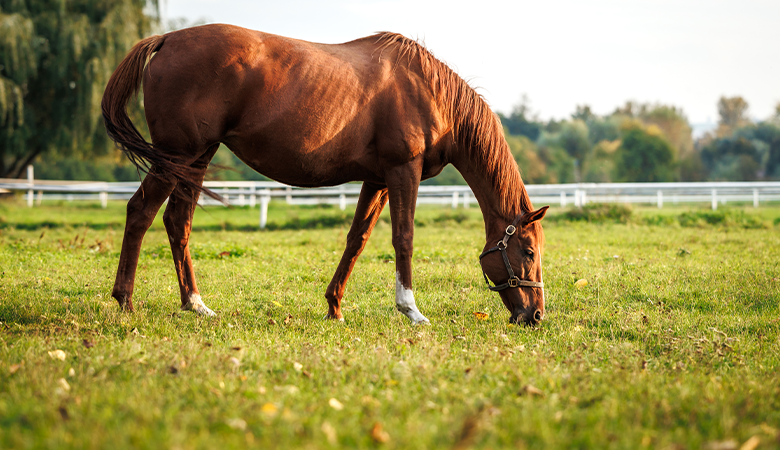
Worms occur in almost every horse. In small numbers this is usually not a problem, but heavy burdens can lead to serious health issues, from weight loss to colic. Fortunately, with the right approach and regular monitoring you can keep the worm burden low and keep your horse healthy. In this blog we explain which worm species are most common, how to set up a responsible deworming schedule and why faecal testing and pasture management are essential.

Every horse owner knows the feeling: your horse seems restless, looks around nervously, or startles at things it normally ignores. Stress in horses occurs more often than we think—sometimes very subtly, sometimes clearly visible. But how do you know if your horse is really experiencing stress? And more importantly: what can you do to help them relax? In this blog, you’ll learn how to recognize stress in your horse, which signals you should never overlook, and what practical steps you can take to create more calm and balance.

Add products to view your basket
We use cookies to help us serve you better and more personally. Functional cookies ensure that the website works properly and have an analytical function. We also use technology to track your behaviour anonymously, both inside and outside our website. Personal data and cookies may be used for personalisation or advertising. Want to know more? Read our privacy policy and cookie statement here. If you choose to reject, we will only place functional and analytical cookies.