The natural feeding behaviour of fish
To understand how long a fish can go without food, it is important to first look at its natural feeding behaviour. In the wild, fish eat small amounts of food spread throughout the day, such as algae, plankton, insects, larvae, and other aquatic organisms. Their digestion is adapted to this, allowing them to cope well with fluctuating and irregular feeding moments.
Differences between fish species
There are considerable differences in feeding behaviour and nutritional needs between fish species. What and how often a fish needs to eat depends not only on the species but also on the environment in which it lives. Taking this into account helps prevent deficiencies, overfeeding, and unnecessary water pollution.
Broadly speaking, fish can be classified based on their diet and their habitat:
- Herbivores: these fish mainly eat algae and plant material. They have a longer digestive process and therefore need smaller portions more frequently.
- Carnivores: these species primarily eat insects, larvae, or other animals. They eat less often but require protein-rich food.
- Omnivores: these fish have a mixed diet and thrive best on a varied diet of both animal and plant components.
Difference between aquarium fish and pond fish:
- Aquarium fish: are completely dependent on what you feed them. They have no natural food sources and therefore need to be fed regularly, but in moderation.
- Pond fish: can often find additional food themselves, such as algae, insects, and small aquatic organisms. As a result, they can generally go longer without additional feeding than aquarium fish.
How long can fish go without food?
How long fish can go without food depends on factors such as species, age, health, and living environment. Water temperature also plays an important role: in warmer water, metabolism is higher and fish use up energy more quickly. In general, healthy adult fish can go without food for several days up to about a week. Pond fish can often go even longer without additional feeding because they find algae, insects, and other small organisms themselves, while aquarium fish are entirely dependent on what you provide. Young or sick fish and species with a high metabolism need food more frequently and tolerate longer periods without food less well.
As a guideline, you can use the following per fish type:
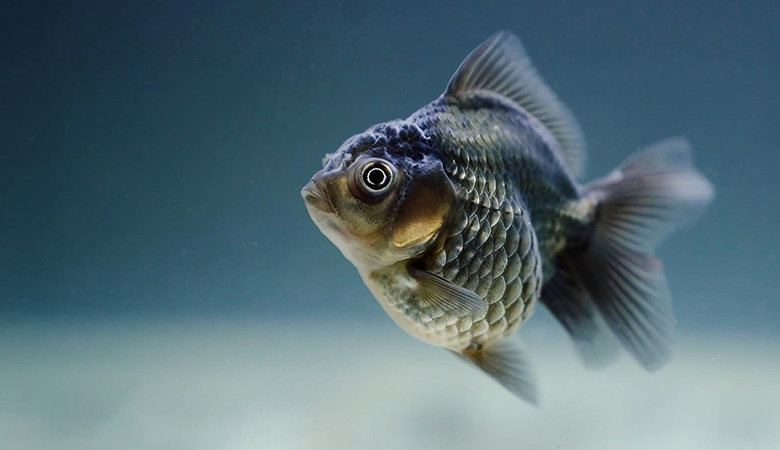
- Tropical aquarium fish (such as guppies, neon tetras): 3 – 5 days
- Goldfish: 5 – 7 days
- Cichlids: 5 – 7 days
- Bottom dwellers (such as corydoras): 3 – 5 days
- Pond fish (such as koi and goldfish): 7 – 14 days, depending on season and natural food availability
Please note: these are general guidelines for healthy, adult fish. The actual length of time a fish can go without food varies by species and is influenced by age, health, metabolism, water temperature, and the availability of natural food sources. Always carefully consider your own fish and situation and avoid taking risks.
When should you be extra cautious?
Extra attention is required for young fish, sick or recovering fish, and species with a high metabolism. These fish need food more frequently and tolerate longer periods without food less well. Fish also use more energy at higher water temperatures, causing them to weaken more quickly if they are not fed.
When you do not feed for a period of time, it is generally not necessary to add extra products to the aquarium, as long as it concerns healthy fish and a short period (1 to 5 days). However, make sure the water quality remains good: check that the filter is functioning properly, keep the temperature stable, and avoid sudden changes in lighting or maintenance. Adding extra food, vitamins, or other products is usually unnecessary and may even be disruptive.
When is temporarily not feeding not a problem?
A short period without food, for example during a weekend or short holiday, is not a problem for most (healthy) fish. In some cases, it may even be beneficial for water quality. However, there are a few practical tips to keep in mind when you are on holiday or away:
- Make sure the aquarium is stable: do not perform major maintenance right before departure. Changes in water parameters or layout can cause more stress than temporarily not feeding.
- Check the filter and equipment: make sure the filter, pump, and heater are working properly. Stable water quality is more important than extra feeding during this period.
- Preferably do not let anyone feed ‘extra’: a well-meaning caretaker often feeds too much. Too much food is usually more harmful than a few days without food.
- Take the fish species into account: healthy adult fish usually cope well, but young, sick, or vulnerable fish require extra attention.
Weekend and holiday food: use it or not?
Weekend and holiday foods can be a practical solution in some situations, for example when you are away for a longer period and there is no option for an automatic feeder or a well-instructed caretaker. Weekend or holiday foods are designed to release food slowly over several days. It is important to use these products carefully. Not every fish species responds equally well to them, and incorrect use can negatively affect water quality. Always test weekend or holiday food in advance, for example a few days before you leave. Pay attention to whether the fish actually eat the food, whether the product dissolves evenly, and whether the water remains clear. If the water becomes cloudy or food residues remain, this type of food is less suitable for your aquarium. Always choose a product that matches the type of fish, the number of fish, and the size of the aquarium.
For a short absence, not feeding is in most cases the safest and simplest option. For a longer holiday, a properly adjusted automatic feeder or a caretaker who strictly follows clear instructions provides more security than additional or uncontrolled feeding. This helps maintain balance in the aquarium and reduces the risk of water quality problems.
Finally, what can go wrong?
If feeding is handled incorrectly during absence, various problems can arise. Too much food or poorly dissolving holiday food can lead to water pollution, increasing harmful substances such as ammonia and nitrite. This can cause stress in fish and, in severe cases, health problems. Disruption of the natural feeding rhythm can also result in fish becoming less active or refusing food. By keeping feeding simple and making conscious choices, you significantly reduce these risks.
Temporarily not feeding can sometimes do no harm, but under normal circumstances fish do benefit from regular, well-balanced feeding.