Service
Basket
Menu
Trovet Week: up to 15% off Trovet Read more

Impulse Control in Dogs

Written by Astrid |

Does your dog immediately jump up when the door opens? Does he struggle to wait for his food or react to everything that moves? Impulse control in dogs is an important skill that helps dogs remain calmer and cope better with distractions. In this blog, you'll learn what impulse control in dogs is, how to recognise reduced impulse control and how you can help your dog develop it.
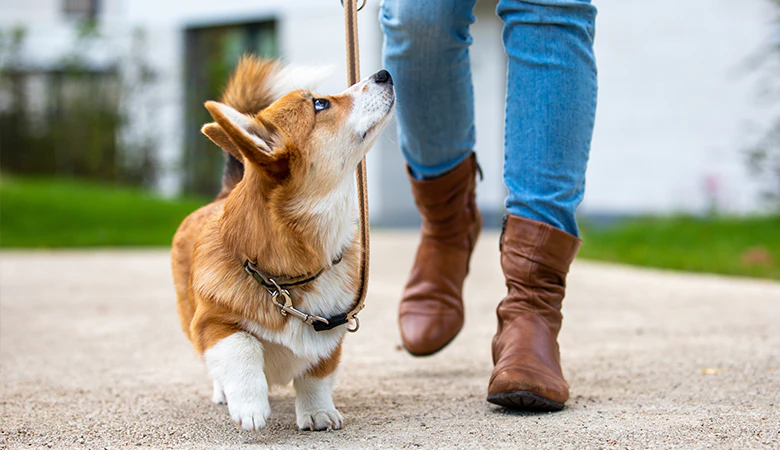
corgi looking at owner on lead

Impulse control in dogs is not something every dog naturally excels at. Age, personality, breed and previous experiences all play a role. Fortunately, dog impulse control is a skill that can be developed step by step. With patience, clear guidance and suitable dog impulse control exercises, your dog can learn to think before reacting.

What is impulse control in dogs?

Impulse control is a dog’s ability to delay an immediate reaction or urge. Instead of instantly chasing a ball, jumping up at visitors or pulling towards another dog, a dog learns to pause and think before acting. This doesn’t mean your dog loses his enthusiasm, but rather that he learns to manage his behaviour more effectively.

Good impulse control in dogs makes everyday life more enjoyable for both your dog and you as the owner. It contributes to a safer environment, helps your dog cope better with exciting or challenging situations and often makes training much easier. Dogs that cope better with distractions also tend to relax more easily.
Popular products

How do you recognise poor impulse control?

Every dog gets excited or impatient from time to time. Reduced impulse control does not automatically mean there is a behavioural problem. However, if your dog regularly struggles to control himself, you may notice the following:

  • Immediately jumping up when visitors arrive
  • Pulling strongly on the lead as soon as something interesting appears
  • Struggling to wait for food or complete an exercise calmly
  • Quickly barking or whining due to excitement or frustration
  • Chasing moving objects such as cyclists, cars, birds or cats
  • Finding it difficult to settle down, even indoors

These signs may also be related to other factors, such as stress, fear, pain or overstimulation. Are you unsure what is causing your dog’s behaviour? If so, it’s advisable to discuss this with your veterinarian or a qualified canine behaviourist first.

Breed differences

Although every dog has its own personality, some breeds are naturally more inclined to react immediately to stimuli. This is particularly common in dogs bred to work closely with people or hunt independently. Examples include:

  • Border Collie
  • Australian Shepherd
  • Belgian Shepherd (Malinois)
  • Jack Russell Terrier
  • Labrador Retriever

This does not mean these dogs always have poor impulse control. With appropriate training, sufficient mental stimulation and consistent guidance, even energetic dogs can learn to manage their impulses very well.

Developing impulse control in puppies

Puppies are not born with good impulse control. Just like children, they need to learn that they cannot always get what they want straight away. This takes time and develops gradually as they grow. You can support your puppy by:

  • rewarding calm behaviour
  • keeping training sessions short and positive
  • occasionally asking your puppy to wait calmly before receiving food or going outside
  • making exercises gradually more challenging
  • providing plenty of rest periods so your puppy doesn’t become overstimulated
  • gradually introducing distractions during training (reward your puppy when he remains calm around moving distractions or keeps his attention focused on you)

Avoid expecting too much from a young puppy. Developing self-control is a learning process that can take several months. By practising calmly and creating plenty of positive experiences, your puppy will gradually learn to cope better with different situations.

When is extra support advisable?

Sometimes training alone is not enough to achieve sufficient progress. Behaviour may also become so intense that it affects daily life or creates unsafe situations. Contact a qualified canine behaviourist or a dog training school that uses positive training methods if your dog:

  • puts himself or others at risk
  • finds it very difficult to settle down
  • reacts increasingly intensely to distractions
  • shows little improvement despite training

The sooner you seek guidance, the greater the chance that unwanted behaviour can be redirected before it becomes a habit.

Frequently asked questions

What is impulse control in dogs?

Impulse control is a dog’s ability to delay an immediate response. A dog with good impulse control learns, for example, to wait, remain calm around distractions and avoid reacting to every stimulus straight away.

At what age can you start practising impulse control?

You can begin with simple exercises from a young age. Puppies gradually learn to wait calmly, keep their focus on their owner and avoid reacting immediately to every distraction. As they grow older, you can slowly increase the difficulty and duration of the exercises.

Is a lively dog the same as a dog with poor impulse control?

No. An energetic dog is not automatically impulsive. Age, excitement, stress, fear or insufficient rest may also influence behaviour.

When should you consult a canine behaviourist?

If your dog struggles to settle down, puts himself or others at risk, or shows little improvement despite training, it’s advisable to seek advice from a qualified canine behaviourist or dog training school. The sooner you receive the right guidance, the easier it will be to help your dog.

Can every dog learn impulse control?

Yes, almost every dog can develop impulse control. Some dogs learn more quickly than others. Age, breed, personality and previous experiences all play a role. Training is also essential in helping your dog develop this skill.

Which dogs are more likely to struggle with impulse control?

Active working and hunting breeds, such as Border Collies, Australian Shepherds, Belgian Shepherds and Jack Russell Terriers, often react more quickly to distractions. These breeds were developed to stay alert, make quick decisions and respond immediately while herding, guarding or hunting. As a result, they may find it more difficult to delay an impulse. With sufficient mental stimulation, appropriate training and dog impulse control exercises, these dogs can also learn to manage their excitement and reactions more effectively.

How long does impulse control training take?

This varies from dog to dog. With regular, short training sessions, many dogs gradually make progress. Consistent training and plenty of rest are important factors.

Read our other blogs

More tips

Sign up for our newsletter

Astrid-Klein

About the author

Astrid, veterinary nurse at Vetsend

Astrid is a veterinary nurse and works at Medpets as a content specialist, where she uses her many years of hands-on experience to provide pet owners with clear and reliable information. She specializes in rabbit behaviour and enjoys contributing ideas for innovative products and blog posts that meet the needs of both pets and their owners.

Read more about Astrid