Teething in puppies: everything you need to know
Written by Kelsey |
Teething is part of a puppy’s development. In a short period of time, the baby teeth are replaced by adult teeth, and this can cause your puppy quite a lot of discomfort. Puppies suddenly want to chew on everything, and this can sometimes come at the expense of furniture, shoes or toys. In this blog, you can read when puppies start teething, which signs to look out for and how you can support your pup during this phase.
When does a puppy start teething?
Just like humans, puppies are born without teeth, and the first baby teeth appear at around three to four weeks of age. From around three to five months, the change to the adult teeth begins. By around seven months of age, the adult teeth are usually complete. In general, the incisors change first, followed by the canines and finally the molars.
How can you tell that your puppy is teething?
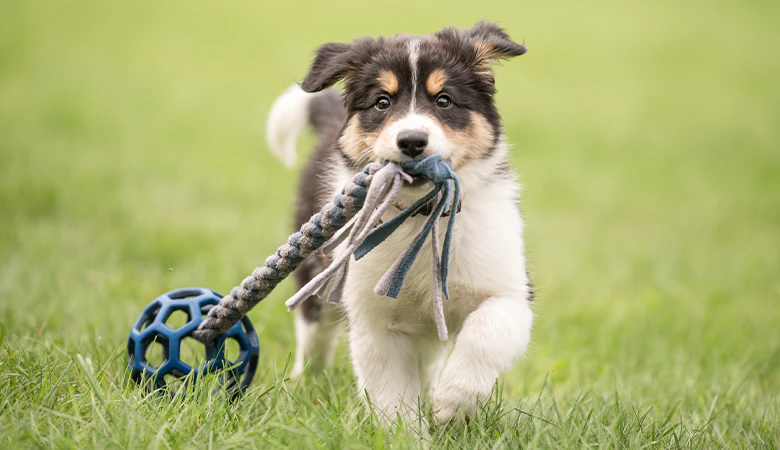
During teething, your puppy may suffer from sensitive teeth and gums. This often gives them a strong urge to chew. Many puppies suddenly start biting more on toys, furniture, hands or other items around the house. Other noticeable signs include:
- More chewing behaviour
- Red or sensitive gums
- Reduced appetite
- More drooling
- Loose teeth
- Slightly bleeding gums
Sometimes you may find a tooth, but most puppies swallow their baby teeth while eating or playing. This is normal and harmless.
Does teething hurt?
Teething can be very uncomfortable for a puppy, especially when the larger teeth and molars come through. Fortunately, you can help your puppy in various ways with chew toys for puppies and cooling products.