Housing and care of the Netherland Dwarf Rabbit
The Netherland Dwarf Rabbit may be small, but like every other rabbit, it needs space, enrichment and social contact. Because of its active and alert character, it is important not to look only at size, but especially at what it needs to stay healthy and happy. In addition, this also applies to this breed: a Netherland Dwarf Rabbit must never be kept alone, but always together with a companion of its own kind.
Housing
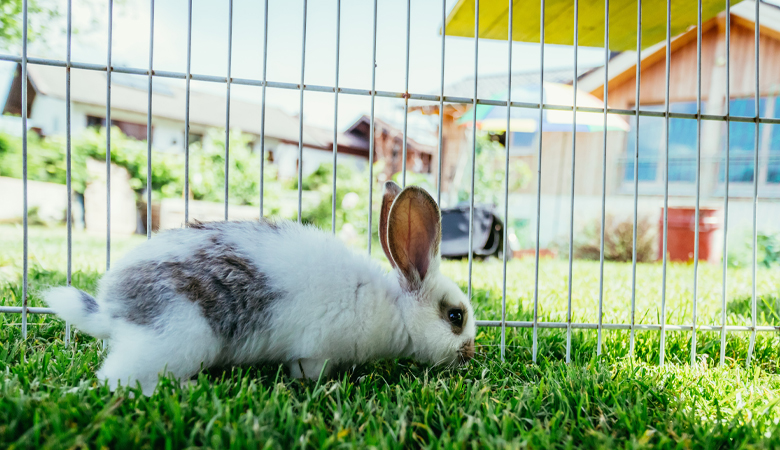
A Netherland Dwarf Rabbit needs a spacious enclosure in which it can run, sit upright, lie stretched out and retreat. Both indoors and outdoors, the living environment must be safe, dry, clean and well set up. Think of hiding places, a spacious toilet area, a hay rack, gnawing material and toys that stimulate natural behaviour. Because Netherland Dwarf Rabbits are often active and curious, they benefit from variety and enrichment in their enclosure.
Always provide, both indoors and outdoors:
- enough space to move freely
- soft, dry bedding
- hiding places and tunnels
- a spacious toilet area
- a well-filled hay rack
- toys and challenges for mental stimulation
For indoor housing, a non-slip surface is important so that the rabbit can move safely. Outdoors, it is especially important that the enclosure is dry, draught-free and well protected against weather conditions and predators.
Care
Coat care for a Netherland Dwarf Rabbit is usually quite simple because the coat is short. Weekly checks for loose hair, nails, eyes, ears and teeth remain important, however. Especially in this breed, the teeth and eyes deserve extra attention. Due to the short head shape, some Netherland Dwarf Rabbits may develop problems with teeth that do not wear down properly or with watery eyes more quickly. Therefore, watch carefully for signs such as eating less well, drooling, wet eyes or dirty front paws from cleaning the eyes. When in doubt, it is wise to consult a rabbit-savvy vet.
It is also important to have rabbits vaccinated in good time against common and serious diseases such as RHD (VHD) and myxomatosis. Which vaccinations are needed and how often they should be repeated can be read in our extensive blog: Vaccinating your rabbit against myxomatosis and VHD.