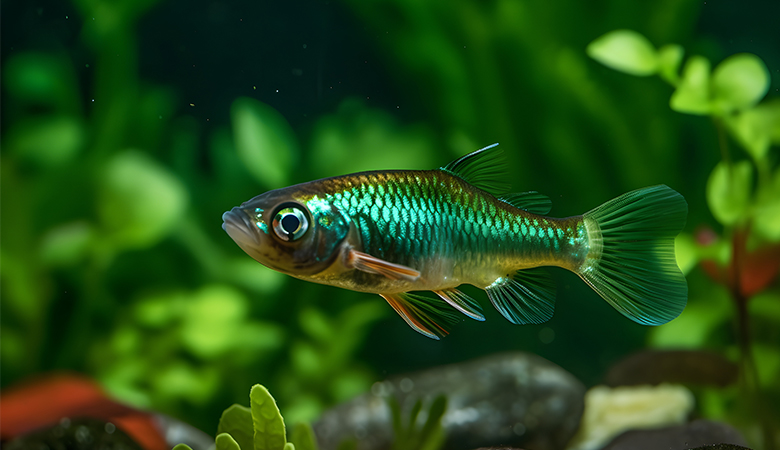
Which tropical fish are suitable for beginners?
If you are just starting with an aquarium, it is wise to choose hardy fish species that are less sensitive to small fluctuations in water parameters. This allows you to gain experience without small mistakes immediately having major consequences.
Suitable fish for beginners include: guppies, platies, mollies, corydoras and rasboras. These species are generally easy to care for, peaceful and compatible with other fish.
Which tropical fish can live together?
Creating a well-balanced aquarium requires the right mix. Not only appearance, but especially the behaviour and lifestyle of the fish are important. Peaceful schooling fish such as tetras and rasboras generally combine well with bottom dwellers such as corydoras.
It is important that the fish you choose require the same water parameters and temperature. Also consider the layout of the aquarium: some fish mainly live in the upper layers, while others stay near the bottom. By combining different layers, you prevent competition and stress.
Which tropical fish should not be kept together?
Some fish species are best not kept together due to differences in temperament or behaviour. For example, a betta (Siamese fighting fish) may react aggressively to other fish with long fins, such as guppies. Larger fish such as African cichlids may also see smaller fish like neon tetras as prey and eat them.
Territorial species, such as certain gouramis or cichlids, can cause problems in smaller aquariums, especially when there are insufficient hiding places. Keeping multiple male bettas together almost always leads to fights and injuries.
Starting an aquarium
Before adding fish, it is important to properly set up the aquarium first. This process is often called “cycling” and takes on average 2 to 4 weeks. During this period, beneficial bacteria develop in the filter and water, helping to break down waste substances such as ammonia and nitrite. If you add fish too quickly, these bacteria will not yet be sufficiently present and harmful substances may accumulate. This can cause stress and health problems in fish. By giving the aquarium time to stabilise, you create a solid foundation for healthy water quality.
Aquarium setup
The setup of the aquarium plays an important role in the well-being of your tropical fish. Plants, hiding places and suitable substrate ensure that fish feel safe and can display natural behaviour. Plants also help improve water quality by absorbing nutrients and releasing oxygen. Hiding places such as wood, stones or caves are especially important for shy or territorial species. The choice of substrate is also important. Some fish, such as corydoras, prefer fine sand, while others do well on gravel. By tailoring the setup to the needs of the fish species, you create an aquarium that is not only visually appealing but also functional and healthy.
Water quality: the foundation of a healthy aquarium
Stable water quality is essential for the health of tropical fish. By regularly testing, you gain insight into key parameters and can prevent problems early. It is important to monitor the following values:
- pH level: indicates how acidic or alkaline the water is
- GH (general hardness): indicates the amount of minerals in the water
- KH (carbonate hardness): helps keep the pH stable
- Ammonia (NH3): highly toxic and should always be 0
- Nitrite (NO2): also toxic and should be 0
- Nitrate (NO3): less harmful but undesirable at high levels
By changing part of the water weekly (around 20–30%) and using a properly functioning filter, the aquarium remains balanced and you create a healthy environment for your fish.
The right temperature for tropical fish
Most tropical fish feel comfortable at a water temperature between 24 and 26 degrees. This is a safe guideline for a typical community aquarium. Some species deviate from this. For example, discus fish and certain gouramis prefer warmer water (around 27–28 degrees), while others tolerate slightly lower temperatures. The most important factor is that the temperature remains stable. Fluctuations can cause stress and weaken your fish’s resistance. An aquarium heater with a thermostat is therefore essential.
What do tropical fish eat?
The diet of tropical fish varies by species, but in most aquariums the basis consists of dry food such as flakes or pellets. Flakes stay at the surface longer and are suitable for fish that feed there, while pellets often sink and are better for mid- and bottom-dwelling fish. Variety is important. Occasionally feeding frozen or live food such as mosquito larvae or artemia provides extra nutrients and stimulates natural behaviour.
Some fish require a more plant-based diet, while others need animal protein. Therefore, pay close attention to the needs of each species. It is also better to feed small amounts that are eaten within a few minutes to prevent water pollution. View the range of fish food here.
How many fish in the aquarium?
A commonly used guideline is approximately 1 cm of fish per litre of water, but this is only a rough indication. It strongly depends on the species and behaviour. Active swimmers or territorial fish require more space than calm species. Schooling fish should always be kept in groups, which also affects how many you can keep in your aquarium.
In addition, the dimensions of the aquarium and its setup play an important role. It is therefore wise to consider not only the length of the fish but also their behaviour and space requirements.
Additional points of attention for a healthy aquarium
Besides the basics, there are a few important points to keep in mind.
- An aquarium must first be “cycled” before adding fish, so beneficial bacteria can develop.
- New fish should be acclimated slowly to reduce stress.
- It is also important to observe your fish carefully. Changes in behaviour, appetite or appearance may be early signs that something is wrong.
Would you like to learn more about different fish species and which ones suit you best? Then also take a look at our fish species page.