Cleaning muddy paws after a walk
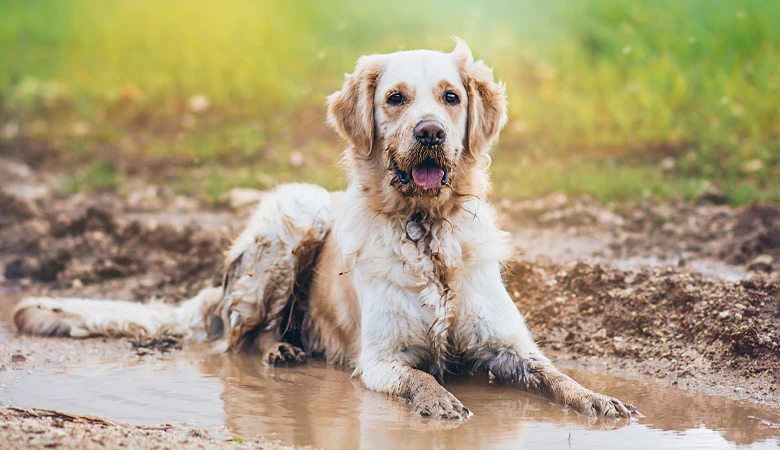
Does your dog only have wet paws? Drying them thoroughly with an absorbent towel is usually enough. After a walk through mud, sand or wet grass, some extra cleaning may be necessary.
If the paws are very dirty, rinse them with lukewarm water. This removes mud and sand without having to use shampoo every time. A paw cleaner can also be useful for loosening dirt around the paws and between the toes. Dry the paws carefully afterwards. Pay particular attention to the spaces between the toes and around the paw pads. In dogs with lots of hair between their toes, moisture and dirt can easily remain trapped there.
Do you only want to clean the paws, belly or another small area? You can also use a damp flannel. Preferably use only lukewarm water or a grooming product that is suitable for a dog’s skin.
How to dry a wet dog properly
A good drying routine starts with the paws. Then move on to the belly, chest and the rest of the body. Ideally, use a soft, highly absorbent towel that is large enough for your dog.
How long it takes for a dog to dry completely varies considerably. A short-haired dog may dry relatively quickly after being thoroughly towel-dried, while a long, thick or double coat can retain moisture for much longer. Do not just feel the surface of the coat; also check whether it is still damp closer to the skin.
A dog bathrobe can be a practical addition. After the initial towel-drying, it can absorb even more moisture from the coat. This is not only comfortable for your dog, but can also prevent them from drying their wet coat on the sofa, rug or your trousers.
Can you blow-dry a dog?
A hairdryer can help dry the coat further, but it should be used carefully. Choose a low temperature and a gentle airflow setting, and keep a safe distance from the skin. Never direct hot air at the same spot for a prolonged period.
Not every dog is comfortable with the noise or airflow, so allow your dog to get used to it gradually. For dogs with long or very thick coats, a dog dryer or high-velocity dryer can be useful. Unlike a regular hairdryer, a high-velocity dryer primarily uses a powerful stream of air to blow water out of the coat. This can make drying thick and double coats considerably easier. Again, allow your dog to become accustomed to the noise and airflow gradually.
Why does a wet dog smell?
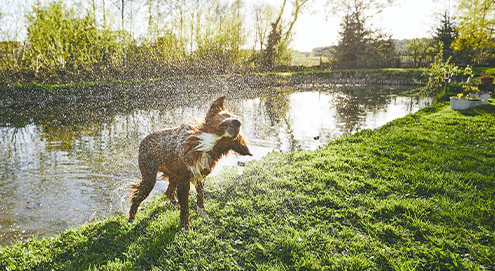
The typical wet dog smell is not caused by rainwater itself. Microorganisms naturally live on the skin and in the coat, alongside skin oils and various odour-producing substances. When the coat becomes wet, volatile odour compounds are released more easily and spread as the moisture evaporates. This is why a wet dog often smells much stronger than a dry dog.
Drying your dog thoroughly and allowing the coat to dry completely can help the smell disappear more quickly. Does your dog still have a noticeably strong or unpleasant smell when completely dry? Check the skin and ears. An unusual smell combined with symptoms such as itching, redness, flaking or excessive licking can be a reason to have your dog’s skin or ears checked by a vet.
How do you keep your home fresh with a wet dog?
The easiest solution is to prevent moisture and mud from spreading throughout your home. Make cleaning your dog when you return home part of your regular routine. For example, let your dog wait on a doormat by the door while you dry their paws and coat.
Wash dog towels, blankets, dog bed covers and other fabrics your dog regularly lies on according to the washing instructions. Make sure wet towels and blankets are completely dry before using or storing them again. Otherwise, a damp dog bed or blanket can develop an unpleasant smell of its own.
Has your dog left a wet patch where they have been lying? Allow the surface to dry thoroughly and wash any removable covers where possible. With sofas, rugs and other fabrics, it is important to absorb the moisture as quickly as possible and then allow the material to dry completely.
Should you wash a muddy dog every time?
No, this is usually not necessary. Is your dog mainly wet, with just a few splashes of mud on their paws and belly? Rinsing with lukewarm water and drying thoroughly is often enough. Washing your dog completely with shampoo after every wet walk is generally unnecessary.
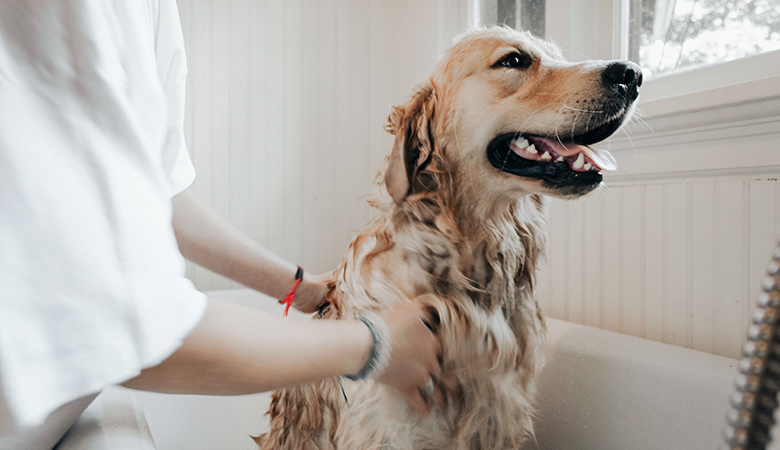
Is the coat really dirty, or has your dog rolled in something? In that case, a bath can of course be useful. Use a mild dog shampoo that is suitable for your dog’s skin and coat. For smaller dirty areas, a cleansing mousse or spray for dogs can be a practical alternative to a full bath.
The paw pads also deserve some attention. Especially during periods of heavy rain, cold weather or when road salt is being used, the pads can become drier or rougher. A paw balm can be used to care for the paw pads and keep them supple.
A dog that loves running through puddles and mud and a home that is always spotless may never go perfectly hand in hand. Still, a good routine can make a big difference. And that one muddy paw print that manages to escape? Perhaps that is simply a small part of life with a dog.