What does a snake eat?
Written by |
Snakes have specific dietary needs that are closely linked to their way of life and hunting behaviour. In the wild they hunt a range of prey, from insects and rodents to birds, eggs and even other reptiles. Because snakes are cold-blooded animals, they eat less frequently than many other species. Their metabolism is slower and they can store energy efficiently. When a snake is kept as a pet, it is important to match its diet as closely as possible to its natural feeding pattern. In this blog you will learn what snakes eat in the wild, which foods are suitable for pet snakes, and what they should not be fed.
The diet depends on the species
Which food a snake eats is closely linked to its species and the habitat it occurs in. In the wild, constrictors mainly eat small mammals or birds, which they kill with their bodies before swallowing. Other species, such as garter snakes and water snakes, feed on fish, amphibians or insect larvae. There are also species that eat only eggs or other reptiles. These natural dietary differences are closely connected to the way snakes hunt and digest their prey.
What do the most commonly kept snakes eat
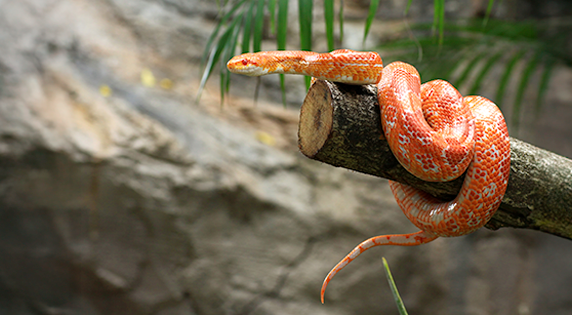
When snakes are kept as pets, their natural diet is followed as closely as possible. The most commonly kept species are the red rat snake, also known as the corn snake, the kingsnake, the milk snake and the common boa (Boa constrictor). All of these species are non-venomous and belong to the constrictors. They kill their prey by encircling it with their bodies before swallowing it.
In the wild, these species hunt mice, rats or birds, depending on what is available in their habitat. As pets, this natural feeding pattern is replicated with appropriately sized frozen prey, offered after thawing. Juvenile animals receive smaller prey, while adult snakes eat larger mice or rats.
Within these snake species there are minor differences in preference. Corn snakes mainly eat mice, whereas kingsnakes and milk snakes will sometimes eat chicks as well. Larger species, such as the common boa, need larger prey, such as rats. For all species, an appropriately tailored diet is important, with variation in the size or type of prey, so that they receive all the necessary nutrients and can maintain their natural feeding behaviour as closely as possible.
What snakes should not eat
Not all foods are suitable for snakes. Raw meat from the supermarket is unsuitable to offer, as it is often processed and does not have the same nutritional value as whole prey. Cooked or seasoned food is also unsuitable and can lead to digestive problems. Oversized or live prey can cause injuries or stress. It is therefore important that snakes are given only appropriate, whole prey items that match their species and size.