Service
Basket
Menu
25% off Hill’s with Vetsend Repeat code: HILLS25 Read more

Which snacks are suitable for puppies?

Written by Nova |

Puppies explore the world with both their nose and their mouth. During training, puppy treats therefore play an important role. Reward treats can help teach desired behaviour, while chew treats help your puppy relax and support the development of their teeth. However, not every snack is suitable for young dogs. Puppy treats should match your puppy’s age, size and chewing strength.
Why puppy treats are important

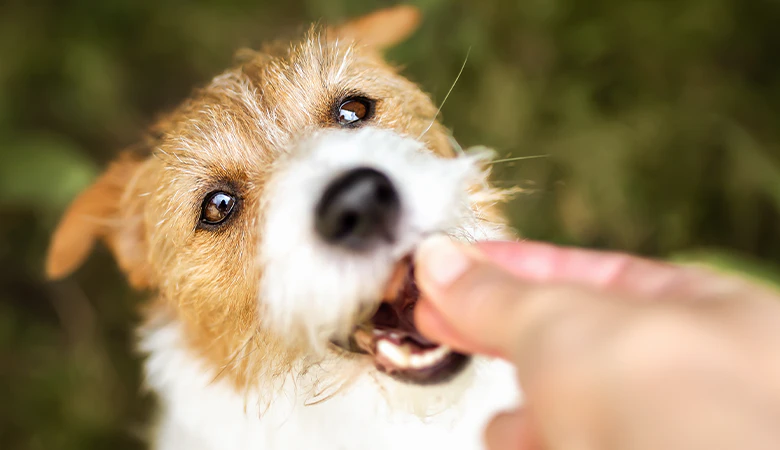
Puppies learn new things every day. Rewarding helps your puppy understand which behaviour is desired. Many puppies respond well to treats during training because they are motivated by smell and taste. In addition, puppies naturally have a need to chew. Especially during teething, chewing can help reduce pressure on the gums. Suitable puppy treats therefore not only support training, but can also contribute to relaxation and mental stimulation.


Relevant products

Which snacks are suitable for puppies?

Suitable puppy treats are adapted to milk teeth and the sensitive digestion of young dogs. Preferably choose soft or semi-moist treats that are easy to chew. Small training treats are useful during walks, puppy classes or short training sessions at home. Chew treats specially developed for puppies can also be suitable. These are often softer than chew products for adult dogs. Always make sure the treat matches your puppy’s size and age.

Many puppies respond well to treats with a strong smell. This helps maintain attention during training. Use puppy treats in moderation and take your puppy’s daily diet into account to help prevent obesity. For puppies that enjoy chewing, you can choose special puppy chew products, such as some Beeztees treats and puppy toys that can be combined with a reward.

At what age can a puppy have a chew bone?

A puppy can usually be introduced to suitable chew treats or puppy chew bones from a young age, as long as they are adapted to milk teeth. Always choose soft chew products specially developed for puppies. During teething, which often begins around the fifteenth week of life, many puppies have an increased need to chew. Chewing not only helps puppies relax, but can also provide support during this phase.

Always supervise your puppy while chewing and regularly check whether the chew product is still safe. Replace damaged treats or chew bones in time to avoid risks.

Puppy treats and chew bones: what should you look out for?

With puppy chew bones, it is important that the size suits your dog. A chew bone that is too small can create a choking hazard, while a product that is too hard can damage teeth or gums.

Introduce new treats gradually to see how your puppy responds. Some puppies have sensitive digestion and may otherwise develop stomach or intestinal problems.

Avoid treats with high salt content, artificial additives or sharp hard parts. Human food is also not always suitable for puppies. Products such as chocolate, grapes, raisins and heavily seasoned foods can be harmful to dogs.

Choosing healthy puppy treats: from training treats to chew products

Healthy puppy treats should match your dog’s age and needs. Natural treats with simple ingredients are often a good choice. Alternate between reward treats, training treats and suitable chew products so your puppy stays engaged in different ways. For extra challenge, you can combine treats with toys or feeding puzzles. Some puppies, for example, enjoy getting a treat out of a toy. Are you looking for suitable puppy treats, training treats or chew products? Discover the range of puppy treats and chew products for young dogs and choose a treat that suits your puppy.