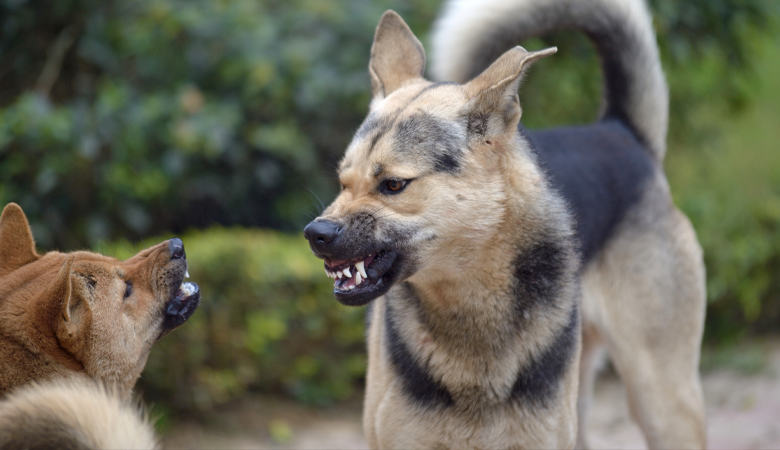
Situations in which dogs often growl
Growling often occurs in specific situations where a dog feels uncomfortable, threatened, or overstimulated. In addition to growling at other dogs on the street, there are also moments inside the home when dogs may growl.
For example:
- Growling around food or the food bowl: some dogs growl when someone approaches while they are eating. This behavior is also known as “resource guarding.” The dog is trying to protect its food or valuable possessions. This can also occur with bones, toys, or a favorite resting spot. You can read more about this in our blog: Food guarding in dogs.
- Growling when being touched: a dog may also growl when it is touched. Sometimes this happens because the dog feels uncomfortable with the way it is approached. In other cases, pain may play a role. Dogs with physical complaints often react more sensitively to touch. If a dog suddenly starts growling when touched, it is therefore wise to have possible medical causes ruled out by a veterinarian.
- Growling at children: children often move quickly, make unexpected noises, and do not always understand dog body language well. For some dogs, this can be stressful. A dog may then growl to create distance when it feels overwhelmed. It is therefore important that contact between dogs and children always takes place calmly and under supervision, so that the dog’s signals are recognized in time.
- Growling or snapping at the owner during certain actions: some dogs may growl or even snap at their owner during certain actions, such as trimming nails, brushing, giving medication, or taking an object away. This behavior often occurs because the dog experiences the situation as stressful or unpleasant. In many cases, a dog has previously had a negative experience with the action, or it feels insecure when someone comes close to sensitive body parts. Pain may also play a role. When a dog learns that growling causes the situation to stop, the behavior may develop further. It is therefore important to take such signals seriously and not force the situation. A veterinarian can help rule out pain, and a canine behaviorist can assist with calmly and safely retraining these types of actions.
What is aggression in dogs?
Aggression in dogs is behavior in which a dog threatens or attempts to bite. This may be expressed through various signals such as growling, showing teeth, snapping, or actually biting. Aggressive behavior usually does not occur without reason. It is often a response to stress, fear, frustration, or pain. Dogs typically resort to aggression only when earlier signals have not been recognized or respected.
Before a dog growls or lunges, it often shows more subtle signs of tension, such as:
- looking away
- licking its lips
- freezing
- turning its body away
- holding the tail low
When these signals are not noticed, a dog may feel increasingly pressured.
Aggression or insecurity: what is the difference?
Behavior that appears aggressive often actually stems from insecurity or fear. A dog that feels unsafe usually tries to keep a stressful situation at a distance. Growling or lunging may then be a way to create space.
- In an insecure dog, you will often see that the body is held lower and that the dog tries to avoid tension. It may look away, turn its body aside, or slowly move backwards.
- With true aggression, the behavior is often more forward-directed. The dog may freeze, stare intensely, or move purposefully toward a person or animal. However, the difference is not always easy to recognize, because fear and aggression can sometimes appear very similar in behavior.
How can you recognize aggressive behavior in a dog?
When a dog shows aggressive behavior, the signals are often clearly visible. The body may stiffen and the dog may stare intensely at a person or animal.
The following signals may also occur:
- growling
- showing teeth
- fixating or staring
- lunging
- snapping or biting
It is important to take these signals seriously. In most cases, aggressive behavior does not appear suddenly but develops gradually.
What can you do if your dog growls or shows aggressive behavior?
If a dog regularly growls or shows aggressive behavior, it is important not to ignore it. Also avoid trying to solve the behavior yourself by correcting the dog or experimenting with different training methods. Incorrect intervention can actually worsen the problem.
Does a dog suddenly react differently or seem more easily irritated? Then it is always advisable to first have a veterinarian check whether pain or physical discomfort may be present. Medical problems can make a dog more sensitive to touch or cause it to show defensive behavior more quickly.
If medical causes have been ruled out, it is wise to seek help from a certified canine behaviorist. They can help determine the cause of the behavior, carefully analyze the behavior, and develop an appropriate training plan. The sooner professional help is sought, the greater the chance that the behavior can improve. If problem behavior persists for a long time, it may escalate further.
Therefore, do not wait too long to seek help, even if a dog growls or snaps during actions such as nail trimming or being touched. By intervening in time, you help make the situation safer and allow your dog to feel more relaxed again.