How big should a litter box be?
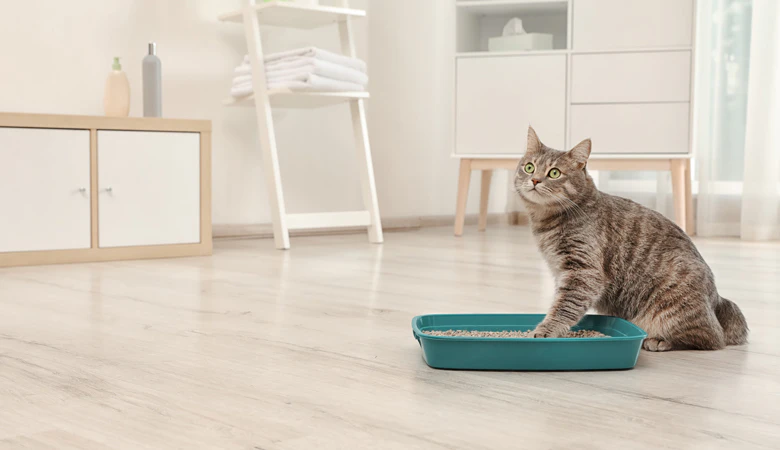
A litter box should be large enough for your cat to turn around comfortably and adopt a natural toileting position. A commonly used guideline is that the litter box should be around 1.5 times the length of your cat’s body (excluding the tail).
For larger cat breeds, such as the Maine Coon or the Norwegian Forest Cat, an extra-large litter box is often the better choice.
Open or covered litter box?
Many cat owners choose a covered litter box because it helps contain odours and is less noticeable in the home. However, many cats actually prefer an open litter box.
Open litter box
An open litter box gives your cat a better view of its surroundings. Cats can more easily see what is happening around them, which often helps them feel safer. They can also leave the litter box from multiple sides, which is particularly important in households with more than one cat.
In multi-cat households where there is tension between cats, an open litter box can help create a calmer environment. A model such as the D&D Dean Open Litter Box is a good choice, as it prevents one cat from cornering another while using the litter box.
Covered litter box
A covered litter box contains odours more effectively and helps prevent litter from being scattered around the house. However, covered litter boxes also have some disadvantages. The hood traps odours, moisture and ammonia inside the box for longer. For a cat’s sensitive sense of smell, this can be unpleasant. In addition, a covered litter box limits your cat’s view of its surroundings, which may make some cats feel less secure while using it.
If your cat prefers a covered litter box, there is of course nothing wrong with that. The most important thing is to observe your own cat’s behaviour and preferences.
Self-cleaning litter boxes
A self-cleaning litter box can offer great convenience, especially if you have more than one cat. Waste is removed automatically, helping to keep the litter box cleaner and reducing unpleasant odours.
Your cat may need some time to get used to the sounds or movements of a self-cleaning litter box. Introduce the new system gradually and don’t remove the old litter box straight away.
Which cat litter should you choose?
Besides choosing the right litter box, selecting the right cat litter is equally important. Most cats prefer a fine-grained, clumping and unscented cat litter. Strongly scented litter may smell pleasant to people, but it can be overwhelming for cats.
A neutral cat litter, such as Gritty Clumping Cat Litter, therefore matches the preferences of many cats.
Don’t change cat litter without thinking it through. Cats often need time to adjust to a different type of litter. It can therefore be helpful to place two litter boxes side by side temporarily, allowing your cat to choose.
How many litter boxes do you need?
A good general guideline is: number of cats + 1 litter box.
For example, if you have two cats, it’s recommended to provide three litter boxes in different locations around the house. This helps prevent cats from blocking each other or having to share a litter box when they don’t want to. Make sure the litter box is not placed close to food or water bowls. Cats are naturally clean animals and generally prefer not to toilet where they eat.
Keep the litter box clean
Even the best litter box won’t work well if it isn’t kept clean. Remove faeces and urine clumps every day and replace all of the cat litter regularly. Clean the litter box once a week using warm water and a mild, unscented cleaning product.
Read more tips in our blogs:
How do I get my cat to use the litter box? 5 tips
Cleaning the litter tray
Which litter box is best for your cat?
There isn’t a single litter box that’s perfect for every cat. Most cats are happiest with a spacious, open litter box filled with fine-grained, unscented cat litter. However, some cats prefer a covered model or a self-cleaning litter box. The most important thing is to observe your cat’s behaviour. If your cat uses the litter box willingly and without any problems, you’ve probably made the right choice.
Browse our complete range of litter boxes, self-cleaning litter boxes and cat litter to find the option that best suits your cat.
Do you have any questions about litter boxes? Please feel free to contact us at vet@vetsend.co.uk.