2. Gobbling and the satiety centre
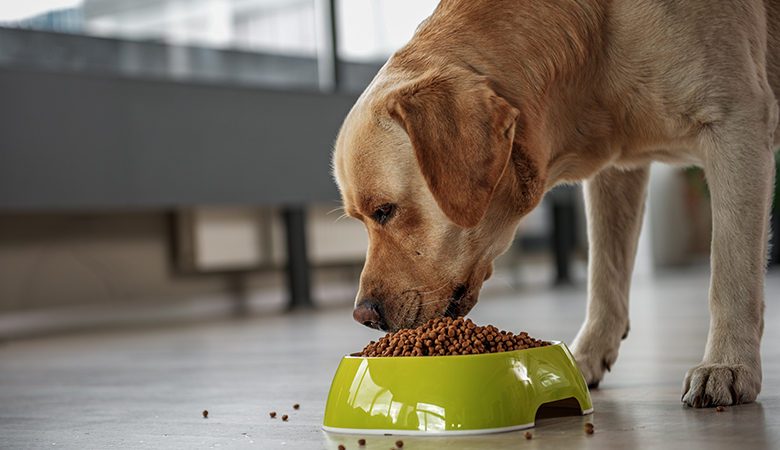
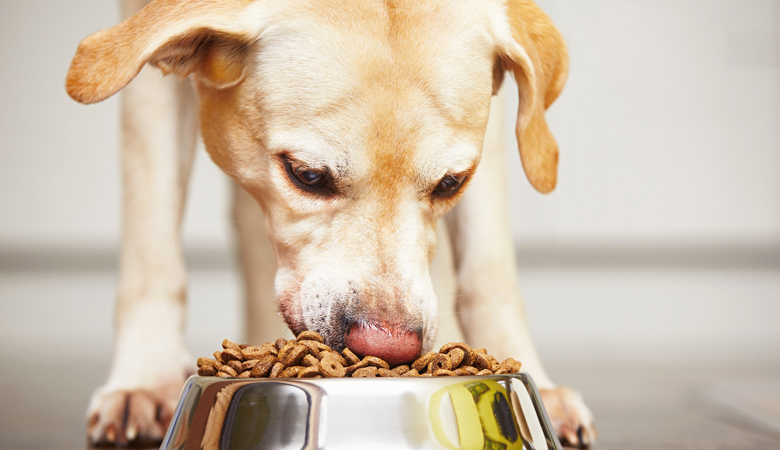
Some dogs eat so quickly that the satiety signal in the brain has not yet “arrived” before the bowl is already empty.
The satiety centre in the brain needs time to register that the stomach is full. When a dog gobbles its food, it may continue looking for more food even though physiologically it has already had enough.
Possible solutions include:
Slower eating gives the body more time to develop a feeling of fullness. Read more in our blog Help, my dog gobbles his food!
3. Genetic predisposition
In some breeds, genetics play a role. In particular, a mutation in the so-called POMC gene is known in Labrador Retrievers.
This gene is involved in:
- satiety
- appetite regulation
Dogs with this mutation feel full less quickly and are therefore more prone to constantly appearing hungry and developing obesity. This does not mean that every Labrador “is always hungry”, but it does explain why this breed may be more sensitive to it.
4. Overweight as a puppy
Research shows that puppies that are overweight:
- develop more fat cells
- may have a permanently increased appetite
A puppy that has been overweight may struggle to regulate its appetite as an adult dog. Preventing overweight at a young age is therefore important.
5. Active dogs need more energy
Not every dog with a big appetite has a problem. Highly active dogs simply have a higher energy requirement.
Think of:
- working dogs
- hunting dogs
- sporting dogs
- young, energetic dogs
If energy intake does not match energy expenditure, a dog may constantly feel hungry. In that case, a more energy-dense food or an adjusted portion may be needed.
Medical causes of constant hunger
Sometimes a persistent feeling of hunger is a sign of an underlying condition. Contact your vet if you notice other symptoms in addition to increased appetite. Conditions that can lead to increased appetite include:
1. Diabetes mellitus
With diabetes, a dog may:
- eat a lot
- still lose weight
- drink a lot
- urinate a lot
Because glucose is not properly absorbed into the cells, the body experiences an energy shortage despite sufficient food intake.
2. Cushing’s disease
Cushing’s is caused by an excess of cortisol. Typical symptoms include:
- eating a lot
- drinking a lot
- urinating a lot
- thin skin
- a pot-bellied appearance
An increased appetite (polyphagia) is a common symptom.
3. Intestinal parasites (worms)
Worm infections can cause nutrients to be absorbed less efficiently. This can lead to:
- increased appetite
- weight loss
- a dull coat
- diarrhoea
Regular deworming or faecal testing is important to treat worm infections, especially in young dogs.
Also view our range of dog deworming treatments and worm tests.
When should you be concerned?
A dog that is always enthusiastic about food is not unusual in itself. Appetite is a strong motivator for many dogs.
Make an appointment with your vet if your dog:
- loses weight despite eating a lot
- drinks excessively (more than 100 ml/kg per 24 hours)
- becomes lethargic
- has diarrhoea or other complaints
- suddenly has much more appetite than normal
What can you do yourself?
You can take several steps if your dog always seems hungry:
- Check whether the portion size matches your dog’s age, weight and activity level.
- Weigh the food accurately.
- Choose a high-quality dog food.
- Divide meals into several feeding times per day, preferably 2 or 3.
- Encourage slower eating. Use a slow feeder bowl or a snuffle mat if needed.
- If in doubt, have your dog checked by your vet.
A dog that always seems hungry can have various causes. Sometimes it is related to food or eating habits, sometimes to genetic predisposition (as in Labradors), and sometimes there is a medical cause such as diabetes, Cushing’s disease or worms.
In doubt? Always have your dog examined. A healthy appetite is normal, but an insatiable hunger deserves attention.
Do you have any questions about this topic? Please contact us via veterinarian@vetsend.co.uk.