What happens during puberty?
During puberty, the production of sex hormones increases. These hormones not only cause physical changes, but also influence behaviour.
A young dog’s brain is still developing rapidly. As a result, dogs may temporarily respond less well to commands they previously knew perfectly well. Many dogs also become more independent and more curious about their surroundings. It is therefore completely normal for a dog to test boundaries during this period and sometimes listen less well.
Symptoms of puberty in dogs
Every dog experiences puberty in their own way, but many owners recognise a number of typical changes.
A pubescent dog may:
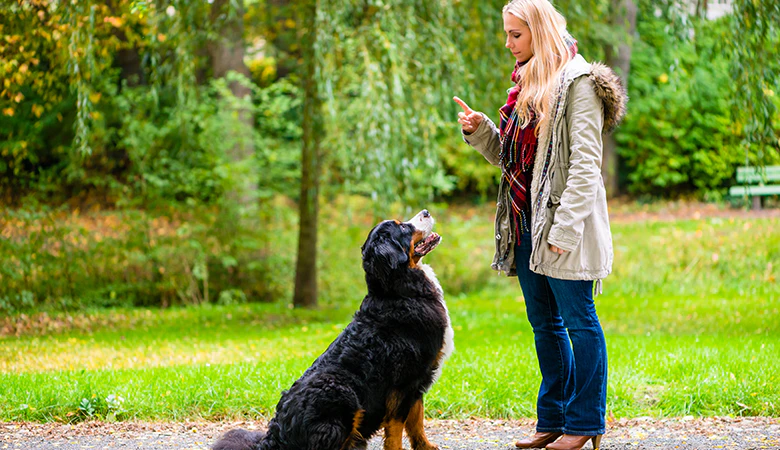
- listen less well
- be distracted more quickly
- become more interested in smells and other dogs
- show more independent behaviour
- have more energy
- react in an insecure or overly confident way
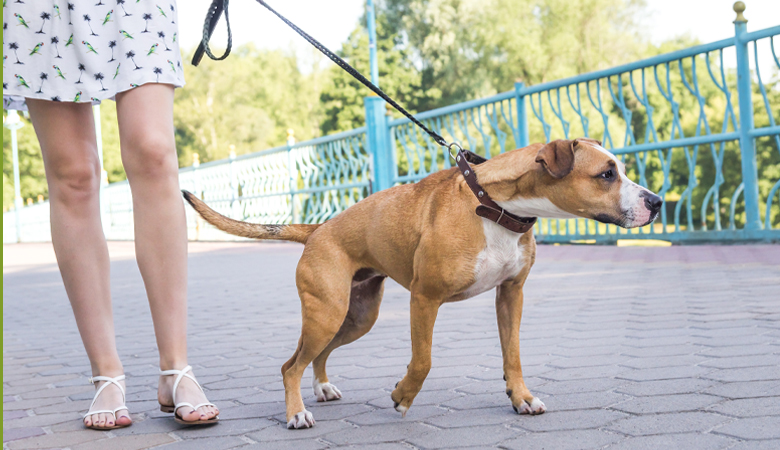
- temporarily become afraid of situations that were not a problem before
Some dogs suddenly seem to have forgotten commands during this period. Usually this is not the case, but they choose to find something else more interesting first.
Differences between male and female dogs
Although both male and female dogs go through puberty, the changes can show themselves slightly differently.
Puberty in male dogs
In male dogs, testosterone and sexual development play an important role. Many male dogs become more interested in the smells of other dogs and may start marking more often during walks.
Owners may also notice:
- more interest in female dogs in season
- bolder or more challenging behaviour
- more distraction during training
- increasing independence
Not every male dog shows these changes to the same extent. Character and upbringing also play an important role here.
Symptoms of puberty in female dogs
In female dogs, puberty often coincides with the first season. Depending on the breed, this usually happens between 6 and 15 months of age.
In addition to physical changes, female dogs may:
- become more sensitive or affectionate
- react more irritably
- temporarily listen less well
- show more interest in male dogs
Some female dogs seem calmer during their season, while other dogs become busier or more emotional.
How long does puberty last in dogs?
How long puberty lasts differs from dog to dog. On average, puberty lasts from several months to over a year. Small dogs are often mature earlier, while large and giant breeds may not be fully grown and mentally mature until around two to three years of age.
The most challenging part of puberty is usually between 6 and 18 months of age.
How do you deal with a pubescent dog?
Puberty often requires a little extra patience from the owner. Punishment usually has the opposite effect. A dog does not consciously choose to be difficult. They are still developing.
So continue to:
- be consistent with the rules
- train regularly
- reward desired behaviour
- provide enough mental stimulation
- ensure enough exercise
Short, positive training moments often work better than long sessions.
When should you be concerned?
Pubertal behaviour is normal, but sudden behavioural changes can sometimes also have a medical cause.
Contact your vet if your dog:
- suddenly becomes aggressive
- reacts extremely fearfully
- seems to be in pain
- becomes noticeably lethargic
- shows other unusual behaviour
Although puberty can sometimes be challenging, this phase will eventually pass. With patience, clear rules and positive training, you help your dog grow into a stable adult dog.
Do you have any questions about puberty in dogs? Please contact us via veterinarian@vetsend.co.uk.