Causes of eye infections in cats
Eye infections in cats can therefore have various causes. Below, we discuss the most common ones.
1. Eye irritation
Many eye infections develop due to mild irritation, for example from:
- dust
- sand
- hairs
- draughts
- smoke or sprays
This often causes mild symptoms that sometimes improve on their own, but they may also worsen if the irritation persists.
Also read our blog: A cat with hay fever – is that possible?
2. Cat flu
Eye infection is a common symptom of cat flu. The herpesvirus (FHV-1) and calicivirus play a major role. Secondary bacterial infections may also occur, such as Bordetella bronchiseptica, Chlamydia felis and Mycoplasma.
Characteristics of cat flu include:
- often both eyes are inflamed
- redness, swelling and discharge
- often combined with sneezing, nasal discharge and general illness
Read more about this condition in our blog Cat flu.
3. Entropion (inward-rolling eyelid)
With entropion, the eyelid rolls inward, causing:
- eyelashes and hairs to continuously rub against the cornea
- chronic irritation and inflammation
This occurs more often in certain cat breeds, such as the Persian and the Exotic Shorthair, and may affect one or both eyes.
4. Foreign objects in the eye
Sand, dust particles or small splinters can get lodged under the eyelid and cause symptoms such as:
- acute pain
- squinting
- sudden redness
Sometimes the foreign object is not immediately visible.
5. Corneal damage
Scratches, fights or a hard impact can lead to corneal damage. This is often very painful. In most cases, your cat will tightly shut the affected eye. It is important to visit your veterinarian quickly for treatment. A deep injury can even lead to rupture of the eye, which must be prevented at all times.
6. Corneal sequestrum (sequester eye)
A corneal sequestrum is a typical condition in cats, especially in breeds with protruding eyes such as Persians.
What is it?
A sequestrum is a dark brown to black, “mummified” area on the cornea, usually centrally located, and may resemble a splinter in the eye. It is often very painful for the cat.
How does it develop?
The exact cause is not fully known, but possible factors include:
- chronic irritation (for example due to entropion or hairs)
- dry eyes
- reduced blinking (with protruding eyes)
- previous infections (such as herpesvirus)
- reduced corneal quality
- previous surgery on the third eyelid
Treatment ranges from intensive eye medication to surgical removal of the sequestrum by a veterinarian.
7. KCS (Keratoconjunctivitis Sicca or dry eye)
In KCS, the eye produces insufficient tear fluid, which leads to:
- chronic irritation
- inflammation
- increased risk of corneal damage and sequestrum formation
With special medication (eye ointment containing ciclosporin, such as Optimmune Canis), it may be possible to stimulate tear production again. Early diagnosis is very important. In addition, supportive treatment with antibiotic ointment and artificial tears or other lubricating drops is often required.
Symptoms of an eye infection in cats
You can recognise an eye infection in your cat by the following symptoms:
- redness of the white of the eye
- squinting or keeping the eye closed
- discharge (clear, mucous or pus-like)
- swelling of the eyelid
- frequent blinking
- rubbing the eyes with the paw
- sensitivity to light
The symptoms may affect one eye or both eyes at the same time.
How does the veterinarian examine an eye infection?
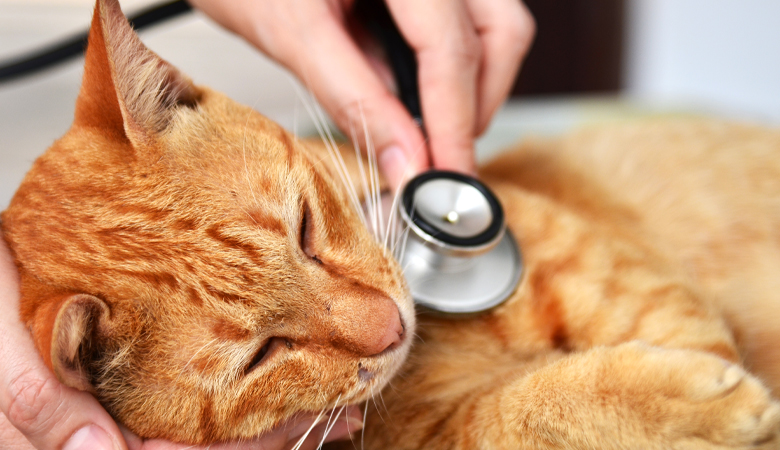
The veterinarian does not only examine the eye itself, but also your cat’s general health, for example:
- fever
- nasal discharge
- difficulty breathing
- reduced appetite
In addition, the following eye examinations may be performed:
- Checking the position of the eyes and the size of the pupils. The pressure in the eyeball may also be roughly assessed manually.
- Staining the eye (fluorescein test) to detect corneal damage or ulcers.
- Schirmer Tear Test to measure tear production. This helps diagnose dry eye (KCS).
- Inspection under the eyelids: after local anaesthesia, the eyelids are gently turned outward to check for a foreign object, which can be removed immediately if possible.
- Examination of the eyelid margins with a special lamp to see whether hairs are growing where they should not.
Depending on the findings, an appropriate treatment plan will be started.
Treatment of eye infections in cats
Treatment depends on the underlying cause and often consists of eye drops or eye ointment. In case of infection, an antibiotic eye ointment prescribed by the veterinarian is required. Many eye problems can also be supported with additional eye drops or ointments.
For example:
- Eye drops or ointments with vitamin A have a caring effect on the eyes, such as Ophtosan.
- TVM Ophtaprime is an eye ointment that prepares the eye for further treatment. It cleans the eye and helps antibiotics work more effectively.
- For dry eyes (KCS), in addition to prescription treatment, a hydrating gel or drops are needed, such as Optixcare Eye Lube and TVM Remend 0.4.
- For corneal damage or sequestrum, eye drops may also be used to promote healing and hydration, such as TVM Remend 0.75 and TVM Clerapliq eye drops. Remend 0.75 is particularly suitable for severe dry eye with corneal damage, such as injuries associated with KCS.
Tear stains in cats
Do you see dark tear stains under the eyes? Possible causes include:
- narrowed or blocked tear ducts
- small or absent tear duct openings
- anatomy (bulging eyes, short nose)
- reduced tear drainage
You can clean these tear stains, for example with TVM Ocryl.
When should you visit the veterinarian?
Eye problems can worsen quickly. Always contact your veterinarian if:
- your cat appears to be in pain
- the eye remains closed
- the eye is red or swollen
- yellow or green pus comes from the eye
- the eye appears cloudy or bluish
- your cat rubs its head with its paw
- the symptoms worsen or do not improve
Do you have questions about eye problems or products? Please contact us at vet@vetsend.co.uk.