Which factors may play a role in feline acne?
Although the exact cause is unknown, several factors seem to contribute to the development of feline acne:
- Abnormalities in hair growth
- Disturbed sebum production
- Allergies
- Stress
- Reduced immunity
- Insufficient grooming of the chin
- Viral infections (such as calicivirus)
It is likely that feline acne develops due to a combination of factors.
What do you see with feline acne?
Feline acne can occur in different stages, ranging from uncomplicated acne to a complicated form with skin infection and inflammation.
Uncomplicated feline acne
In most cats you will only see small black grains on the chin (blackheads). There is no redness, swelling or pain. This is called uncomplicated feline acne. The cat usually does not experience any discomfort.
At this stage, the advice is: leave it alone. Cleaning or treating the area too frequently can actually disturb the sebum production even further.
Complicated feline acne (inflamed acne)
If the cat starts rubbing, scratching or excessively grooming, the skin may become damaged. Bacteria or yeasts can then cause a secondary infection. The appearance of the acne may then change and include:
- Redness
- Swelling
- Pimples
- Scabs
- Discolouration of the fur
- Bald patches
- Pain
In severe cases, the chin may become clearly swollen and sensitive.
How is feline acne treated?
As mentioned earlier, the advice for uncomplicated acne is to do nothing. You may gently clean the skin if needed, but avoid scrubbing or squeezing the blackheads. This can actually cause an infection. Daily cleaning is also not necessary.
If you would like to clean the area carefully, use mild wipes such as Maxani Regular Wipes and clean the skin no more than 2–3 times per week. Always wipe in the direction of the fur and do not scrub.
If the skin becomes inflamed, always visit your veterinarian. The vet can perform a cytological examination to check for bacteria, yeasts and inflammatory cells. Depending on the findings, treatment for mild inflammation may consist of cleaning and disinfecting the skin, for example with Dermoscent PYOclean Mousse or CLX Wipes.
In the case of active infections, additional treatment is often required, such as antibiotic ointments and/or corticosteroids.
How can you help prevent feline acne?
Is your cat prone to inflamed acne? Then there are a few steps you can take to try to prevent it.
- Gentle cleaning: You can gently clean the skin 2–3 times per week using mild wipes such as Maxani Regular Wipes.
- Supporting the skin barrier: You can help restore and maintain your cat’s skin barrier with special pipettes, such as Virbac Allerderm Spot-On or Dermoscent Essential 6 (blue variant).
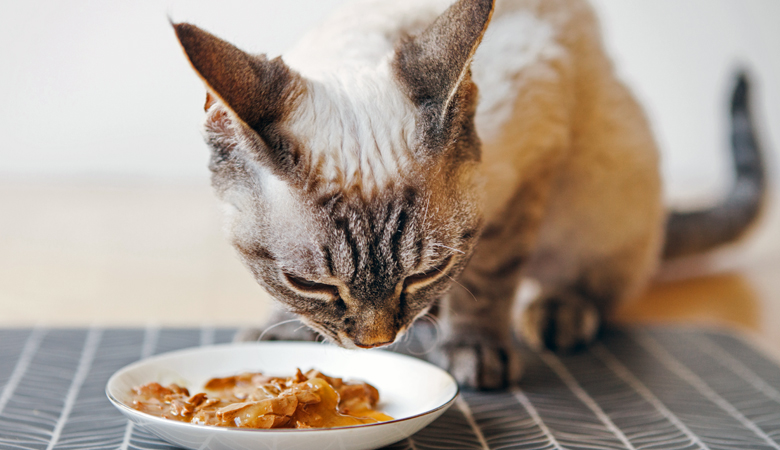
- Pay attention to food and water bowls: Sometimes feline acne is thought to be caused by a contact allergy to food or water bowls. This has not been scientifically proven, but varying the material can still be helpful.
Food bowls are available in different materials such as ceramic, plastic, stainless steel, bamboo and other materials. Preferably choose a bowl with low edges and a wide surface (this helps prevent whisker fatigue). Place water in a different location than the food.
Good options include the District 70 Bamboo Cat Food Bowl or the Nobby Oval Ceramic Bowl.
Feline acne is common and usually harmless. Black grains on the chin without inflammation are not a reason to panic and certainly not a reason to clean intensively. Only when the skin becomes red, painful or inflamed is treatment necessary. If you are unsure, have your cat examined by your veterinarian.
Do you still have questions about feline acne? Please contact us via veterinarian@vetsend.co.uk
.