Service
Basket
Menu
5% off snacks with code SNACKS5 Read more

Butterfly

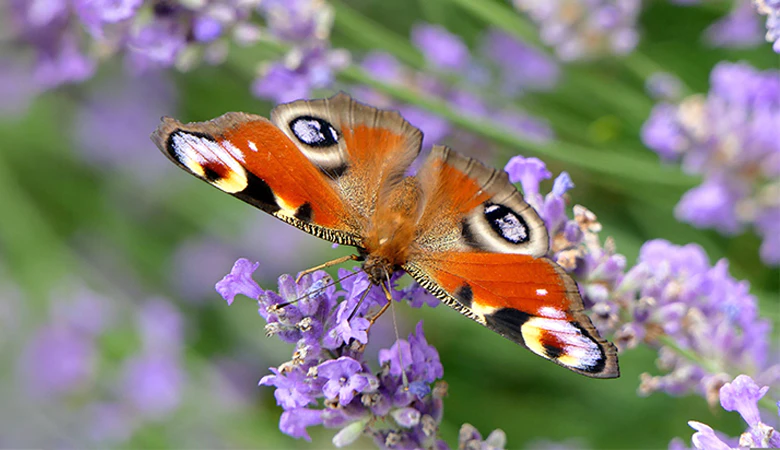
Butterflies are colorful insects belonging to the order Lepidoptera, with more than 160,000 species worldwide. They range from inconspicuous moths to well-known garden butterflies, some of which are under pressure in Europe. They go through four life stages: from egg, to caterpillar, to chrysalis, and finally butterfly. Caterpillars feed on specific plants, while butterflies drink nectar and contribute to the pollination of plants. Adult butterflies often live only a short time and are highly dependent on a flower-rich, sheltered, and pesticide-free environment. Due to their sensitivity to environmental changes, butterflies are often seen as indicators of the health of nature.

Butterfly

Characteristics

Body build: Slim body with six legs and two pairs of wings covered with a fine, delicate layer that is easily damaged.
Colours and coat types: Highly variable; from brightly colored (yellow, orange, blue) to brown or gray. Wing patterns differ by species.
Weight: A few milligrams
Life Expectancy: A few weeks - months
Health risks: Loss of habitat, pesticides, climate change, and lack of food plants.

Behavior Profile

Activity (daytime)
Visibility in the garden
Useful for the garden
Sensitivity to disturbance
Human orientation

Popular products for your garden

Habitat

Butterflies live in flower-rich, peaceful environments with sufficient food and shelter, such as gardens, meadows, and forests. They need nectar plants for food and host plants (such as nettles and cabbage varieties) for their caterpillars. Sunlight plays an important role, as butterflies need warmth to become active. Sheltered places, such as shrubs or hedges, also help protect them from wind and rain.

Would you like to attract butterflies to your garden? Then choose a natural, pesticide-free design with flowering plants from early spring until autumn, such as lavender, butterfly bushes, and wildflowers. Also consider leaving part of the garden slightly wilder so caterpillars can develop properly and butterflies have enough places to shelter.

Diet

Butterflies mainly feed on nectar from flowers. With their long proboscis, they suck up sugar-rich nectar, which gives them energy to fly and reproduce. Some species also obtain nutrients from ripe fruit, tree sap, or damp mineral-rich areas. You can help butterflies by creating a garden with plenty of nectar-rich flowers that bloom throughout the season, such as lavender, butterfly bushes, and wildflowers. Avoid using pesticides and consider leaving out some overripe fruit as an additional food source. This is a simple way to support butterflies.

Role in the garden

Butterflies play an important role in the garden as pollinators. While drinking nectar, they carry pollen from flower to flower, helping plants reproduce. In addition, they are an important part of the food chain: caterpillars and butterflies serve as food for birds and other animals. Butterflies are also a good indicator of a healthy garden. If you see many butterflies, it is often a sign that there is sufficient biodiversity, food, and a pesticide-free environment. Of course, butterflies also bring extra color and life to the garden.

Protection and points of attention

Butterflies are delicate animals that are highly dependent on their environment. Due to the loss of natural habitats, the use of pesticides, and a lack of flowers and host plants, many species are declining in number. Neatly maintained gardens often provide too little food and shelter as well. You can help butterflies by choosing a natural, varied, and pesticide-free garden. Provide flowering plants from early spring until autumn and also plant host plants for caterpillars. In addition, leave part of the garden a little wilder, with leaves or branches for example, so butterflies can shelter and reproduce. Small changes can already make a big difference for these important and beautiful insects.

Everything about the butterfly

How long does a butterfly live?

The lifespan of a butterfly varies greatly by species. Most butterflies live only a few weeks as an adult butterfly (imago), during which they reproduce. Some species live only a few days, while others, such as the brimstone butterfly, can live for several months and even hibernate. The full life cycle from egg, caterpillar, and chrysalis to butterfly usually takes several weeks to months.

What does a butterfly eat?

Butterflies mainly feed on nectar from flowers. With their long proboscis, they suck up sugar-rich liquids that provide them with energy to fly and reproduce. Some species also feed on rotting fruit or tree sap.

How does a caterpillar turn into a butterfly?

A caterpillar turns into a butterfly through a remarkable process called metamorphosis. After the caterpillar has eaten enough and grown sufficiently, it pupates. It forms a cocoon or chrysalis in which its body is almost completely rebuilt. During this phase, the caterpillar’s organs are broken down and reconstructed into those of a butterfly, including wings.

How long this process takes varies by species and depends on temperature and conditions. Usually, pupation takes several weeks, but in some species it can take longer, for example when they overwinter in the chrysalis stage. Once development is complete, the butterfly emerges from the chrysalis. At first, the wings are still soft and crumpled, but they are quickly inflated and hardened, after which the butterfly can fly away.

Which butterfly comes from a green caterpillar?

Many caterpillars are green in color because this helps them camouflage among leaves. Green caterpillars can, for example, develop into butterflies such as the cabbage white butterfly. The exact species is often difficult to determine without details about the pattern, size, and host plant.

Which caterpillar becomes which butterfly?

Every butterfly species starts as a specific caterpillar. For example, the caterpillar of the cabbage white butterfly eventually becomes a white butterfly, while a striking caterpillar with stripes or hairs may become a completely different species. The caterpillar species therefore fully determines which butterfly will emerge.

How can you attract butterflies to your garden?

You can attract butterflies by planting nectar-rich flowers such as butterfly bushes and lavender. It also helps to have a natural garden with enough shelter and host plants for caterpillars.

Also read our other blogs

More tips