Service
Basket
Menu
5% off all dog coats this week with code DOGCOAT5 Read more

Liver fluke in sheep: recognising, preventing and treating

Written by Mara |

Liver fluke, or Fasciola hepatica, is a parasite that mainly affects grazing animals such as sheep, goats and cattle. The infection damages the liver and bile ducts and can lead to serious health problems. Liver fluke occurs worldwide, including in the UK, especially on wet pastures or grazing land with large numbers of snails. In this blog, we explain what liver fluke is, how sheep become infected, what the symptoms are, and how you can recognise, prevent and treat liver fluke.
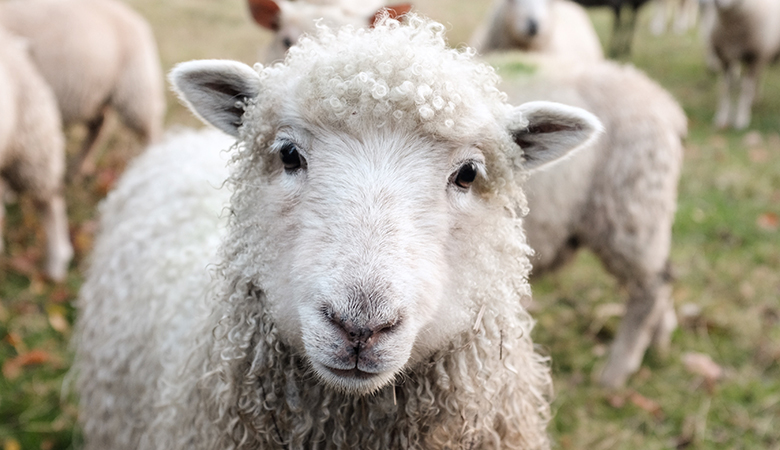
Sheep looking at the camera

What is liver fluke?

Liver fluke is a flatworm that lives in the bile ducts of a sheep’s liver. Its scientific name is Fasciola hepatica. The parasite has a complex life cycle that depends on an intermediate host: the mud snail (Galba truncatula).

An infection with liver fluke can cause severe damage to the liver and other organs. The severity of the symptoms depends on the number of flukes present and the duration of the infection.

Relevant products

How do sheep become infected with liver fluke?

Infection occurs in several stages:

  1. Liver fluke eggs are passed onto the pasture through the faeces of infected animals.
  2. The eggs develop in wet areas (such as ditch edges or marshy fields).
  3. Mud snails ingest the larvae, where they continue to develop.
  4. The larvae leave the snail and attach to grass as infectious cysts (metacercariae).
  5. Sheep become infected by eating grass containing these cysts.
  6. The larvae migrate to the liver, where they mature and the cycle begins again.

Please note: Sheep do not become infected through direct contact with other sheep, but through contaminated grass containing liver fluke cysts. Liver fluke is therefore not directly contagious between animals, but animals grazing on the same infected pasture can all become infected.

Symptoms of liver fluke in sheep

The symptoms depend on the stage of infection. We distinguish between acute and chronic liver fluke infection.

Acute liver fluke

Acute liver fluke occurs when sheep ingest a large number of cysts over a short period (especially in autumn). Symptoms may include:

  • Sudden death (especially in young sheep)
  • Lethargy
  • Anaemia (pale mucous membranes)
  • Abdominal pain
  • Breathing difficulties
  • Oedema (fluid accumulation, particularly under the jaw)

Acute liver fluke is serious and can quickly become fatal without treatment.

Chronic liver fluke

Chronic liver fluke develops due to prolonged, low-level infections and is more common in winter and spring. Symptoms may include:

  • Weight loss despite adequate feeding
  • Poor fleece condition
  • Reduced milk production
  • Anaemia
  • Weakness or delayed growth in lambs

Chronic liver fluke mainly affects productivity and the overall resistance of sheep.

How is liver fluke diagnosed?

Your vet can diagnose liver fluke in several ways:

  • Faecal examination (detecting eggs) – commonly used for chronic infections
  • Blood testing to assess liver values and antibodies
  • Post-mortem examination in deceased animals
  • Bulk milk monitoring (in dairy animals)

Your vet can help you choose the most appropriate testing method and interpret the results.

What can you do about liver fluke?

Treatment is possible, but prevention is just as important.

Treatment of liver fluke in sheep

Effective antiparasitic treatments (flukicides) are available, such as products containing triclabendazole. Always treat in consultation with your vet, as not every product is effective against all life stages of the parasite.

Prevention of liver fluke in sheep

You can help prevent liver fluke by taking the following measures:

  • Limit grazing on wet or snail-infested fields, especially in late summer and autumn.
  • Avoid overgrazing, as this increases ingestion of contaminated grass.
  • Move animals to dry fields or house them in time.
  • Improve drainage and pasture management to reduce snail populations.
  • Carry out regular faecal examinations to monitor infection pressure.

You can also support your sheep’s resistance, for example with Adrisin or Licosan Forte.

Do you have any questions about liver fluke in sheep? Please contact us at veterinarian@vetsend.co.uk.

Sign up for our newsletter

image (20)

About the author

Mara van Brussel-Broere, Veterinarian at Vetsend

Graduated as a companion animal veterinarian from Utrecht University, she uses her practical experience to advise customers and share knowledge at Vetsend. She finds it important to provide pet owners with clear information about health and wellbeing.

Read more about Mara