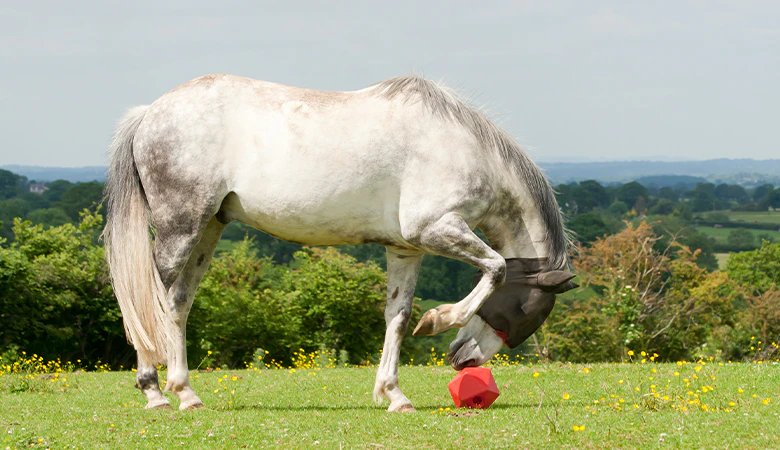
Examples of mental stimulation for horses
Mental challenges can be offered in many different ways. For example:
- a Jolly Ball
- a sturdy hopper ball
- feeding toys
- sniffing activities
- digging or searching games
- variation in feeding methods
- safe objects to play with or chew on
Not every horse enjoys the same things. That is why it is interesting to try different forms of enrichment, so you can discover together what your horse prefers. In addition, you can easily make horse toys yourself.
DIY: making your own horse toys
1. Chew wood or herb block: a simple piece of safe chew wood can already provide a lot of enrichment. For example, use willow, birch, or apple wood. You can optionally place safe herbs between the wood or create an herb block with pressed herbs and hay cobs. You can also coat the wood with a natural glue (for example based on linseed or oats mixed with water), and then sprinkle dried herbs over it. Be careful when using rope: always ensure your horse cannot become entangled in it.
2. DIY hay ball: make a simple hay ball yourself by filling a sturdy ball or plastic object with hay or dried herbs. By creating small openings, the horse has to work to get the hay out.
3. Create a feeding puzzle: use, for example, a sturdy bucket with holes, a rubber feeding ball, or a plastic container in which your horse has to search for pellets or herbs. This makes eating slower and more challenging.
4. Branch hanger: make a hanger from safe branches or bundles with leaves and hang it in the paddock or stable. Horses often enjoy pulling at it, sniffing it, and eating from it. Suitable branches include willow, birch, hazel, and apple tree branches.
5. A vegetable garland: thread pieces of safe vegetables or fruit onto a strong and safe rope, for example carrot, cucumber, pieces of apple, and celery. Hang the garland up so your horse has to make an effort to reach it.
6. DIY snuffle mat for horses: a snuffle mat is not only fun for dogs, horses can also enjoy a safe search mat. Use a large rubber stable mat, rubber tiles, or a wooden frame as a base. Then fill it with:
- safe branches or larger pieces of wood
- straw
- loose hay cobs (that may be fed dry)
- small pieces of vegetables or fruit
- safe flowers or herbs
This encourages the horse to search, smell, and explore. No time or desire to make a snuffle mat? There are also ready-made snuffle mats for horses.
Making horse treats
Making horse treats yourself is easier than you think and a fun way to create healthy snacks yourself. With simple ingredients such as soaked hay cobs, grated carrot, linseed, herbs, and a little banana or apple, you can quickly make tasty snacks for your horse. Mix the ingredients into a firm mixture, shape them into small biscuits or balls, and let them dry thoroughly before storing them.
Creative challenge: stepping objects and play items
Some horses also enjoy investigating objects or stepping onto things. A large car tyre filled with sand can, for example, serve as a stepping object, balance object, or training aid during groundwork. Always check carefully that materials are sturdy and safe.
Water fun: vegetables or fruit in a water container
Some horses really enjoy “fishing” for pieces of vegetables or fruit in a bucket, tub, or water container. This stimulates curiosity, play, and exploratory behaviour. Suitable options include pieces of carrot, apple, cucumber, celery, or seedless watermelon. For many horses, this is especially a fun and cooling activity on warm days.
Please note:
- only use safe vegetables and fruits
- feed fruit in moderation because of the sugars
- refresh the water regularly
- preferably offer this individually to horses with food aggression
Important considerations and safety
When making horse toys, safety should always come first.
Please pay attention to the following points:
- only use non-toxic materials
- avoid sharp edges
- use safe types of wood
- check toys regularly for wear and tear
- be careful with rope and loose parts
- only offer some toys under supervision
- take food aggression into account when horses are together; if in doubt, always remove your horse from the herd first
Not every horse plays in the same way. Therefore, always observe how your horse responds to new toys or enrichment.
Finally
Mental stimulation does not have to be complicated or expensive at all. With a little creativity and safe materials, you can provide your horse with much more challenge, variety, and enjoyment in daily life.
Whether you choose a simple vegetable garland, a snuffle mat, or homemade horse treats, it is often the little things that matter most. Try different forms of enrichment and discover what your horse enjoys the most. Every horse is different, and that is exactly what makes discovering together so much fun.