Service
Basket
Menu
Great savings in our Summer Deals! Read more

Mental stimulation for dogs

Written by Astrid |

A daily walk is important, but did you know that mental stimulation is just as valuable for your dog? By regularly encouraging your dog to think, search and explore, you help prevent boredom and stimulate natural behaviour. In this blog, you'll discover fun ways to mentally challenge your dog.
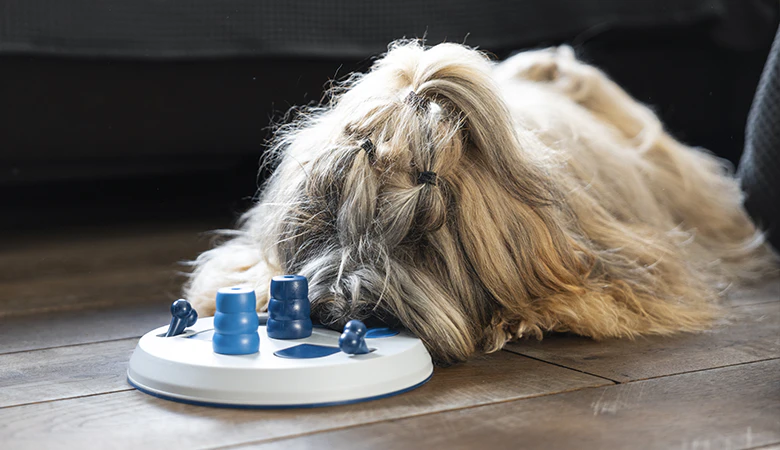
Tibetan Terrier with a puzzle toy

Why is mental stimulation so important?

Dogs naturally enjoy using their nose, brain and problem-solving skills to find food and explore their surroundings. At home, they often have to make very little effort to do this. By offering mental stimulation, you give your dog the opportunity to keep using these natural abilities.

Dog puzzles and brain games

How can you tell if your dog needs more mental stimulation?

A dog that is bored will often show it in different ways. For example:

  • constantly seeking attention
  • destructive behaviour or excessive chewing
  • restlessness around the house
  • excessive barking
  • constantly following you around
  • difficulty settling down

Of course, these signs can also have other causes. If your dog’s behaviour suddenly changes, always contact your veterinarian first to rule out any medical causes.

Ways to mentally stimulate your dog

There are many simple ways to give your dog extra mental stimulation every day. You certainly don’t need to spend hours doing it – just 10 to 15 minutes of brain work can already be a valuable addition for many dogs.

1. Brain games with dog puzzles

Dog puzzles encourage your dog to think. By sliding, turning or opening compartments, they gradually learn how to earn a reward. Start with an easy puzzle and slowly increase the level of difficulty.

2. Sniffing and searching

A dog’s nose is its most important sense. By hiding rewards or using a snuffle mat, you encourage your dog’s natural searching behaviour. In addition to toys designed for this purpose, you can also enjoy scent work together or take a nose work class to make even better use of your dog’s incredible sense of smell.

Fun ideas include:

  • hiding treats around the house or garden
  • using a snuffle mat
  • creating a search game with toys

3. Licking and chewing

Licking and chewing are also great ways to mentally stimulate your dog. A lick mat or a fillable toy, such as a Kong filled with wet food or another tasty treat, will keep your dog occupied for longer. For even more fun, you can freeze the Kong before giving it to your dog. A suitable chew treat also provides variety and enjoyable enrichment.

4. Learning new exercises

Your dog doesn’t always have to learn a new trick. Balance and coordination exercises, or practising familiar commands, also encourage your dog to use its brain and provide valuable mental stimulation.

Slow feeders and feeding toys

Food enrichment makes mealtimes more fun

Many dogs finish their meal within seconds. By offering food in a different way, you can turn mealtime into an enjoyable challenge.

For example:

  • a Pawzler dog puzzle
  • a slow feeder
  • a treat-dispensing ball
  • a snuffle mat
  • hiding food during a search game

This keeps your dog occupied for longer during mealtimes while also providing mental stimulation.

Mental stimulation for every age

Brain games aren’t just beneficial for young dogs. Mental stimulation is important for dogs of all ages, although the type of activity should match their stage of life. Puppies benefit from short, simple games that support their development and introduce them to new challenges in a playful way. Adult dogs benefit from plenty of variety, which provides mental stimulation and can help prevent boredom and unwanted behaviour. Senior dogs also benefit from brain games. Gentle thinking games keep the brain active without placing too much strain on the body, making them a valuable addition to their daily routine.

Tips for getting started

When introducing brain games, keep these simple tips in mind:

  • start with an easy challenge
  • allow your dog to experience success
  • use an appealing reward
  • keep sessions short
  • increase the difficulty gradually
  • put puzzles away after use

Mental stimulation is a valuable addition to your dog’s daily care routine. With simple search games, food enrichment or a dog puzzle, you give your dog the opportunity to express its natural behaviour. This helps keep your dog active not only physically, but mentally as well.

Frequently asked questions

Is brain work tiring for a dog?

Yes. Brain work requires a lot of concentration and can be mentally tiring for a dog. For many dogs, a session of just 10 to 15 minutes is enough before they are ready to relax or take a nap. Increase the difficulty gradually and finish the session while your dog is still motivated.

Is a dog puzzle suitable for every dog?

Yes, almost every dog can enjoy using a dog puzzle. Just make sure you choose one that matches your dog’s age, experience and ability. Start with an easy puzzle and only increase the difficulty once your dog has mastered it. This helps prevent frustration and keeps brain work enjoyable.

How often can I mentally stimulate my dog?

Ideally every day. It doesn’t have to take long – 10 to 15 minutes of brain work is already a valuable addition to the daily walk for many dogs. Vary the activities, such as using a dog puzzle, a search game or a lick mat, to keep things fun and challenging.

Which is better: walking or brain work?

Both are important and complement each other perfectly. Walking provides physical exercise, opportunities to sniff and social stimulation, while brain work mentally challenges your dog and encourages its natural problem-solving abilities. A combination of sufficient exercise and mental stimulation is therefore the ideal approach for your dog.

Sign up for our newsletter

Read our other blogs

More tips
Astrid-Klein

About the author

Astrid, veterinary nurse at Vetsend

Astrid is a veterinary nurse and works at Medpets as a content specialist, where she uses her many years of hands-on experience to provide pet owners with clear and reliable information. She specializes in rabbit behaviour and enjoys contributing ideas for innovative products and blog posts that meet the needs of both pets and their owners.

Read more about Astrid