Service
Basket
Menu
World Animal Day weekend deal: 5% off the entire range, exclusively in the app! Read more

Pancreatic problems in dogs

Written by Meanne |

The pancreas is a fairly flat and elongated organ located next to the back wall of the stomach and the duodenum. The pancreas is connected to the duodenum by a duct. The pancreas has two functions, with two distinct production processes: internal and external secretion.
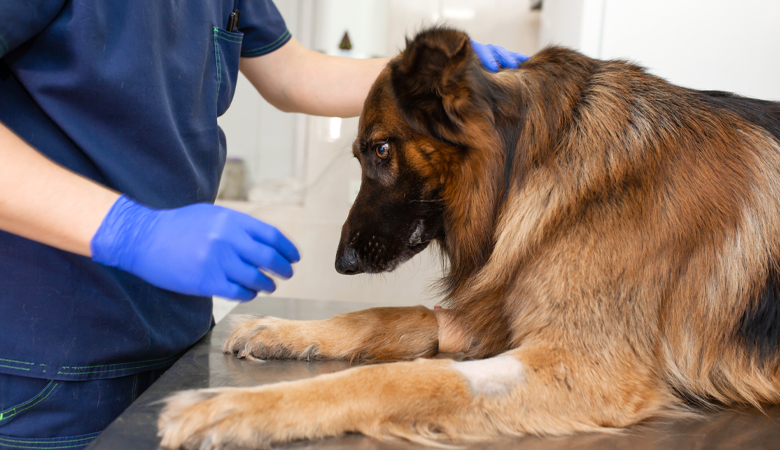
Pancreatic problems in dogs

The exocrine part or external secretion

This part of the gland is essential for proper digestion. Digestive juices containing several enzymes are produced here and pass through the duct into the duodenum. These juices ensure that proteins, fats and sugars can be digested properly.

EPI, exocrine pancreatic insufficiency

With this condition, there is no external secretion or not enough of it, which severely compromises digestion. EPI is particularly common in German Shepherds and causes the following symptoms: weight loss despite a good appetite, excessive drinking and urination, chronically abnormal stools (often looser than normal and sometimes greyish in colour) and a dull coat. The diagnosis can be made using faecal and blood tests. Treatment includes injections of vitamin B12. In addition, the dog must be fed an easily digestible, low-fat diet for life, such as Royal Canin Gastro Intestinal Low Fat, Hill’s Canine i/d Low Fat or Vetality Gastrointestinal Low Fat. Finally, pancreatic enzymes must also be added to the food for life to compensate for the function of the pancreas. This can be done, for example, with Zymoral.


Relevant products

The endocrine part or internal secretion

The endocrine part is essential for proper glucose metabolism. It consists of the islets of Langerhans, where the hormones insulin and glucagon are mainly produced. These hormones are released into the blood alternately, depending on the blood sugar level. When the blood sugar level is low, glucagon is released to stimulate the liver to release glucose. When the blood sugar level is high (just after a meal), insulin is released to ensure that glucose is stored.

Diabetes or diabetes mellitus

Diabetes develops when the pancreas does not produce enough insulin. Without insulin, the blood sugar level remains high and glucose is excreted in the urine. Diabetes is more common in unspayed female dogs. You will mainly notice that the dog loses weight despite having a good appetite and drinks and urinates excessively. The dog is also more susceptible to urinary tract infections. The diagnosis can be made using urine and blood tests. Treatment is started with insulin, and an appropriate low-calorie diet is prescribed, such as Hill’s Canine r/d or Hill’s Canine w/d. It is often necessary to spay intact female dogs to keep diabetes under control.

Inflammation of the pancreas or pancreatitis

This inflammation can be acute or chronic. The acute form is most common in dogs. It is usually unclear why the pancreas becomes inflamed. However, links have been found with factors including unusual or high-fat food, abdominal surgery that damages the pancreas, a tumour and the use of certain medications.

Symptoms

Dogs with acute pancreatitis often have very severe symptoms: they have no appetite and suffer from vomiting or nausea, severe abdominal pain, weakness and abnormal stools. The symptoms of chronic pancreatic problems are less pronounced. These dogs have a reduced appetite, occasional abdominal pain and abnormal stools, and they are lethargic.

Diagnosis

The diagnosis can usually be made based on the clinical signs, supplemented by blood tests and an ultrasound examination (or X-ray).

Treatment

Treatment depends on the severity of the symptoms and therefore on whether the pancreatitis is acute or chronic. Particularly in acute cases, intensive intravenous fluid therapy is essential, combined with pain relief, medication for vomiting and nausea, and sometimes antibiotics. An appropriate low-fat diet of the same type as for EPI is also often prescribed. It is recommended that dogs remain on this diet for life. Pancreatic enzymes are also added to the food for life to support the pancreas (see EPI). This also applies to chronic pancreatitis. Permanent damage to the pancreas can cause complications, and dogs may develop EPI and/or diabetes.

Do you have any questions about pancreatic problems in dogs? Please contact our veterinarian at veterinarian@vetsend.co.uk.