Service
Basket
Menu
Enjoy 10% off Acana now! Read more

Ball Python

The Ball Python (Python regius) is a snake that naturally occurs in parts of West and Central Africa, where it lives in savannahs, grasslands and open woodland areas. This mainly crepuscular and nocturnal snake spends a large part of its time in hiding places, such as abandoned burrows or beneath vegetation. The species is known for its calm and often somewhat reserved nature. When a Ball Python feels threatened, it often curls up into a tight ball with its head in the centre, which is how the species got its name. In captivity, it is important to replicate the natural habitat as closely as possible with a suitable terrarium, appropriate temperature zones and sufficient hiding places. This supports the snake’s natural behaviour and helps reduce stress.

Ball Python

Characteristics

Country of origin: West and Central Africa
Also known as: Royal Python
Body build: Strong, muscular snake with a relatively short tail and a distinct head.
Colours and coat types: Usually brown to black with lighter golden-brown patterns. In captivity, many different colour and pattern variations exist.
Weight: 1 - 2 kg
Life Expectancy: 20 - 30 years
Health risks: Shedding problems, respiratory infections and parasites when housing or care is inadequate.

Profile

Activity
Tameness
Ease of care
Space requirements
Environmental sensitivity
Nutritional needs

Popular products for the Ball Python

Origin

The Ball Python naturally occurs in West and Central Africa, including countries such as Ghana, Togo, Benin and Nigeria. The species mainly lives in savannahs, grasslands and open woodland areas where sufficient hiding places are available. Ball Pythons often use abandoned rodent burrows, termite mounds or dense vegetation to hide during the day from heat and predators. At dusk and during the night they become more active and start searching for prey. The natural habitat has warm temperatures with hiding places where humidity can be higher. These conditions are characteristic of the regions where the snake naturally occurs.

Appearance and behaviour

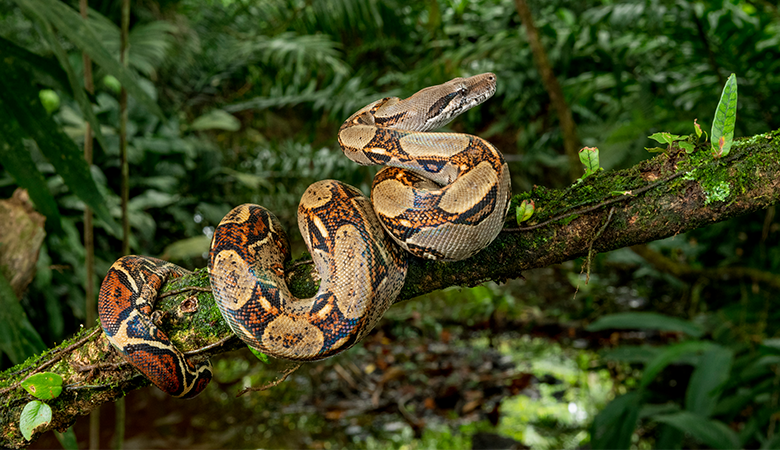
The Ball Python has a strong, muscular body with a relatively broad head and a short tail. The wild type has a dark brown to black base colour with lighter golden-brown to beige spots and patterns. In captivity there are also many colour and pattern variations, often referred to as morphs. Ball Pythons are mainly active at dusk and during the night. During the day they often lie curled up in a hiding place where they feel safe. When a Ball Python feels threatened, it usually curls up tightly into a ball with its head protected in the centre. This behaviour has led to the English name Ball Python. They are generally calm and reserved snakes that can often be cared for well with patient and gentle handling. Like other snakes, Ball Pythons shed their skin regularly. Suitable humidity and a proper hiding place help ensure that shedding proceeds smoothly.

All about the Ball Python

What does a Ball Python eat?

The Ball Python is a carnivore that mainly hunts small mammals in the wild. Its diet mainly consists of rodents such as rats, mice and sometimes small birds. In captivity, Ball Pythons are usually fed prey animals such as mice or rats that are appropriate for the size of the snake. These prey animals are offered frozen and fed after thawing. This reduces the risk of injuries that live prey can cause. Young Ball Pythons usually receive smaller prey such as mice, while adult snakes often eat rats. The feeding frequency depends on the age and size of the snake. In addition, make sure that drinking water is always available, preferably in a large bowl so the snake can also lie in it if it wishes.

How old does a Ball Python get?

A Ball Python can live on average 20 to 30 years in captivity. Factors such as nutrition, housing, stress and general care play an important role in life expectancy.

During their lives, Ball Pythons go through several life stages. A young Ball Python is usually 0 to 1 year old. In this phase the snake grows quickly and sheds relatively often. This is followed by the juvenile stage, usually between 1 and 3 years. The python is not yet fully grown but grows more slowly and continues developing towards adulthood. An adult Ball Python is generally 3 years or older. At this stage the snake is usually sexually mature and has largely reached its final length.

Is the Ball Python dangerous?

The Ball Python is generally not considered dangerous to humans. It is a relatively calm and reserved snake that usually tries to hide when disturbed. When it feels threatened, it often curls up into a tight ball with its head protected in the centre.

As with all animals, a Ball Python may bite if it feels threatened or startled, for example during feeding or when it is suddenly picked up. The bite is usually superficial and is rarely considered serious. With calm and careful handling, many Ball Pythons become accustomed to human presence. Although the species is not venomous, it remains important to treat a Ball Python with respect and care and to always pay attention to the animal’s behaviour and signals.

How large should a Ball Python terrarium be?

The size of the terrarium for a Ball Python mainly depends on the length and age of the snake. Young snakes can temporarily be kept in a smaller terrarium, but as they grow more space is needed. For a young Ball Python, a terrarium of about 60 x 40 x 30 cm is often used. This provides sufficient space while the snake can still feel secure. A juvenile Ball Python usually requires a terrarium of about 90 x 45 x 45 cm. At this stage the snake is still growing and extra space is important. For an adult Ball Python, a terrarium of at least 120 x 60 x 60 cm is generally recommended. This gives the snake enough room to move and makes it possible to create different temperature zones and multiple hiding places.

How often should a Ball Python eat?

The feeding frequency mainly depends on the age and size of the Ball Python. Young snakes usually eat a small prey animal, such as a mouse, every 5 to 7 days. As the snake grows, the time between feedings becomes longer. Juvenile snakes often eat every 7 to 10 days and when a Ball Python reaches adulthood, there can even be 10 to 14 days between feedings. Adult snakes do receive a larger prey animal, such as a rat.

It is relatively common for Ball Pythons to temporarily eat less or even stop eating for a period, for example during shedding or at certain times of the year. As long as the snake otherwise remains healthy and does not noticeably lose weight, this is usually not a cause for concern.

How long can a Ball Python grow?

A Ball Python grows to an average length of 120 to 150 cm. Females usually grow larger and heavier than males. Males often remain around 90 to 120 cm, while large females can sometimes reach 150 cm or even longer. Growth is fastest during the first years. With good care, sufficient space and a suitable feeding schedule, a Ball Python can reach its adult length within a few years.

Do Ball Pythons like to be stroked?

No, Ball Pythons do not necessarily enjoy being stroked. Snakes do not need social contact or physical touch to feel comfortable. Touch is more likely to be experienced by a snake as handling rather than affection. However, Ball Pythons can gradually get used to regular and gentle handling. When this is done calmly and without sudden movements, many snakes tolerate it and remain relaxed. It is important to recognise signs of stress, such as tightly curling up, hiding or quickly trying to escape. In such cases it is better to leave the snake alone. For a Ball Python, a safe hiding place, stable temperatures and as little stress as possible are more important than physical contact.

Care and housing of the Ball Python

The Ball Python is a snake that lives on the ground and spends most of its time in hiding places. For an adult snake, a terrarium of at least 120 x 60 x 60 cm is recommended. In a larger terrarium you can create multiple hiding places, climbing structures and temperature zones. Provide a clear warm and cooler zone and place a hiding place in both areas so the snake can safely retreat in different spots. A sturdy water bowl and a suitable heat source are important for its wellbeing.

Temperature and lighting

It is important to have multiple temperature zones in the terrarium. Aim for a warm spot of around 31 to 33°C and a cooler side of 25 to 27°C. At night, the temperature may drop to 22 to 24°C. Heating can be regulated with a heat mat, heat panel or heat lamp which should always be controlled by a reliable thermostat. Ball Pythons do not require strong UVB lighting, but a day and night rhythm of around 10 to 12 hours of light per day helps maintain a natural cycle.

Setup

Choose a safe substrate that can retain moisture without becoming too wet, such as coconut fibre, reptile bark or specialised terrarium substrate. Place at least two hiding places, one on the warm side and one on the cooler side of the terrarium. Additional elements such as cork logs, branches or decorations can provide more shelter and structure. Also provide a water bowl with fresh water that the snake can drink from and occasionally lie in.

Care

Ball Pythons shed their skin regularly. During this period the skin may become dull and the eyes may appear milky. A slightly increased humidity helps the shedding process go smoothly. After shedding, check whether the old skin has come off completely. It is also important to remove droppings and dirty substrate in time, clean the water bowl regularly and thoroughly clean the terrarium once a week. Also pay attention to the overall condition of the snake and regularly check whether it is eating well and behaving normally.

More tips