Service
Basket
Menu
This week up to 33% off dental care for your pet Read more

How to set up a terrarium for reptiles? A complete guide

Written by Mara |

A well-designed terrarium is the foundation for a healthy and active reptile. Reptiles are completely dependent on their environment: temperature, humidity, lighting, diet and layout must closely match their natural habitat. In this blog, we guide you step by step through setting up a terrarium, from the initial choices to the finer details of plants, lighting and climate.
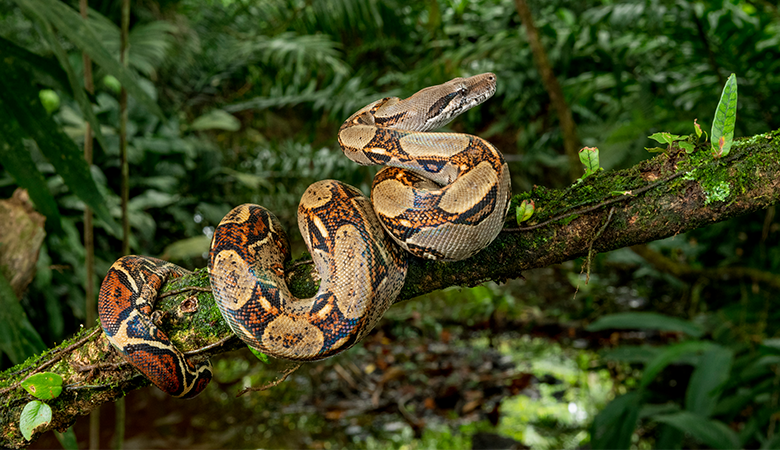
Snake sitting on a branch

Step 1: Decide which animal you want to keep

Before purchasing or setting up a terrarium, it’s important to carefully consider which reptile (or amphibian) you want to keep. Each species has different requirements for:

  • temperature
  • humidity
  • lighting (UV)
  • space
  • furnishings
  • diet

A desert lizard needs a completely different environment than a tropical frog. Always research the needs of each species thoroughly. On our page about reptile species, you can read which living conditions suit your animal. You can also find useful information in the animal care guides provided by the LICG.
Relevant products

Step 2: Choose the right type of terrarium

Depending on your animal’s natural habitat, choose the appropriate terrarium. There are four main types:

1. Temperate terrarium

This type of terrarium mimics climates found in southern Europe. It is spacious and typically contains:

  • wood and rocks
  • hiding places
  • smaller plants

This terrarium is suitable for species that do not require extreme heat or humidity.

2. Desert terrarium

A desert terrarium features:

  • a dry climate
  • plenty of light
  • large temperature differences between warm and cooler areas

Desert terrariums are ideal for desert-dwelling lizards and snakes.

3. Tropical terrarium

This terrarium resembles a rainforest:

  • high temperature
  • high humidity
  • lots of plants
  • optionally a small water section

This type of terrarium is suitable for geckos, tree frogs and poison dart frogs, as well as anoles, certain lizards and even some snake species.

4. Tropical paludarium

A paludarium is similar to a tropical terrarium but consists of approximately one third water. It is suitable for species that use both land and water, such as certain frogs and salamanders.

Step 3: Determine the correct terrarium size

The size of the terrarium depends on:

  • the adult size of the animal
  • the number of animals
  • how well the animals can live together

A larger terrarium offers important advantages:

  • a more stable climate
  • better distribution of warm, cool, wet and dry zones
  • less rapid build-up of waste
  • more space to move and less stress

Step 4: Heating

Almost all reptiles require additional heat. Overhead heating is preferred, as it mimics the sun. Heating from below is often less suitable, as many reptiles dig to cool down.

Explore heating solutions in our Heating category.

Step 5: Lighting and UV radiation

Lighting is essential for reptiles:

  • UV-A: important for behaviour and recognising other reptiles
  • UV-B: necessary for the production of vitamin D3

A lack of UV-B and vitamin D3 can lead to Metabolic Bone Disease (MBD), which causes bones to weaken and deform. Additional support through vitamins and minerals is often required.

View our range of reptile lighting.

Step 6: Climate control

After choosing your terrarium and lighting, you need to set the climate:

  • temperature (day/night)
  • humidity
  • ventilation

Good climate control helps prevent mould, bacteria and health problems.

Step 7: Substrate

The substrate must be safe, hygienic and functional.

Safe options include:

  • beech wood chips
  • coconut fibre
  • reptile sand

Sawdust is not suitable as a substrate.

The substrate affects:

  • moisture regulation
  • hygiene
  • digging behaviour

With live plants, you may also choose a soil and peat mixture as a base layer.

Step 8: Furnishings and hiding places

Reptiles need to feel safe. You can achieve this by providing:

  • multiple hiding places (caves, tunnels)
  • dense planting
  • branches and stones with smooth edges

Live plants increase humidity but must not be toxic. Artificial plants are a safe alternative.

Browse our range of furnishings and decorations for terrariums.

Step 9: Water and feeding

Always ensure:

Step 10: Ventilation and placement

Good air circulation helps prevent mould and bacteria. Place the terrarium:

  • stable and level (preferably on a polystyrene sheet)
  • away from draughts
  • out of direct sunlight
  • with enough space for heat dissipation

Try to replicate nature as closely as possible in your terrarium. A terrarium is not a decorative object but a living biotope. By adjusting temperature, humidity and lighting to natural conditions, reptiles feel safe and stay healthy. Alternate dry and humid periods, ensure air movement and observe your animals carefully.

Not sure? Always seek advice from a specialised reptile shop or experienced keepers. A well-prepared start is the key to many years of enjoyment with your reptiles.

Here you can find our complete range of supplies for reptiles and amphibians.

Sign up for our newsletter

Read our other blogs

More tips
image (20)

About the author

Mara van Brussel-Broere, Veterinarian at Vetsend

Graduated as a companion animal veterinarian from Utrecht University, she uses her practical experience to advise customers and share knowledge at Vetsend. She finds it important to provide pet owners with clear information about health and wellbeing.

Read more about Mara