Service
Basket
Menu
5% off probiotics with code PROBIOTICS5 Read more

Red Rat Snake

The Red Rat Snake (Pantherophis guttatus) is a popular terrarium animal that naturally occurs in the southeastern United States, where it inhabits forests, grasslands and agricultural areas. This slender constrictor is active both during the day and at dusk and is known as an excellent climber, often found in shrubs or low trees. Red Rat Snakes generally have a calm and curious temperament and can become accustomed to human contact when handled regularly and gently. In captivity, it is important to create an environment that matches their natural habitat and behaviour. Therefore, it is essential to provide sufficient hiding places, climbing structures and a clear temperature gradient within the terrarium, so their basic needs are met. This helps maintain good condition and prevents unnecessary stress.

Red Rat Snake

Characteristics

Country of origin: Southeastern United States
Also known as: Pantherophis guttatus, corn snake
Body build: Slender, muscular snake with a relatively small head and a long, gradually tapering tail.
Colours and coat types: Smooth, glossy scales. The wild type has a red to orange base colour with dark saddle-shaped blotches. In captivity, many colour and pattern variations occur.
Weight: 500 - 900 g
Life Expectancy: 15 - 20 years
Health risks: Respiratory infections, shedding problems, parasites (mites) and mouth infections due to improper feeding or hygiene.

Profile

Activity
Tameness
Ease of care
Space requirements
Environmental sensitivity
Nutritional needs

Popular products for the Red Rat Snake

Origin

The Red Rat Snake naturally occurs in the southeastern United States. There, it lives in a varied landscape of forests, grasslands, marshy areas and agricultural land. This snake is also regularly found near built-up areas, for example in barns or woodpiles where sufficient hiding places and prey animals are available. During the day and at dusk, the Red Rat Snake actively searches for food, while retreating in between to burrows, under tree roots or among dense vegetation. Its way of life is adapted to a temperate to warm climate with seasonal temperature differences. Thanks to its climbing behaviour and flexible body structure, it can adapt well to a wide range of environments.

Appearance and behaviour

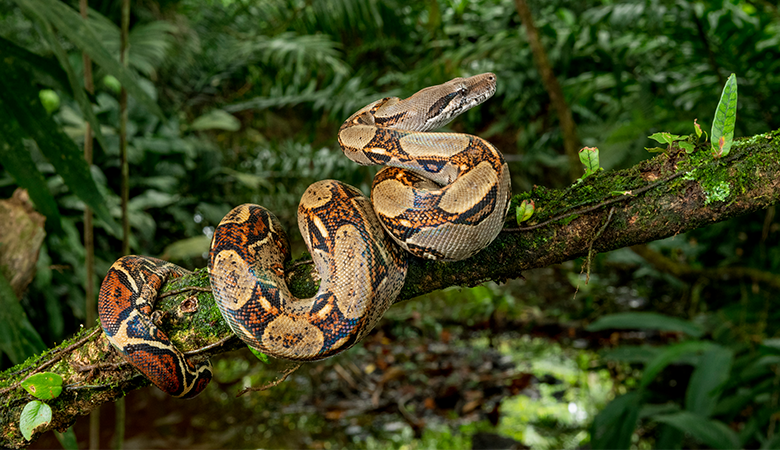
The Red Rat Snake has a slender, muscular body with a relatively small head and smooth, glossy scales. The wild type has a red to orange base colour with dark, saddle-shaped blotches along the back and a light-coloured belly with a checkerboard pattern. In captivity, many colour and pattern variants have been developed, such as albino, anerythristic, caramel, snow and various combinations of these. Red Rat Snakes are mainly active during the day and at dusk and make use of their surroundings by climbing and exploring. They are generally calm and curious snakes that are easy to handle when handled regularly and gently. A characteristic behaviour is the rapid vibration of the tail when startled or threatened, which can produce a rattling sound against dry leaves or substrate. The snake sheds its skin regularly and usually leaves it behind in one complete piece. Proper humidity and sufficient hiding places help ensure this process runs smoothly.

All about the Red Rat Snake

What does a Red Rat Snake eat?

The Red Rat Snake is a carnivore that mainly feeds on small mammals such as mice and rats in the wild. In addition, it also eats young birds and their eggs, depending on what is available in its habitat. Using its constricting technique, the prey is first seized and suffocated before being swallowed whole.

In captivity, a suitable diet consists of thawed frozen prey animals, such as mice or young rats, adapted to the size and age of the snake. Young snakes usually eat smaller prey more frequently, while adult snakes are given larger prey at longer intervals. It is important to always use high-quality prey and to thaw it completely and offer it at body temperature. Live prey is discouraged due to the risk of injury. In addition, fresh and clean drinking water should always be available.

Is a Red Rat Snake venomous?

No, a Red Rat Snake is not venomous. It is a harmless constrictor that catches its prey by gripping and suffocating it, not by using venom. This snake poses no danger to humans. When a Red Rat Snake feels threatened, it may display hissing behaviour or rapidly vibrate its tail to appear intimidating. In some cases, it may also bite, but this is a defensive reaction and the bite is often superficial and harmless. With calm and correct handling, Red Rat Snakes are generally easy to approach and rarely show defensive behaviour.

How old can Red Rat Snakes become?

Red Rat Snakes can live an average of 15 to 20 years. In captivity, where they receive good care, suitable housing and a stable feeding schedule, some snakes even live longer than 20 years. The final lifespan depends on factors such as genetics, nutrition, hygiene and stress levels. With consistent care and attention to proper living conditions, a Red Rat Snake can therefore remain in good condition for many years.

Does a Red Rat Snake have teeth?

Yes, a Red Rat Snake has teeth. These are small, backward-facing teeth designed to hold prey during feeding. The teeth are not used for chewing, but help the snake move its prey safely inward. In addition, the Red Rat Snake does not have venomous fangs or enlarged canine teeth. If it does bite, the bite is usually harmless. This mainly happens when the snake is startled or feels threatened. With calm handling, biting rarely occurs.

How long does an adult Red Rat Snake grow?

An adult Red Rat Snake reaches an average length of 120 to 150 cm. Some individuals can grow slightly larger and reach a length of around 180 cm, but this is less common. The final length depends on factors such as genetics, diet and housing. Red Rat Snakes grow relatively quickly in their first years and usually reach their adult size within three to four years.

Care and housing of the Red Rat Snake

The Red Rat Snake is an active snake that makes use of both the ground space and the height of the terrarium. For one adult animal, a terrarium of at least 100 x 50 x 50 cm is recommended. The enclosure must be securely closed, as Red Rat Snakes are strong and intelligent escape artists. Arrange the terrarium in such a way that a clear temperature gradient is created and provide several hiding places in different areas. Climbing opportunities such as branches and cork are important, as this snake enjoys climbing and exploring.

Temperature and lighting

On the warm side of the terrarium, the ideal temperature is between 26 and 30°C, with a warm spot of around 30°C. The cooler side may remain around 22 to 24°C. At night, the temperature may drop to approximately 20°C. Lighting is usually provided for 10 to 12 hours per day to support a natural day and night rhythm. UVB lighting is not strictly necessary. Always use a reliable thermostat to prevent overheating.

Interior setup

Suitable substrates include materials such as beech wood chips, aspen, coconut fibre or paper, as long as they are kept dry and clean. Avoid loose substrates that can easily be ingested during feeding. Place several hiding places on both the warm and cool sides of the terrarium so the snake can retreat safely. Branches, cork bark and platforms provide extra structure and stimulate natural climbing behaviour. A sturdy water bowl with fresh water is essential and should be large enough for the snake to soak in if desired.

Care

Red Rat Snakes shed their skin regularly and usually leave it behind in one complete piece. Proper humidity and a rough surface or branch help ensure this process runs smoothly. After shedding, check whether the skin has been fully removed, especially around the tip of the tail. Daily removal of waste and refreshing the water are important for hygiene. In addition, it is advisable to regularly check the snake’s weight and overall condition in order to detect any health issues at an early stage.


More tips