Which rodent is right for me?
Before buying a rodent, it is important to consider whether and which rodent suits you.
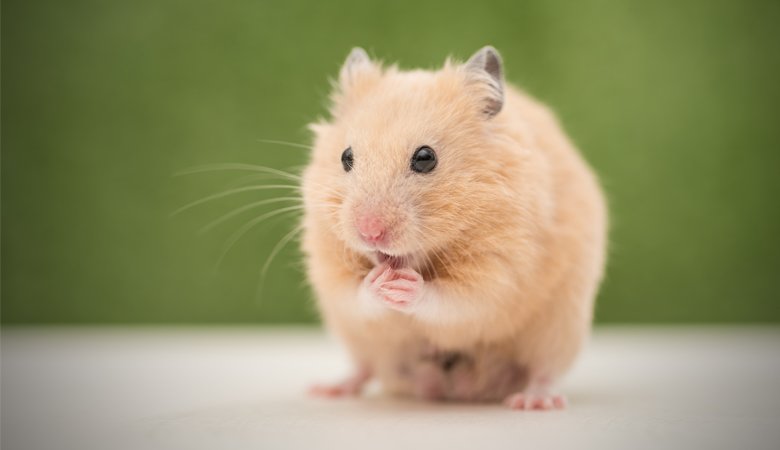
The Golden Hamster, also called the Syrian hamster, is one of the most commonly kept hamsters as a pet. It owes its name to its original golden-coloured coat. In the wild, the Golden Hamster lives in dry steppe and desert areas. It is an animal that is mainly active at night, when it shows natural behaviour such as running, digging and collecting food.

The Golden Hamster originally comes from the dry steppe regions and deserts of Syria and Southern Turkey. In these regions, the climate is characterised by heat, dryness and limited vegetation. Golden Hamsters live underground in self-dug tunnel systems, where they find shelter from predators and extreme temperatures. Because of this habitat, the Golden Hamster has developed a strong need to dig and create tunnels. This behaviour also plays an important role in captivity and explains why a deep layer of bedding is essential for its wellbeing. Its natural behaviour and adaptation to a dry environment mean that a suitable and calm living environment is important for a Golden Hamster as a pet.
The Golden Hamster is an independent and active rodent that mainly comes to life in the evening and at night. In its enclosure, it shows natural behaviour such as running, digging and collecting food. During the day, it sleeps and needs rest, which makes it less suitable for interaction at fixed times during the day. In contact with people, the Golden Hamster is generally calm, but also quite solitary. It likes to set its own pace and does not always like being picked up. Because of its solitary nature, it needs its own living space and can experience stress when kept with other hamsters. When the Golden Hamster is kept in a calm and predictable environment, it shows stable behaviour and feels comfortable in its enclosure. Its active and natural behaviour, especially at night, makes it mainly interesting to watch and follow in its daily rhythm.
The Golden Hamster, also called the Syrian hamster, is the largest hamster species kept as a pet. It is an animal that lives alone and is mainly active in the evening and at night. Because of its natural behaviour and needs, the Golden Hamster requires a suitable living environment.
The food of a Golden Hamster mainly consists of seeds and grains, supplemented with nuts, grasses and animal proteins such as insects. This matches its natural diet.
A Golden Hamster grows to an average size of between 13 and 18 cm, making it the largest hamster species kept as a pet.
A Golden Hamster lives alone and cannot be kept with other hamsters. When Golden Hamsters are placed together, they may start fighting.
Anyone wanting to buy a Golden Hamster should keep in mind that this animal always lives alone and needs its own enclosure. It is important to provide a suitable living environment in advance and learn about its care. In addition, the Golden Hamster is mainly active at night and sleeps during the day, which means it needs rest, enough space and an environment in which it can show natural behaviour.
The life expectancy of a Golden Hamster is on average between 2 and 3 years. This is also referred to as the Golden Hamster age.
A suitable Golden Hamster cage is important for the wellbeing of the animal. The minimum size of its enclosure is 100 x 50 cm. Because Golden Hamsters like to dig, a deep layer of bedding is essential. It is also important that the cage has enough ventilation and is securely closed, as hamsters can escape easily. Especially when they are not challenged enough.
Golden Hamsters need a spacious enclosure in which they can move around enough and show their natural behaviour. Unlike some other rodents, Golden Hamsters are not climbers, but real diggers. That is why an enclosure with enough floor space and a deep layer of bedding is important. A minimum size of 100 x 50 cm is necessary to give the Golden Hamster enough space.
Golden Hamsters are always kept alone and need their own enclosure. The enclosure can be a cage, terrarium or aquarium and should be placed in a quiet spot in the home, away from draughts and direct sunlight. A stable and calm environment helps prevent stress and contributes to the hamster’s wellbeing.
Also provide enough hiding places, such as a house and nesting material, so that the Golden Hamster can retreat. A deep layer of bedding of at least 20 cm makes it possible to dig and create tunnels. A sand bath is also important, so that the hamster can care for its coat. A exercise wheel with a minimum diameter of 28 cm is essential to provide enough exercise.
Good daily care helps keep a Golden Hamster healthy and active. Because of its natural behaviour and need for structure, it is important to keep to a number of regular care routines.
Good care for the Golden Hamster includes:
By paying attention to these points every day, the living environment stays clean and the Golden Hamster can continue to show its natural behaviour.

Add products to view your basket
We use cookies to help us serve you better and more personally. Functional cookies ensure that the website works properly and have an analytical function. We also use technology to track your behaviour anonymously, both inside and outside our website. Personal data and cookies may be used for personalisation or advertising. Want to know more? Read our privacy policy and cookie statement here. If you choose to reject, we will only place functional and analytical cookies.