Service
Basket
Menu
Celebrate 18 years of Vetsend with up to 50% off your favourite products! Read more

The tick season: which tick species are found in the United Kingdom?

Written by Mara | Dierenarts |

It may seem early in the year, but the tick season has already begun. Ticks become active as soon as temperatures rise above 7 degrees Celsius. In the United Kingdom, this means you should already be alert in early spring.

A man and a woman with a dog in the woods

When is the tick season in the UK?

In the United Kingdom, ticks are usually active from March to October. During mild winters, ticks can become active earlier and may even be present all year round. You will mainly find ticks in woodlands, heathland and grasslands.

Which tick species are found in the United Kingdom?

In the UK, the number of relevant tick species is more limited than in Southern Europe. The main species are:

  • Ixodes ricinus (sheep tick)
  • Dermacentor reticulatus (locally present)
  • Ixodes hexagonus (hedgehog tick)

In addition, there is a notable but rare species:

  • Hyalomma tick (giant tick)

Ixodes ricinus (sheep tick)

Ixodes ricinus is the most important and most common tick species in the UK. This tick lives in humid areas with dense vegetation and can transmit, among others:

Lyme disease is by far the most common tick-borne disease in the United Kingdom.

Dermacentor reticulatus

This tick is less common in the UK but is present in certain areas. It can transmit babesiosis in dogs, a condition that can become severe without prompt treatment.

Hyalomma tick (giant tick)

The Hyalomma tick is not native to the UK but is occasionally observed.

These ticks are usually:

  • carried by migratory birds
  • or introduced via imported animals

Key characteristics:

  • they are larger than common ticks
  • they can move actively
  • they are occasionally found in England

The UK Health Security Agency (UKHSA) closely monitors these ticks through the Tick Surveillance Scheme.

The Hyalomma tick originates from warmer regions such as Africa, Asia and Southern Europe. In the UK climate, they are generally unable to establish permanent populations.

This tick can transmit Crimean-Congo haemorrhagic fever (CCHF). However, the risk of this in the UK is extremely low. This is therefore a rare, “imported” visitor rather than an established tick species.
Relevant Products

Why are ticks dangerous?

A tick bite can cause irritation, but the main risk is the transmission of diseases.

In dogs:

  • Lyme disease
  • Anaplasmosis
  • Babesiosis (rare but serious)

In humans:

  • Lyme disease
  • Tick-borne encephalitis (TBE) (very rare)
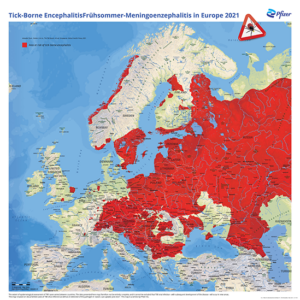
  • Tick-borne encephalitis (TBE) in the UK

Tick-borne encephalitis is a relatively new disease in the United Kingdom.

The virus has been detected in ticks in areas including:

  • Thetford Forest (East Anglia)
  • New Forest
  • parts of Hampshire and Dorset

The risk of infection is very low, but in rare cases TBE can lead to inflammation of the brain. Most people experience no symptoms or only mild symptoms.

Protect yourself and your pets against ticks

Prevention is important, especially if you spend a lot of time in nature.

For your pet:

  • use suitable tick prevention products
  • check daily for ticks

For yourself:

  • wear protective clothing
  • use products containing DEET
  • check your body after a walk

Always remove a tick as soon as possible.

Do you have any questions about ticks? Please contact veterinarian@vetsend.co.uk.

Frequently asked questions about ticks

Which diseases can ticks transmit to dogs?

In the UK, dogs can become infected with:

  • Lyme disease
  • Tick-borne encephalitis (TBE)
  • Babesiosis
  • Ehrlichiosis (very rare)
  • Anaplasmosis

Which dangerous tick species are found in the UK?

The main tick species are:

  • Ixodes ricinus: main transmitter of Lyme disease and TBE
  • Dermacentor reticulatus: important for babesiosis in dogs

The Hyalomma tick is occasionally found but is not an established species.

How many tick species are there?

There are around 900 tick species worldwide. Only a small proportion of these play a role in disease transmission.

In the United Kingdom, this mainly concerns a limited number of species, with Ixodes ricinus being the most important.

How quickly can a tick transmit diseases?

This depends on the pathogen, but it can sometimes happen within just a few hours. For Lyme disease, transmission usually takes longer, often 24 to 48 hours. That is why it is important to remove a tick as quickly as possible.

View our category Tick Removal Tools.

Sign up for our newsletter

Read also our other blogs

More tips
image (20)

About the author

Mara van Brussel-Broere, Veterinarian at Vetsend

Graduated as a companion animal veterinarian from Utrecht University, she uses her practical experience to advise customers and share knowledge at Vetsend. She finds it important to provide pet owners with clear information about health and wellbeing.

Read more about Mara