What can a parrot eat?
Written by Mara |
Parrots are known for their intelligence, their ability to talk and their long lifespan. But did you know that good nutrition may well be the most important factor for a healthy and long parrot life? Many health problems in parrots are caused by years of nutritional deficiencies. These often develop unnoticed and when the first signs become visible, it is unfortunately often already (partly) irreversible. In this blog, you will read what a good parrot menu should consist of, why mixed feeds come with risks and what you really should not give.
How parrots eat in the wild
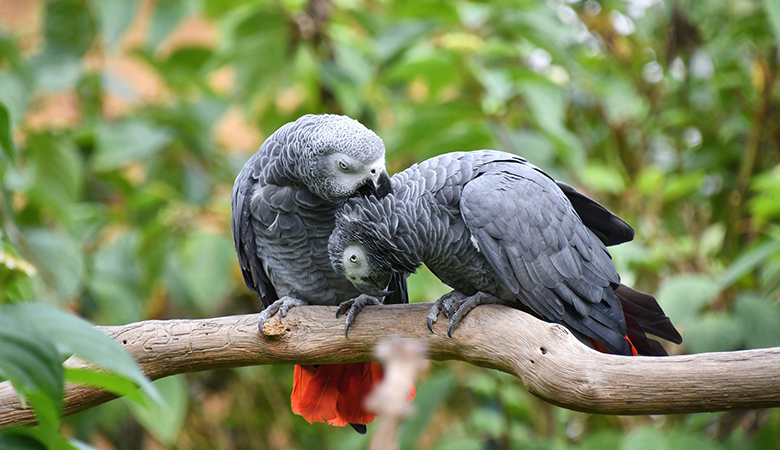
Parrots are naturally omnivores (omnivores) with a varied diet. In the wild, they forage for hours in search of seeds, nuts, fruit, leaves, flowers, nectar and sometimes insects. Their diet is therefore not only varied, but also spread throughout the day and linked to active foraging behaviour.
This natural way of eating not only provides the right nutrients, it also keeps parrots mentally stimulated and physically active. In captivity, they often get much less variety and move less, which increases the risk of obesity and nutritional deficiencies. Good nutrition and enough enrichment are therefore essential to mirror this natural behaviour as closely as possible.
The problem with mixed feeds: selective eating
Traditionally, parrots were often given a mix of seeds, fruit and supplementary feed, with the guideline:
- 1/3 mixed seed
- 1/3 mixed fruit
- 1/3 supplementary feed or eggfood
Although this seems varied, the risk of selective eating is high. Many parrots choose only the tastiest parts, such as sunflower seeds and peanuts, and leave the rest. This results in a diet that is far too energy-rich and too low in protein, vitamins and minerals.
The consequences of this imbalance only become visible after years. By then, serious deficiencies may already have built up, and the damage often cannot be fully reversed.