What Does a Horse Naturally Eat?
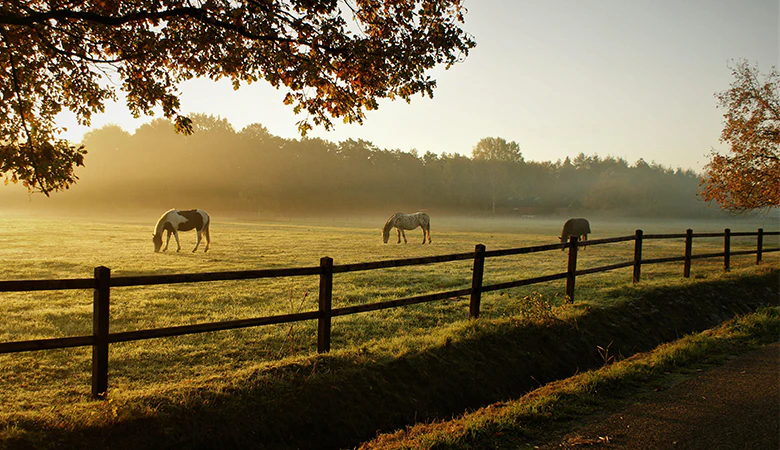
Horses are natural grazers. Wild horses travel long distances every day while eating small amounts of grass, herbs and other plants. Rather than eating a few large meals each day, they are adapted to grazing almost continuously. This natural feeding behaviour still forms the basis of the diet of our domesticated horses today.
How Does a Horse’s Digestive System Work?
A horse’s digestive system works in a unique way. Horses have a relatively small stomach, making large meals less suitable. Most digestion takes place in the intestines, where fibre from grass and hay is broken down into nutrients that the body can use. Because the digestive system relies on a constant supply of fibre, it is important that horses are not left without forage for extended periods (no more than 4 to 6 hours). This not only supports healthy gut function but also reduces the risk of gastric ulcers and helps prevent boredom.
What Can a Horse Eat Every Day?
A healthy diet should primarily consist of sufficient forage, such as:
- Hay
- Grass
- Haylage (when suitable for the horse)
In addition, a horse should always have access to plenty of fresh drinking water. Depending on the horse’s age, workload and health, the diet can be supplemented with concentrates or supplements.
Does a Horse Need Concentrates?
Not every horse needs concentrates. A leisure horse with a light workload can often obtain enough energy from good-quality forage alone. Performance horses, broodmares, growing horses or horses that struggle to maintain their weight may benefit from an additional source of energy and nutrients. The amount of concentrates a horse needs therefore varies considerably from one individual to another. It is important to tailor the diet to the horse’s specific needs rather than simply its size.
Read more in our blog: The Right Nutrition for Your Horse: What Should You Know About Supplements and Choosing the Right Feed?
Which Nutrients Does a Horse Need?
To stay healthy, a horse needs a range of nutrients:
- Fibre for healthy digestive function
- Protein for maintenance and muscle development
- Vitamins and minerals for various bodily functions
- Fat as an additional source of energy
- Water for almost every process in the body
In the wild, horses obtain these nutrients not only from grass but also from a wide variety of herbs, leaves and branches. By browsing different plant species, they naturally consume a broad range of nutrients. For this reason, some horse owners choose to supplement the diet with suitable herbs or safe branches from, for example, willow, birch, hazel or untreated fruit trees. These provide additional variety and fit well with the horse’s natural feeding behaviour. A deficiency or excess of certain nutrients can affect a horse’s condition, performance and overall well-being.
What Can and Can’t a Horse Eat?
Many horses enjoy a healthy treat, but not everything we eat is suitable for horses.
Suitable treats:
Suitable branches from safe tree species can also be a fun and natural addition to the daily diet.
Not suitable:
- mouldy feed
- bread
- sugary foods
- poisonous plants and garden waste
Adapting the Diet to Your Horse’s Life Stage
A horse’s nutritional requirements change throughout its life. Foals need different nutrients from adult horses, while senior horses may benefit from extra nutritional support to help maintain their condition. Performance horses also often require a different dietary composition than horses used mainly for leisure riding. By considering your horse’s age, activity level and health, you can better tailor its diet to its individual needs.
How Do You Know if Your Horse Is Getting the Right Nutrition?
A healthy horse has an appropriate body condition, a shiny coat and plenty of energy. It is also important to monitor changes in body weight, manure quality and appetite. These signs can provide valuable insight into whether the current diet meets your horse’s nutritional needs.
If you are unsure whether your horse is receiving all the nutrients it needs, it is advisable to review the diet with your veterinarian and, where appropriate, supplement it with a suitable nutritional supplement.