The basis is forage
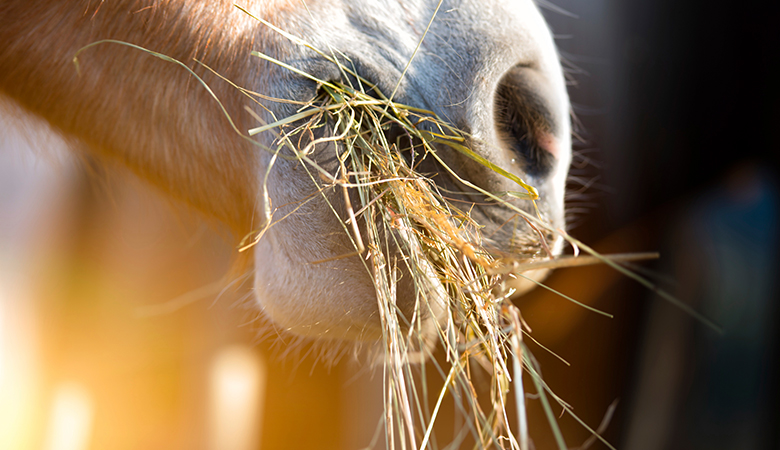
From a veterinary point of view, forage always forms the foundation of the ration. For a healthy adult horse, the general guideline is 1.5 to 2% of body weight in forage per day, calculated on a dry matter basis. For a 500 kg horse, this equals approximately 7.5 to 10 kg of dry matter per day. In addition, it is important that a horse spends as little time as possible without forage and ideally has almost continuous access to it. It is advisable not to leave a horse without forage for longer than 4 to a maximum of 6 hours. Longer breaks increase the risk of gastric ulcers and can disrupt the gut flora.
Hay, haylage or silage: what is the difference?
Not all forage is the same. Hay is fully dried and contains little to no fermentation, making it the most stable and gut-friendly choice for most horses. Haylage and silage contain more moisture and undergo a fermentation process. As a result, they can be more acidic and show greater variation in composition. Some horses tolerate this well, while others react more sensitively, for example with looser droppings or increased gas production.
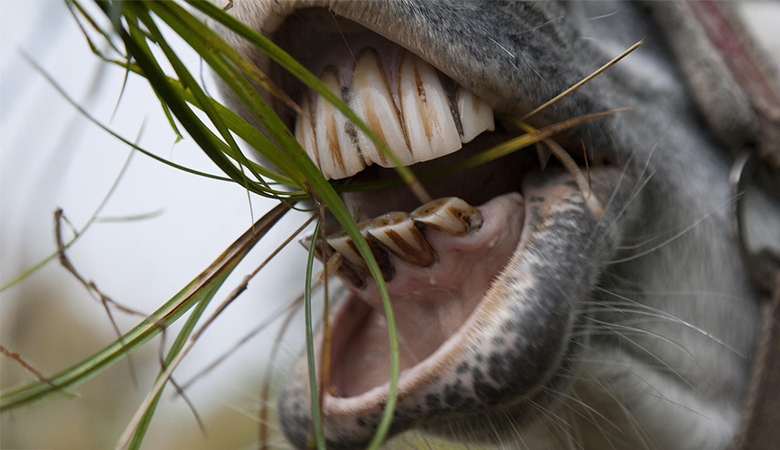
Quality and packaging are also important. Forage should be clean and free from mould. Damaged bales or forage with an unusual smell, colour or structure can negatively affect the stomach and intestines. Good-quality hay or haylage also supports gut flora, stimulates chewing and saliva production, and helps buffer stomach acid. Only when forage alone is insufficient to meet nutritional requirements does additional feeding become relevant.
When is concentrate feed necessary and when is a mineral balancer sufficient?
Not every horse automatically needs concentrate feed. In practice, more is often fed than is strictly necessary. The need for concentrate feed mainly depends on workload, body condition, age and the quality of the forage.
Horses that:
- are lightly worked,
- are used recreationally,
- become overweight or too excitable easily,
- or obtain sufficient nutrients from good-quality forage,
can often do very well on a vitamin and mineral balancer alone. This helps correct potential deficiencies without adding extra energy, sugar or starch.
Concentrate feed is generally useful when a horse:
- is trained intensively or competes in sport,
- cannot maintain adequate condition or muscle mass on forage alone,
- has increased energy or protein requirements (for example growing young horses, pregnant or lactating mares, or senior horses),
- or is recovering from illness or a period of reduced intake.
It is important not to add concentrate feed as a standard measure, but as a targeted supplement when the ration would otherwise be insufficient. A modest, well-balanced diet helps maintain gut health and prevents unnecessary strain on the digestive system.
What should you look for when choosing horse feed?
Not all horse feeds are formulated in the same way. When selecting suitable nutrition, it is important to critically assess:
- Sugar and starch content: Grains (such as maize, wheat and barley) and additions like molasses increase the sugar and starch content of feed. High levels can disrupt gut flora and increase the risk of insulin resistance, laminitis and digestive problems.
- Quality of raw materials: This can vary greatly in origin and processing method. Highly processed or low-quality by-products often provide nutrients that are less readily absorbed and can place unnecessary strain on the digestive system.
- Additives and fillers: Such as flavourings, colourings, binders or inexpensive fibre sources (for example certain hulls, shells or heavily processed residual products) that are mainly added for taste, structure or volume. They contribute little or nothing to nutritional value and can, especially in sensitive horses, unnecessarily burden gut health.
- Protein quality: Not only the amount of protein matters, but also its source and digestibility. Proteins from highly digestible sources such as alfalfa, high-quality soy or pea protein are generally used efficiently for muscle development and recovery. Less digestible proteins can place greater strain on digestion and are less effectively converted into body tissue. This includes, for example, hulls, shells and proteins with an unfavourable amino acid profile (such as methionine and threonine).
Different forms of horse feed
There are several types of supplementary horse feeds, each with its own function:
- Muesli: Often palatable and high in structure, but sugar and starch levels can vary greatly between products.
- Concentrate feed: A concentrated source of energy, suitable for horses with higher energy requirements, provided it is well matched to workload and forage.
- Mineral feed or balancer: Ideal when forage quality is good, but vitamin and mineral deficiencies need to be supplemented or prevented, without adding extra energy.
- Mash: Often used for older horses, horses with reduced appetite or during recovery periods. Composition varies greatly by type.
Supplements
Supplements can be a valuable addition, but they never replace a balanced basic diet. It is important to first assess whether the overall diet is appropriate before adding individual supplements. Would you like to know more about using supplements for your horse? Read our blog: “How do you choose the right supplement for your horse?”.
Conclusion
Choosing the right nutrition for your horse truly requires a tailored approach. By critically evaluating composition, quality and individual needs, many health problems can be prevented. A modest, easily digestible diet with attention to gut health forms the foundation. Less is often more—as long as the basics are right.
Not sure which feed best suits your horse? Please contact us at veterinarian@vetsend.co.uk.