Service
Basket
Menu
Up to 30% off Royal Canin, Purina and Edgard & Cooper Read more

Cat breeds suitable for indoor living

Written by Mara | Dierenarts |

More and more cats live (partly) indoors. In a flat or busy residential area, this is often the safest option. Not every cat breed is equally suited to this lifestyle. Some cats have a calmer temperament and adapt better to indoor living.
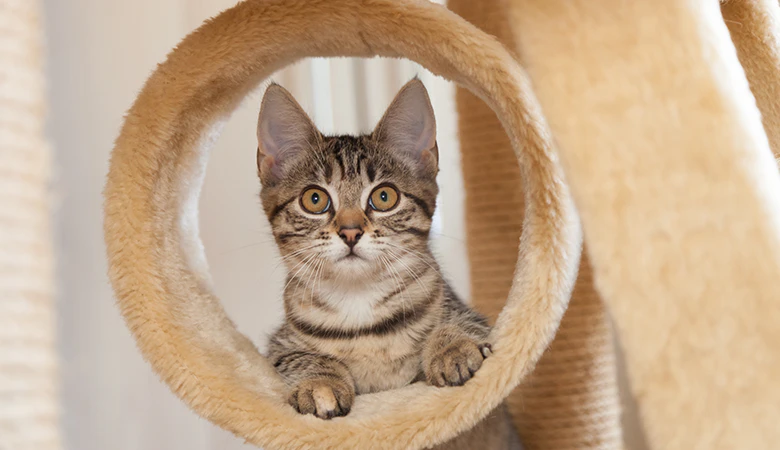
Cat looking through a scratching post tunnel

It is important to know that certain breeds, such as hairless cats (for example the Sphynx and Peterbald) and cats with folded ears (such as the Scottish Fold), are in some countries no longer bred or even allowed due to health and welfare concerns. In this blog, we therefore focus on breeds that are generally considered healthier and more suitable.

The following cat breeds can be kept indoors successfully under the right conditions.

British Shorthair

The British Shorthair is a calm and stable cat. This breed does not have a strong need for activity and adapts well to indoor life. They are affectionate but also independent and can keep themselves entertained for a while.

Ragdoll

Ragdolls are known for their gentle and social nature. They are strongly attached to their owner and have little desire to go outside. This makes them very suitable as indoor cats. They enjoy companionship and like to stay close to you.

Persian

The Persian is a true lover of calm environments. This breed has a low activity level and feels comfortable in a quiet, predictable setting. This makes them highly suitable for indoor living, provided they receive enough light stimulation.

Birman

The Birman is a friendly and social cat with a moderate energy level. They enjoy playing but are not overly active. This makes them suitable for indoor life, as long as they receive enough attention and variation.

European Shorthair

The European Shorthair is not a specific breed but a common domestic cat. Many of these cats adapt well to indoor living, especially if they are kept indoors from a young age. Their character can vary, but with enough enrichment they usually do very well.
)

Relevant products

What should you consider with an indoor cat?

Even cats that are well suited to indoor life need enough stimulation and exercise. Without sufficient enrichment, boredom and behavioural problems can arise.

Make sure to create an enriched environment. Play is essential, for example with products from the category cat toys or treat toys, which help stimulate the hunting instinct.

It is also important that your cat can express natural behaviour, such as scratching and climbing. Scratching posts, boards and furniture are essential for this.

Finally, every cat needs a quiet and comfortable place to sleep. A cosy sleeping spot, such as a bed or basket, helps your cat to fully relax.

Many cat breeds can live indoors perfectly well, as long as you take their needs into account. By choosing a breed with a calm and social temperament and setting up the environment properly, you ensure that your cat feels happy indoors.

Subscribe to our newsletter

Read our other blogs

cat

Help! My cat pees in the house! Now what?

Spraying is normal sexual behaviour in uncastrated male cats. After castration, the spraying behaviour nearly always stops. Spraying behaviour due to stress occurs in both male and female cats, and in both castrated and uncastrated animals. Aside from this natural spraying behaviour, cats may also display abnormal urinating behaviour. Abnormal urinating behaviour in cats can occur due to medical causes or behavioural issues. Medical causes include kidney problems, diabetes or a bladder infection. In this article, we will mainly deal with urinating in the house as a behavioural problem. Before dealing with the possible causes of indoor spraying and urination, we would urge you to contact your veterinarian if you suspect that a medical condition is causing your cat to pee in the house. If you notice that your male cat cannot pee or is constantly straining, please contact your veterinarian as soon as possible! This is always an emergency!

Image not found

Stress in cats: Causes and effects

Stress is one of the most common causes for undesired behaviour. It can lead to excessive scratching on furniture, couches etc. It can also cause issues like spraying in the house. There are many different factors that could lead to stress or behavioural issues.

Cat scratching himself

Nutrition and coat care for dogs and cats with an allergy

Allergic diseases in dogs and cats often manifest themselves in skin problems, such as itching, red skin or ear infections. When your pet has an allergy, the body produces antibodies to certain substances that are not harmful. These may be substances in the environment, such as pollen from grass or trees, weeds or mites. An allergy to substances in the environment is called ‘atopy’. In addition, animals can also develop an immune response against substances in food. This is usually a reaction against certain proteins in the food, but in some cases, other components in the food might be the issue. In this article, you will read more about the importance of skincare and nutrition for animals that have skin problems due to an allergy.

More tips
image (20)

About the author

Mara van Brussel-Broere, Veterinarian at Vetsend

Graduated as a companion animal veterinarian from Utrecht University, she uses her practical experience to advise customers and share knowledge at Vetsend. She finds it important to provide pet owners with clear information about health and wellbeing.

Read more about Mara