How does a dog get ringworm?
A dog can become infected through direct contact with an infected animal. This may be another dog, but it could also be a cat, for example. Cats can carry dermatophytes without always showing clear skin lesions.
Infection can also occur indirectly. Fungal spores can end up on items such as pet beds, blankets, brushes, clothing and other objects in the surrounding environment. The spores can remain there for a long time.
Not every dog that comes into contact with fungal spores actually develops symptoms. Young dogs and animals with a weakened immune system are particularly susceptible. Damage to the skin can also make infection easier.
What does a fungal infection look like in a dog?
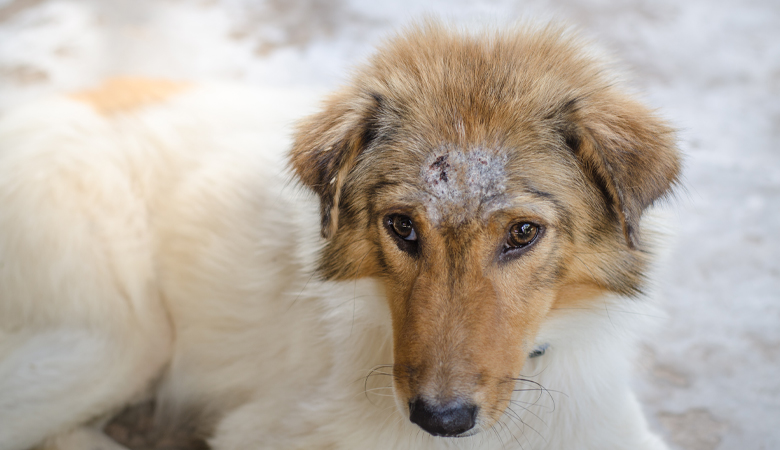
Ringworm can look different in every dog. Typical signs include areas where hairs break or fall out. This can cause round or irregular bald patches. The skin may also be flaky, red or crusty.
Itching may occur, but does not have to be present. Some dogs are barely bothered by the patches, while others clearly scratch or lick them.
The skin lesions may occur on the head, ears and legs, for example, but ringworm can develop in various places on the body.
Is a round bald patch always ringworm?
No. A round bald patch does not automatically mean that your dog has a fungal infection. Bacterial skin infections, mites, allergies and other skin conditions can cause similar lesions.
It is therefore advisable not to diagnose ringworm based only on its appearance. A correct diagnosis is important, especially because the condition can be contagious.
How is ringworm diagnosed?
The vet can carry out various tests. The coat and skin are first examined carefully. A special UV lamp, known as a Wood’s lamp, is sometimes used. Some strains of Microsporum canis may fluoresce under this lamp, but a negative test does not rule out ringworm.
Hair and skin flakes can also be examined under a microscope, or material may be used for a fungal culture. Molecular tests, such as PCR, can also be used to detect genetic material from dermatophytes.
The most suitable method depends on the situation.
How is ringworm treated in dogs?
Treatment depends on factors including the severity and extent of the infection. For a limited infection, topical treatment with an antifungal medicine may form part of the therapy. For more extensive dermatophytosis, the vet may also prescribe an oral antifungal medicine.
It is often important not to treat only the visible patch. Fungal spores may also be present on hairs that look normal.
Do not stop treatment as soon as the skin looks better. The vet will determine when treatment can be ended and may carry out follow-up testing if necessary to check whether the infection has genuinely disappeared.
Why must you also treat the environment?
With ringworm, treating the dog is only one part of the approach. Infected hairs and fungal spores can spread throughout the living environment and cause reinfection.
Vacuum regularly and carefully remove loose hairs. Wash blankets, covers and other washable materials at a suitable temperature, and clean surfaces and materials with which the dog has frequent contact. Remember brushes, combs, crates and pet carriers as well.
It is best to discuss with the vet which cleaning products or disinfectants are suitable. Not every household cleaning product is effective against fungal spores, and some products can be harmful to pets.
Is ringworm in dogs contagious to people?
Yes. Ringworm is a zoonosis, which means the infection can be transmitted between animals and people. After becoming infected, people may develop red, flaky, itchy and ring-shaped patches on the skin.
You should therefore maintain careful hygiene during treatment. Wash your hands after contact with the dog and, where possible, avoid intensive contact between the infected skin and people’s skin.
Extra caution is advisable around young children, older people and those with a weakened immune system. If anyone in the household develops suspicious skin lesions, contact your GP.
Can a dog transmit ringworm without showing symptoms?
This is possible. A dog can carry fungal spores on its coat without having noticeable skin lesions. In a household with several pets, it may therefore be necessary to examine the other animals as well.
This is particularly important when the infection continues to return despite treatment.
How long is ringworm in a dog contagious?
This varies from dog to dog and depends on factors including the fungus responsible, the extent of the infection and the treatment. Even when the skin already looks better, infectious hairs or spores may still be present.
Do not therefore rely only on the disappearance of the bald patches. The vet can indicate when a dog has received sufficient treatment and when an additional check is required.
Can you prevent ringworm in your dog?
It is not always possible to prevent infection. Good hygiene can, however, reduce the risk of it spreading. For example, avoid sharing brushes, blankets and other grooming supplies between an infected animal and other pets.
Has your dog been in contact with an animal that was later found to have ringworm? Monitor the skin and coat carefully during the following period. If you notice suspicious patches, it is advisable to consult a vet promptly.
When should you take your dog to the vet?
Have your dog examined by a vet if unexplained bald, flaky or crusty patches develop, especially if they spread or if other pets or family members develop similar skin lesions.
Ringworm is generally treatable, but it can be persistent. Because the infection can also spread easily through hairs and fungal spores, a correct diagnosis, consistent treatment and thorough cleaning of the environment are important.