Service
Basket
Menu
5% off snacks with code SNACKS5 Read more

Great Tit

The great tit is a small, active bird and one of the most common garden birds. With its distinctive appearance (yellow breast and black “tie”) and lively behavior, it is a welcome visitor in many gardens. Great tits are resident birds and stay in the same area all year round. They like to breed in nest boxes and adapt well to living close to humans. In spring, they feed their young with insects and caterpillars, while in other seasons they also eat seeds and nuts. This makes them an important part of the natural balance in gardens, forests and parks.

Great Tit

Characteristics

Body build: Compact and sturdy bird with a round head, short neck and a strong, pointed beak.
Colours and coat types: Yellow breast with a clear black stripe, black head with white cheeks and a greenish back.
Weight: 16 - 22 g
Life Expectancy: 2 - 3 years
Health risks: Food shortages, harsh winters, diseases, parasites and predation (such as cats and birds of prey).

Behaviour profile

Activity (day)
Visibility in the garden
Beneficial for the garden
Sensitivity to disturbance
Human interaction

Popular products for your garden

Habitat

Great tits live in gardens, forests and parks where there are plenty of trees and shrubs. They use these for nesting, shelter and finding food. Tree cavities or nest boxes are their preferred breeding sites. You can attract great tits by creating a varied, green garden and placing nest boxes. It also helps to provide sheltered areas where they can rest and hide.

Diet

Great tits mainly eat insects, caterpillars, seeds and nuts. During the breeding season, they especially need protein-rich food, such as caterpillars, for their young. In winter, they switch more to seeds and fatty foods. You can help by providing sunflower seeds, peanuts and fat balls, especially during the colder months.

Role in the garden

Great tits are very beneficial because they eat large quantities of insects and caterpillars. This helps to reduce pests in a natural way. They also bring life, movement and sound to the garden.

Protection and points of attention

Although the great tit is found in many places, a suitable habitat is very important. The use of pesticides can reduce the availability of food. Cats and poor weather conditions also pose a risk. You can help by creating a pesticide-free garden, offering sufficient food and nesting opportunities, and cleaning nest boxes annually.

All about the great tit

How long does a great tit brood?

A great tit incubates its eggs for about 13 to 15 days. After hatching, the chicks remain in the nest for around 18 to 21 days before they fledge.

What does a great tit eat?

Great tits mainly eat insects, caterpillars and spiders, especially during the breeding season when they are feeding their young. In autumn and winter, they switch more to seeds, nuts and berries. In gardens, they also make good use of fat balls and bird food.

When does a great tit lay eggs?

Great tits usually start laying eggs in April. They often lay one egg per day until a clutch of about 6 to 12 eggs is complete.

How old does a great tit live?

Great tits live on average 2 to 3 years in the wild. Some birds may live longer, but many do not reach this age due to predation, food shortages and weather conditions.

Where is the best place to hang a nest box for a great tit?

A nest box for a great tit is best placed in a quiet spot at a height of about 2 to 3 metres. Make sure the entrance does not face south, to prevent overheating, and place it preferably sheltered from wind and rain. A protected location, such as against a tree or wall, is ideal.

How do you recognize a great tit?

You can recognize a great tit by its distinctive appearance: a yellow belly with a black stripe, a black head with white cheeks and a greenish back. It is a relatively small but very visible bird that is often seen in gardens.

Also read our other blogs

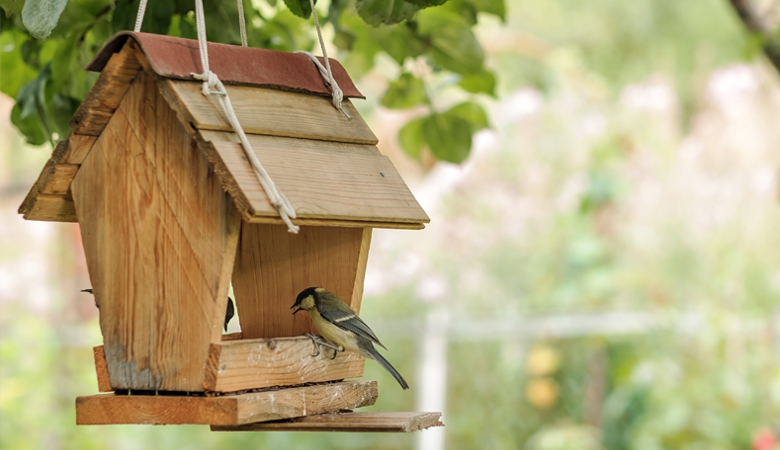
Bird at birdhouse

Feeding garden birds: What to feed and when?

It is recommended to feed garden birds all year round. Birds need energy throughout the entire year. In winter, they use energy to keep themselves warm; in spring, they need it for nesting, laying eggs, and raising their young. In autumn, they build up reserves to prepare for the winter. Birds stop eating once they are full. It is also a myth that birds forget how to find food for themselves.
Plants and gardening

Prepare your garden for spring: be careful with cocoa shell mulch and fertiliser

Most people are aware that chocolate is dangerous for dogs. A lot of dog owners take additional precautionary measures during Easter and Christmas, to prevent their furry friend from eating chocolate. However, plenty of people do not know that a harmful substance called theobromine can be found in various fertilisers and soil improvers. This is why we would like to make you aware of the dangers of this substance, which is often used when people prepare their gardens for the upcoming spring.

How do you attract more birds to your garden?

Attracting more birds to your garden starts with providing the right conditions. Birds look for places where there is enough food, water and peace. When a garden does not provide this, birds are less likely to stay. By responding to what birds need, you can attract more birds to your garden and create a wide variety of bird species. This makes your garden an attractive place for different garden birds.

More tips