Service
Basket
Menu
Save up to 30% now on Royal Canin Read more

Robin

The robin is a small, curious garden bird that you will often see in gardens, parks and woodlands. With its distinctive red-orange breast and inquisitive nature, it is easy to recognise. Robins are mainly active during the day and spend a lot of time searching for food on the ground. They feed primarily on insects, worms, seeds and berries. During the winter in particular, they frequently visit bird tables and gardens in search of extra food. Throughout the breeding season, robins fiercely defend their territory against other robins.

Robin

Characteristics

Body build: Compact songbird with a rounded head, short neck and a fine, pointed beak.
Colours and coat types: Distinctive red-orange breast and face, with a brownish back and a pale belly. Young robins do not yet have a red breast, but instead have mottled brown plumage.
Weight: 16 - 22 g
Life Expectancy: 2 - 3 years in the wild
Health risks: Food shortages, harsh winters, diseases, parasites and predation by cats and birds of prey.

Behaviour profile

Activity (day)
Visibility in the garden
Beneficial for the garden
Sensitivity to disturbance
Human interaction

Popular products for your garden

Habitat

Robins live mainly in gardens, parks, woodlands and shrub-rich areas where there is plenty of cover. They often search for food on the ground among leaves, plants and shrubs. You can attract robins by creating a green, varied garden with shrubs, ground cover and quiet hiding places. Dense shrubs and ivy also provide safe places for resting and nesting.

Diet

Robins feed mainly on insects, worms, spiders, seeds and berries. Insects are particularly important during the breeding season and for raising their young. In winter, robins rely more on seeds, berries and high-energy foods. You can help robins by providing mealworms, soft fat-based foods and small bird seed mixes. Always ensure that fresh drinking water is available as well.

Role in the garden

Robins help control insects and other small invertebrates. They also bring extra life and colour to the garden and are much loved for their distinctive song and curious nature.

Protection and points of attention

Robins need a safe environment with plenty of food. The use of pesticides can be harmful, as it reduces the number of insects available as a food source. Cats, birds of prey, harsh winters and the loss of sheltered areas also pose risks. You can help robins by creating a natural, pesticide-free garden with plenty of shelter, food and water.

All about the robin

What does a robin eat?

Robins mainly eat insects and other small invertebrates. These include worms, spiders, beetles, larvae and small insects, which they usually search for on the ground. They also eat seeds, berries and small pieces of fruit. In gardens, you can supplement their diet with mealworms, soft fat-based foods, fine bird seed mixes and unsalted sunflower seeds. Fresh drinking water is also important.

Which bird looks similar to a robin?

The robin is sometimes confused with other small songbirds that have warm brown or reddish colouring. Birds that may resemble a robin include:

  • The redstart
  • The nightingale
  • The dunnock
  • Young robins, which do not yet have a red breast

The redstart, in particular, shares some similar colouring with the robin but has a slimmer body and a distinctive red-orange tail. The robin is best recognised by its rounded body shape and its striking red-orange breast and face.

How long does a robin live?

A robin lives for an average of around 2 to 3 years in the wild. Many young robins do not survive their first year due to predation, disease, food shortages or harsh winters. Robins that do survive these challenges can sometimes live considerably longer.

What does a robin eat in winter?

During winter, robins eat fewer insects and rely more on other food sources. Their diet then consists mainly of seeds, berries, small pieces of fruit, mealworms and energy-rich foods such as fat balls or bird-safe peanut butter. Robins often search for food on the ground or at bird tables. During cold periods, additional food helps them maintain their energy levels.

What sound does a robin make?

A robin has a clear, soft and melodic song. Its song consists of quick, flowing notes and often sounds calm and pleasant. Robins are particularly vocal in the early morning and at dusk. They also make short contact calls and alarm calls, such as a sharp “tick-tick” or a soft rattling sound when startled or when defending their territory.

How do you recognise a robin?

A robin is most easily recognised by its distinctive red-orange breast and face. It also has a brownish back, a pale belly and a rounded body shape. Robins are relatively small birds with a fine, pointed beak and long legs. They often move by hopping along the ground in search of insects and other small creatures. Their curious behaviour and clear, melodious song also make them easy to identify

Also read our other blogs

How do you attract more birds to your garden?

Attracting more birds to your garden starts with providing the right conditions. Birds look for places where there is enough food, water and peace. When a garden does not provide this, birds are less likely to stay. By responding to what birds need, you can attract more birds to your garden and create a wide variety of bird species. This makes your garden an attractive place for different garden birds.
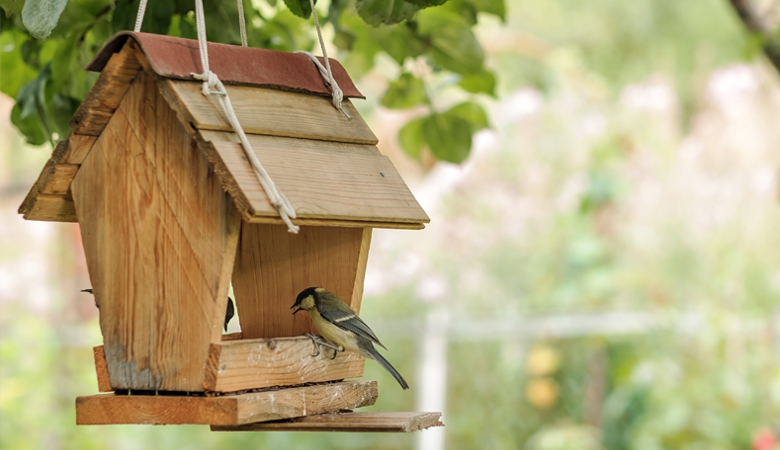
Bird at birdhouse

Feeding garden birds: What to feed and when?

It is recommended to feed garden birds all year round. Birds need energy throughout the entire year. In winter, they use energy to keep themselves warm; in spring, they need it for nesting, laying eggs, and raising their young. In autumn, they build up reserves to prepare for the winter. Birds stop eating once they are full. It is also a myth that birds forget how to find food for themselves.

Plants and gardening

Prepare your garden for spring: be careful with cocoa shell mulch and fertiliser

Most people are aware that chocolate is dangerous for dogs. A lot of dog owners take additional precautionary measures during Easter and Christmas, to prevent their furry friend from eating chocolate. However, plenty of people do not know that a harmful substance called theobromine can be found in various fertilisers and soil improvers. This is why we would like to make you aware of the dangers of this substance, which is often used when people prepare their gardens for the upcoming spring.

More tips