Service
Basket
Menu
Up to 30% off your favourite products! Read more

My dog won’t walk: what can you do?

Written by Mara |

Most dogs get excited the moment the lead appears. Sometimes the opposite happens and your dog refuses to go out. He freezes at the door, turns around as soon as you’re outside, or simply lies down. What’s behind this and what can you do? In this blog you’ll read the possible causes and how to help him enjoy going out again.
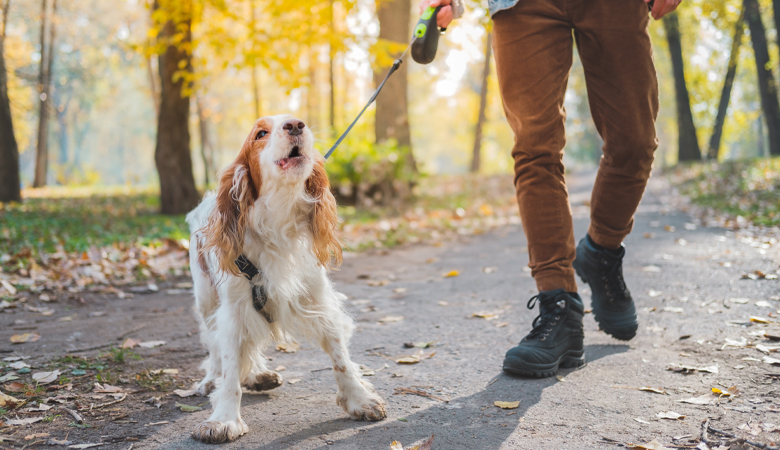
Dog on a forest path

A dog that doesn’t want to walk usually isn’t being stubborn, it’s a signal. Dogs always have a reason for their behaviour; the trick is to find out what’s going on. A dog who won’t walk is often telling you something doesn’t feel right. Causes can be physical, emotional or related to the environment.

Possible reasons why your dog won’t walk

There are many reasons a dog may refuse a walk. We’ll discuss them here:

1. Physical discomfort

One of the most common reasons a dog suddenly won’t walk is pain. Dogs rarely show pain directly. It can look like reluctance when the real issue is discomfort or stiffness. Think of:

  • Joint problems such as osteoarthritis or hip dysplasia
  • Back problems, such as a plain text anchor hernia or spondylosis
  • Muscle soreness after overexertion
  • Sore paws or pads: hot tarmac, road salt, a small stone or cut between the toes, an ingrown nail
  • Heart or lung problems
  • Overweight

You might see your dog stop abruptly, refuse kerbs or stairs, slow down, or lag behind. Older dogs or those recovering from surgery or injury may refuse because movement is uncomfortable. Sometimes a simple tweak helps, such as a supplement with glucosamine and omega-3 fatty acids, pain relief or physiotherapy. Always consult your vet first.

2. Fear and negative associations

Fear is a very common reason dogs stop wanting to walk. Some have had a scary experience outdoors, such as a loud bang, fireworks, an aggressive dog or a speeding scooter. That can be enough to create a lasting negative association: “outside” feels unsafe. Even long after the event, the tension can remain.

Fear can show up in many ways:

  • Refusing to leave the house or stopping at the front door
  • Freezing or lying down mid-walk
  • Trembling, panting or hiding behind you
  • Pulling back home or turning around on stepping outside
  • Barking, snapping or pulling from frustration and stress

When your dog is anxious outdoors, build confidence slowly. Don’t force it, as that increases tension. Start small and reward desired behaviour like calmly standing by the door or walking a few metres, then build from there. You can also support your dog with calming products that reduce anxiety and promote relaxation. Good options include Adaptil, Dr. Ann’s Stress Reduction, Zylkene Plus, PUUR Nervo and Vetplus Calmex. If this still isn’t enough, contact a behaviourist.
Relevant products

3. Insecurity or overstimulation

Not every non-walking dog is fearful; some are overstimulated. Too many impressions at once can cause a shutdown. Poorly socialised dogs or those with little experience in busy places may block on walks. Heavy traffic, unfamiliar sounds, crowds or lots of dogs can be too much. Highly sensitive or nervous dogs pick up more signals and can develop stress or avoidance. It looks like refusal, but they simply can’t process more.

Offer calm, predictability and safety. Choose quiet routes and build up gradually so your dog relearns relaxed walking. A simple routine helps. Watch body language like yawning or trembling as early signs it’s getting too much. Supportive products such as the Adaptil Calm Diffuser, Dr. Ann’s Stress Reduction or Zylkene can lower the arousal threshold. At home, provide a quiet, consistent resting spot for recovery after walks.

4. Low motivation or boredom

Some dogs don’t automatically enjoy walks. Routes might be too predictable or, conversely, too long and tiring. Young, active or clever dogs can bore easily if there’s little challenge. Result: dawdling, stopping or refusing. For dogs, walks are more than exercise; they’re for sniffing, exploring and teamwork with you. If this need is ignored, motivation drops.

5. Environmental factors or routine changes

Many dogs are sensitive to changes in environment or routine. Think of a new collar or harness, a different area, rain, or subtle things like new smells or surfaces. What seems trivial to us can feel unpleasant or uncertain to your dog.

Time of day also matters. In the evening dogs are often more tired, see less well, and may be startled by lights, noises or moving shadows. If your dog is reluctant at certain times or in specific situations, observe calmly what’s different. Small changes, like a familiar location or another time, can help.

If refusal continues, a qualified behaviourist can help pinpoint the cause.

How does your dog show refusal?

Dogs communicate subtly. Refusal isn’t always growling, pulling or barking. Small signals can clearly show stress, tension or overload. Watch for:

  • Looking away
  • Lip-licking or yawning
  • Tail tucked
  • Hesitating at the door
  • Flattening to the ground
  • Hiding or withdrawing

What to do when your dog won’t walk?

Work step by step.

1. Check health first

Rule out physical causes: joint or muscle pain, age-related issues, neurological problems. Even mild arthritis can reduce willingness to move. Have your vet examine your dog. Sometimes pain relief, appropriate diet or physiotherapy makes a big difference.

2. Build confidence gradually

Forcing often backfires. An insecure or tense dog is more likely to shut down. Never drag your dog forward; it can worsen the problem. Start small with positive associations:

  • Clip on the lead indoors and reward.
  • Step a few metres outside and return.
  • Extend gradually as your dog relaxes.

Some dogs benefit from walking with a calm, social dog as a role model.

3. Choose quiet routes and times

Environmental stimuli matter more than you think. Avoid busy roads, loud noises or unpredictable situations. Prefer quiet hours, such as early morning. Some dogs see less well, for example with cataracts, or tire as the day goes on, making evenings harder.

4. Use positive motivation

Sniffing is relaxing. Reward curiosity, not just forward movement:

5. Make walks predictable

Dogs thrive on routine. With fear or uncertainty, predictability brings calm. Temporarily choose:

  • One fixed route
  • Walks at set times
  • The same collar or harness

Once your dog feels safe, gradually expand again. With small steps, patience and positive reinforcement, you’ll rebuild confidence.

What if a dog is never walked?

Dogs miss far more than toilet breaks. They lack exercise and mental stimulation and miss social interaction with other dogs, people and the wider environment. Over time this can lead to overweight, boredom, frustration and behaviour problems like barking, destruction or even aggression. Even dogs with garden access benefit from regular walks: there’s more to discover outside — new scents, sounds, stimuli and tracks — their way to explore, gather information and relax through sniffing and movement.

A healthy dog can manage eight to ten hours without a walk in an emergency, but that should be exceptional. Aim for at least three to four short walks daily, with one longer, decompressing walk. Puppies, seniors and dogs with health issues often need different schedules. Adjust accordingly.

Still have questions about why your dog won’t walk? Contact us at veterinarian@vetsend.co.uk.

Sign up for our newsletter

Read our other blogs

More tips
Armanda-Klein

About the author

Armanda, veterinary nurse at Vetsend

Armanda is a veterinary nurse and Content Specialist at Vetsend with a background in veterinary medicine. She provides accessible and expert advice on animal health, behaviour, and care, helping pet owners make well-informed decisions.

Read more about Armanda