Service
Basket
Menu
Great savings in our Summer Deals! Read more

Carpet Python

The Carpet Python (Morelia spilota) is a constrictor snake that naturally occurs in Australia, New Guinea and several surrounding islands. The snake lives in various habitats, including forests, savannahs and rocky areas. The Carpet Python is mainly active at dusk and during the night, but can also be active during the day to warm itself. The species is known as a good climber and spends a lot of time in shrubs and trees, although it also regularly moves along the ground. In captivity, it is important to set up a terrarium that matches its natural habitat, with plenty of climbing opportunities, hiding places and suitable temperature zones. This encourages natural behaviour and helps to reduce stress.

Carpet Python

Characteristics

Country of origin: Australia, New Guinea and several surrounding islands
Also known as: Morelia spilota
Body build: A muscular, elongated body with a distinct head, powerful jaws and a relatively long tail.
Weight: 2 - 15 kg
Life Expectancy: 15 - 25 years
Health risks: Shedding problems, respiratory infections, parasites, burns caused by incorrect heating, and health issues resulting from unsuitable temperatures, humidity or nutrition.
Food type: Carpet Pythons feed on prey such as rodents, birds and occasionally small mammals.
Activity period: Mainly active at dusk and during the night, but can also be active during the day to bask or warm itself.
Color: Usually features a pattern of dark and light blotches or bands in shades of black, brown, yellow or olive green. The skin is covered with smooth, slightly glossy scales.

Profile

Activity
Tameness
Ease of care
Space requirements
Environmental sensitivity
Nutritional needs

Popular products for the Carpet Python

Origin

The Carpet Python naturally occurs in Australia, New Guinea and several surrounding islands. The species inhabits a variety of environments, including forests, savannahs, rocky regions and coastal areas. Carpet Pythons are well adapted to different habitats and are sometimes even found close to human settlements. As excellent climbers, they spend much of their time in trees and shrubs, but they are also regularly found on the ground. During the day they often rest in a sheltered spot, becoming more active at dusk and during the night as they search for prey. The Carpet Python’s natural habitat generally has warm temperatures with relatively high humidity, depending on the region where the snake occurs.

Appearance and behaviour

The Carpet Python has a long, muscular body with a distinct head and a relatively long tail. Its colour and pattern can vary greatly, but usually consist of a striking pattern of dark and light blotches or bands. This pattern helps the snake blend into its surroundings. Carpet Pythons are mainly active at dusk and during the night, although they may also be active during the day to warm themselves. Compared with many other pythons, they are known for being curious and alert snakes that actively explore their surroundings. Thanks to their climbing ability, they make frequent use of branches and elevated resting places. With regular, calm handling, many Carpet Pythons become accustomed to being handled. Like other snakes, they shed their skin regularly. Suitable humidity and a well-designed terrarium help ensure trouble-free shedding.

All about the Carpet Python

What does a Carpet Python eat?

The Carpet Python is a carnivore that hunts a variety of prey in the wild. Its diet mainly consists of rodents, birds and small mammals. In captivity, Carpet Pythons are usually fed prey such as mice or rats that are appropriately sized for the snake. These prey animals are generally offered frozen and fed after thawing. This reduces the risk of injuries that live prey can cause. Young Carpet Pythons are usually given smaller prey, while adult snakes can eat larger mice or rats depending on their size. Feeding frequency depends on the snake’s age, size and condition. In addition, always ensure fresh drinking water is available, preferably in a large water dish so the snake can also soak in it if desired.

How large can a Carpet Python grow?

The length of a Carpet Python depends on its sex and living conditions. On average, Carpet Pythons grow to between 150 and 250 cm in length. Some snakes remain smaller, while others can exceed 300 cm. Females are generally larger and heavier than males.

Growth is fastest during the first few years of life. With proper care, sufficient space and an appropriate feeding schedule, a Carpet Python will usually reach its adult length within a few years. As this species is an active climber, it is important that the terrarium provides enough space for movement both horizontally and vertically.

How venomous is a Carpet Python?

The Carpet Python is not venomous. Like other pythons, it kills its prey by wrapping its body around it and constricting it. It then swallows the prey whole. Although Carpet Pythons are not venomous, they may defend themselves if they feel threatened, for example by biting. With a calm approach and regular handling, many Carpet Pythons are easy to care for. It is important not to startle the snake and always approach it calmly.

How large should a Carpet Python terrarium be?

The size of the terrarium depends on the Carpet Python’s age and length. Young snakes can temporarily be kept in a smaller terrarium, but as they grow they require more space. A terrarium of approximately 80 x 50 x 50 cm is often used for a young Carpet Python. This provides sufficient space while still allowing the snake to feel secure. A juvenile or subadult Carpet Python will usually require a terrarium of approximately 120 x 60 x 90 cm. Because this species enjoys climbing, not only the floor space but also the height of the enclosure is important. For an adult Carpet Python, a terrarium measuring at least 180 x 90 x 120 cm is generally recommended. Larger snakes often require even more space. A spacious terrarium provides room for sturdy climbing branches, hiding places and different temperature zones, allowing the snake to display its natural behaviour.

How often should a Carpet Python eat?

Feeding frequency mainly depends on the Carpet Python’s age and size. Young snakes are usually fed a suitably sized prey item, such as a mouse, every 5 to 7 days. As the snake grows, the interval between feeds becomes longer. Juvenile and subadult Carpet Pythons are often fed every 7 to 10 days, while adult snakes are usually fed once every 10 to 14 days. Adult snakes are given larger prey items, such as rats.

Carpet Pythons are generally known to be good feeders. However, a snake may temporarily eat less, for example during shedding, after being moved to a new terrarium or during the breeding season. As long as the snake remains healthy, alert and does not show significant weight loss, this is usually not a cause for concern.

Are Carpet Pythons suitable for beginners?

Carpet Pythons can be suitable for beginner snake keepers who are willing to learn about the species thoroughly. Compared with some other pythons, Carpet Pythons are often more active, more alert and less reserved. Young snakes can sometimes behave defensively, but with regular and calm handling, many Carpet Pythons become accustomed to being handled. Their care requires a spacious terrarium with plenty of climbing opportunities, suitable temperature zones and appropriate humidity. It is also important to consider the snake’s eventual size, as some Carpet Pythons grow considerably larger than many other commonly kept snake species.

For first-time keepers who prepare well and have sufficient space available, the Carpet Python can be an interesting and impressive species to keep. Previous reptile experience is not essential, but a good understanding of the species’ care requirements and needs is important.

Does a Carpet Python bite hurt?

A Carpet Python’s bite can be painful, but it is usually not serious. The snake has many sharp, backward-facing teeth that it uses to grip its prey. This can result in small wounds. How painful the bite is depends partly on the size of the snake. A bite from a young snake is generally less severe than one from a large adult. In most cases, the wounds heal without complications if they are cleaned properly.

The risk of being bitten can be reduced by always approaching the Carpet Python calmly and avoiding sudden movements. A snake may also react more quickly if it thinks food is being offered. Proper handling and a suitably designed enclosure help reduce stress and prevent unwanted behaviour.

Care and housing of the Carpet Python

The Carpet Python is an active snake that lives both on the ground and in trees. Compared with many other pythons, this species regularly uses climbing branches and elevated resting places. For an adult Carpet Python, a terrarium measuring at least 180 x 90 x 120 cm is recommended. Larger snakes often require even more space. A spacious terrarium allows you to create different temperature zones, hiding places and climbing structures. Make sure the enclosure is sturdy and secure so the snake can climb and rest safely. A large water dish and a suitable heat source are important for its wellbeing.

Temperature and lighting

It is important to provide several temperature zones within the terrarium. Aim for a warm area of approximately 31 to 33°C and a cooler side of 24 to 27°C. At night, the temperature may drop to 22 to 25°C. Heating can be regulated with a heat mat, heat panel or heat lamp, which should always be controlled by a reliable thermostat. Carpet Pythons do not require strong UVB lighting, but a day and night cycle of approximately 10 to 12 hours of light per day helps maintain a natural rhythm.

Enclosure setup

Choose a bedding that retains moisture without remaining constantly wet, such as coconut fibre, reptile bark or a suitable terrarium substrate. Place several hiding places throughout the terrarium so the snake can retreat to different locations. As Carpet Pythons enjoy climbing, sturdy branches, tree trunks and elevated resting places are essential. Also provide a large water dish with fresh drinking water where the snake can soak if it wishes.

Care

Carpet Pythons shed their skin regularly. During shedding, the skin may become dull and the eyes may develop a cloudy, milky appearance. Suitable humidity helps ensure the shedding process goes smoothly. After shedding, check that the old skin has come off completely, especially around the tip of the tail and the eyes. Remove droppings and soiled bedding regularly, replace the drinking water frequently and keep the terrarium clean. Also monitor the snake’s feeding behaviour, physical condition and general behaviour so that any potential problems can be detected at an early stage.

Reptiles and the vet

Reptiles and the vet: where can you go with your snake, turtle or lizard?

Reptiles and amphibians are unique pets that need completely different care from dogs or cats. They have specific requirements for their environment, diet and health, and the same applies when medical care is needed. But what should you do if your bearded dragon suddenly stops eating, or if your turtle has a small wound? Can you simply go to the vet? In this blog, you’ll read why it is important to find a vet with knowledge of reptiles and amphibians, and how insurance works for these exotic pets.
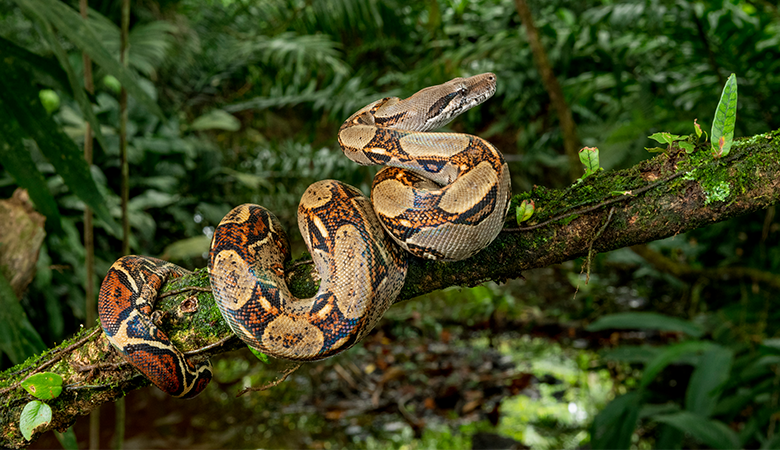
Snake sitting on a branch

How to set up a terrarium for reptiles? A complete guide

A well-designed terrarium is the foundation for a healthy and active reptile. Reptiles are completely dependent on their environment: temperature, humidity, lighting, diet and layout must closely match their natural habitat. In this blog, we guide you step by step through setting up a terrarium, from the initial choices to the finer details of plants, lighting and climate.

reptile

Types of reptiles: which reptiles are there?

Reptiles are fascinating animals that have been roaming our planet for millions of years. They belong to the group of cold-blooded vertebrates, have scaly skin, usually lay eggs, and depend on their environment to regulate their body temperature. Reptiles are popular as pets, but they are also incredibly diverse in the wild. In this blog, you will learn which types of reptiles exist and what their main characteristics are.

More tips