Service
Basket
Menu
5% off all dog coats this week with code DOGCOAT5 Read more

Day gecko

The Day Gecko (Phelsuma spp.) is a striking terrarium reptile that naturally occurs in tropical regions, particularly Madagascar and the surrounding islands. This tree- and shrub-dwelling gecko species is active during the day and stands out for its bright colours and adhesive toe pads, which allow it to climb vertical and smooth surfaces with ease. Day Geckos are known for their alert and fast behaviour and are therefore mainly kept as display animals, as handling often causes stress. In captivity, it is important to replicate the natural conditions as closely as possible, with the correct temperature, lighting, humidity and enclosure setup to meet their basic needs. This helps keep your reptile healthy and stress-free.

Day gecko

Characteristics

Country of origin: Madagascar and surrounding islands
Also known as: Phelsuma
Body build: Slender body with a long tail and well-developed toes with adhesive pads.
Colours and coat types: Smooth skin with bright colours, often green with red, orange or blue markings.
Weight: 25 - 90 g
Life Expectancy: 10 - 15 years
Health risks: Metabolic Bone Disease (MBD), shedding problems and dehydration due to incorrect humidity levels.

Profile

Activity
Tameness
Ease of care
Space requirements
Environmental sensitivity
Nutritional needs

Popular products for the Day Gecko

Origin

The Day Gecko naturally occurs in tropical regions, particularly Madagascar and the surrounding islands in the Indian Ocean. In this warm and humid habitat, Day Geckos mainly live in trees, shrubs and other vertical structures. They inhabit areas with plenty of sunlight, where they actively move around during the day in search of food and suitable basking spots. Their way of life is strongly adapted to a stable, warm climate with high humidity. Due to their diurnal lifestyle and need for UV light, they rely on sunlight to properly support their bodily functions.

Appearance and behaviour

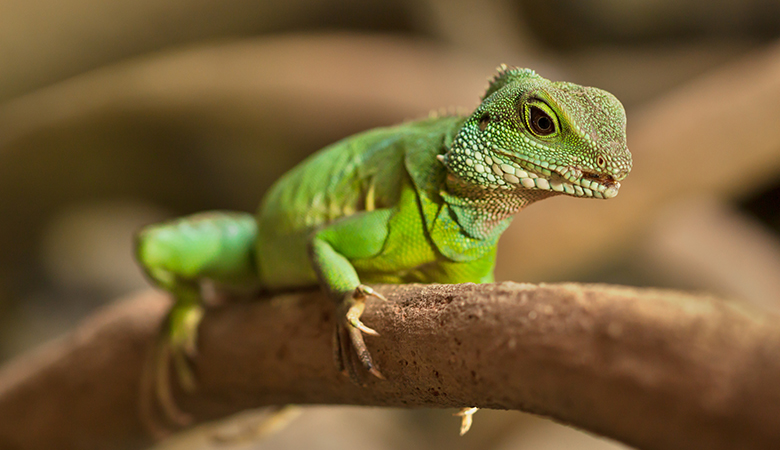
The Day Gecko has a slender body with a relatively long tail and smooth skin. Its toes are equipped with well-developed adhesive pads, allowing it to climb vertical and smooth surfaces effortlessly. Many species have a bright green base colour with red, orange or blue markings, with variations in colour and pattern depending on the species. Day Geckos are active during the day and are often seen basking on leaves, branches or terrarium walls. They are alert and fast animals that can react nervously to disturbances. Handling often causes stress and may lead to skin damage or tail loss. Typical behaviour includes active foraging, territorial behaviour in males, and licking nectar-like food sources. Day Geckos shed regularly as part of their growth and skin maintenance. In a well-designed enclosure with sufficient humidity, this process usually proceeds without problems and no old skin remains attached.

All about the Day Gecko

What does a Day Gecko eat?

The Day Gecko is an omnivore that feeds on insects and sweet plant matter in the wild. During the day, it hunts small insects such as crickets, flies and other invertebrates, and also eats nectar, tree sap and soft fruit. In captivity, a suitable diet consists of live insects such as crickets, Dubia cockroaches and small locusts, supplemented with specialised fruit or nectar food for Day Geckos. Ripe fruit may be offered in small quantities, provided it is finely pureed and suitable for reptiles.

As live insects form an important part of the diet, it is essential to feed them properly before offering them. Provide the insects with nutritious feed that increases their nutritional value, as well as vegetables so they are well gut-loaded. In addition, dust them regularly with a calcium and vitamin supplement to prevent deficiencies and bone problems such as MBD. Do not use insects from the wild due to the risk of pesticides and parasites. Fresh drinking water must always be available.

Can Day Geckos bite?

Yes, Day Geckos can bite, but this rarely happens. They are not aggressive animals. Biting usually only occurs when a Day Gecko feels threatened or is being restrained. Because they are fast and easily startled, they are more likely to try to escape than to bite in such situations.

Why should you not handle a Day Gecko?

It is best not to handle a Day Gecko because this causes significant stress. Their skin is delicate and can be damaged when restrained, sometimes even causing part of the skin to come off. In addition, Day Geckos may drop their tail as a defence mechanism when stressed. Because Day Geckos are fast and easily startled, they do not experience handling as pleasant but as a threat. For this reason, they are mainly kept as display animals, where minimal contact supports their wellbeing.

How big does a Day Gecko get?

A Day Gecko grows to an average length of 15 to 30 cm, including the tail. The exact size depends on the species. Smaller species remain around 15 to 20 cm, while larger species, such as the Giant Day Gecko, can reach approximately 30 cm.

Are Day Geckos suitable for beginners?

Day Geckos are generally less suitable for beginners. They have specific requirements regarding temperature, humidity and lighting, and they are sensitive to mistakes in care. In addition, they are fast, easily startled and not suitable for handling, which can make keeping them more challenging for inexperienced owners. For beginners who prepare thoroughly and are willing to manage the terrarium carefully, a Day Gecko may be possible, but in general they are better suited to keepers with some experience.

What is Metabolic Bone Disease (MBD)?

Metabolic Bone Disease (MBD) is a common condition in reptiles such as the Day Gecko, caused by a deficiency of calcium, vitamin D3 or insufficient UVB light. These three factors are interconnected: without adequate UVB light, the body cannot produce vitamin D3, and without vitamin D3, calcium cannot be properly absorbed.

A lack of calcium weakens the skeleton and affects bone structure. The first signs of MBD are often subtle:

• A soft lower jaw
• Tremors in the legs
• Reduced appetite
• Lethargic behaviour
• In later stages, skeletal deformities, crooked legs or spine, and even fractures may occur.

MBD can be prevented by regularly replacing UVB lighting (usually every 6 to 12 months), providing sufficient calcium and vitamin supplements, and ensuring the correct temperature and nutritional balance. A properly set up terrarium and a balanced diet are therefore essential to prevent this condition.

Care and housing of the Day Gecko

The Day Gecko is mainly active in trees and shrubs and makes extensive use of vertical surfaces. For one adult animal, a vertically oriented terrarium of at least 45 x 45 x 60 cm is required, with larger enclosures always providing more space for climbing and natural behaviour. Furnish the enclosure with clear basking and shaded areas so the Day Gecko can regulate its own body temperature. Proper UVB lighting and a suitable heat source are essential for metabolism, bone health and overall wellbeing.

Temperature and lighting

Under ideal conditions, the daytime temperature ranges between 25 and 30°C, with a basking spot where the temperature can rise to approximately 32°C. At night, the temperature may drop to around 20 to 22°C. Day Geckos are active during the day and therefore require 10 to 12 hours of lighting daily, including UVB. Ensure that all heat sources are controlled with a reliable thermostat to prevent temperature fluctuations.

Enclosure setup

Use furnishings that encourage climbing and hiding, such as sturdy branches, bamboo, cork and live or artificial plants. These provide both shelter and surfaces for basking. An absorbent or natural substrate helps retain moisture. Provide a place where water droplets can remain, for example on leaves, as Day Geckos often drink from surfaces rather than from a water bowl.

Care

Day Geckos shed regularly and do so best in an environment with sufficient humidity. By misting the terrarium daily or several times a week, you support trouble-free shedding. It is important to keep the enclosure clean by removing droppings and food remains daily and thoroughly cleaning the terrarium on a regular basis. In addition, closely monitor the overall condition, such as alertness, appetite, and intact skin and tail.

More tips