Service
Basket
Menu
This week up to 33% off dental care for your pet Read more

MBD in reptiles: what is Metabolic Bone Disease and how can you prevent it?

Written by Mara |

Metabolic Bone Disease (MBD) is a common and serious health condition in reptiles. It develops due to a disrupted calcium and phosphorus metabolism, often caused by incorrect nutrition, insufficient vitamin D3 or a lack of UVB light. Without timely treatment, MBD can lead to permanent skeletal deformities.
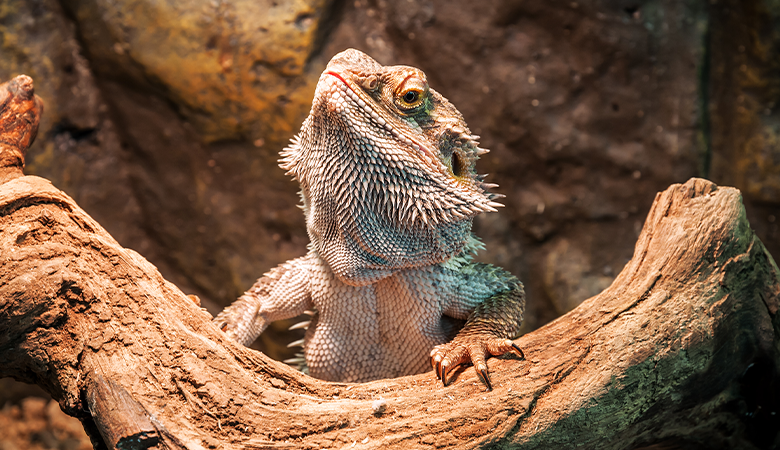
Reptile on a tree trunk

What is Metabolic Bone Disease (MBD)?

MBD is a collective term for conditions in which a reptile’s bones weaken or deform. This occurs when the body cannot absorb or use enough calcium. Calcium is essential for:

  • strong bones
  • proper muscle function
  • nerve signal transmission

When calcium balance is disrupted, the body draws calcium from the skeleton, leading to bone demineralisation and deformities.
Relevant products

How does MBD develop in reptiles?

Below are the main causes of MBD.

Calcium deficiency

A diet that contains too little calcium can cause deficiency, for example in insect-eating reptiles without supplements or those fed a limited diet.

Vitamin D3 deficiency

Vitamin D3 is essential for calcium absorption. Reptiles produce vitamin D3 when exposed to UVB light. Without UVB lighting or vitamin D3 supplementation, calcium absorption becomes insufficient.

Incorrect calcium to phosphorus ratio

Excess phosphorus, for example from fruit or certain insects, can block calcium absorption. If food contains too much phosphorus relative to calcium, an indirect calcium deficiency develops.

Insufficient UVB lighting

Even with adequate dietary calcium, MBD can develop if suitable UVB lighting is missing, preventing vitamin D3 production.

Symptoms of MBD

Symptoms vary by species and individual reptile, but common signs include:

  • soft or deformed bones
  • curved legs or spine
  • swollen or thickened jaw (rubber jaw)
  • difficulty moving or climbing
  • muscle tremors or weakness
  • lethargy and reduced appetite
  • fractures caused by minimal strain

In young reptiles, MBD can result in severe growth disorders.

Diagnosis of MBD

A veterinarian experienced with reptiles can diagnose MBD based on:

  • physical examination
  • X-rays of the skeleton
  • blood tests (calcium and phosphorus levels)

The earlier the condition is identified, the better the prognosis.

Treatment of Metabolic Bone Disease

Treatment focuses on restoring calcium metabolism and improving husbandry conditions:

  • calcium and vitamin D3 supplementation
  • optimising UVB lighting
  • dietary adjustments
  • in severe cases, calcium injections administered by a veterinarian

Please note that bone deformities are not always reversible, but further damage can often be prevented. In very severe cases, the prognosis may be poor and euthanasia may be considered.

Preventing MBD: the right foundation

Prevention is essential when it comes to MBD. Always ensure:

  • a species-appropriate diet
  • adequate calcium intake
  • correct UVB lighting
  • additional vitamins and minerals when required

View suitable vitamins and minerals for reptiles.

Not sure which diet and care suit your reptile? Explore information about different reptile species.

Metabolic Bone Disease in reptiles is often caused by incorrect nutrition and housing. By understanding your reptile’s needs and making timely adjustments, MBD can usually be prevented. If you notice symptoms that may indicate MBD, always consult a veterinarian experienced in reptile care.

Sign up for our newsletter

Read our other blogs

More tips
image (20)

About the author

Mara van Brussel-Broere, Veterinarian at Vetsend

Graduated as a companion animal veterinarian from Utrecht University, she uses her practical experience to advise customers and share knowledge at Vetsend. She finds it important to provide pet owners with clear information about health and wellbeing.

Read more about Mara