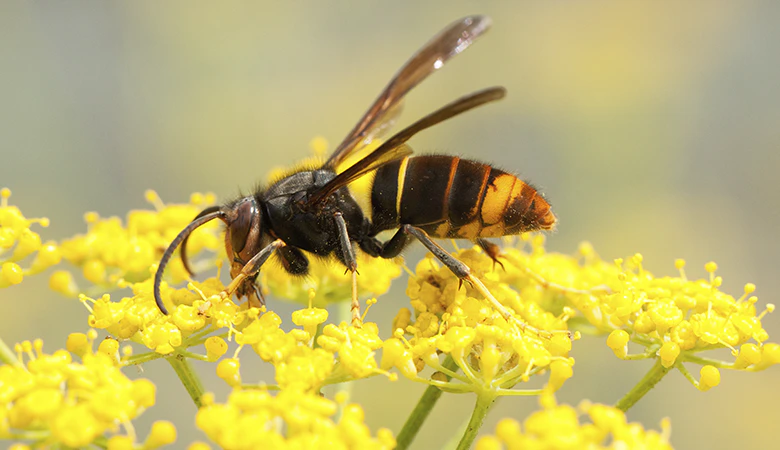
What is the Asian hornet?
The Asian hornet originally comes from Southeast Asia and arrived in Europe around 2004. The species has now also established itself in the Netherlands and Belgium.
The Asian hornet is mainly a problem for nature, because it catches many honey bees and other pollinating insects. For people and pets, the sting is no more venomous than that of an ordinary wasp or European hornet, but because of its larger size and the amount of venom, a sting can be more painful.
Are hornets dangerous to pets?
A single sting is unpleasant for most healthy dogs and cats, but usually not life-threatening.
A greater risk arises when:
- an animal is stung several times
- a sting occurs in the mouth or throat
- an animal develops an allergic reaction
- small pets, such as rabbits or guinea pigs, suffer multiple stings
For horses, an attack by several hornets can also be very painful and cause a lot of stress.
Which pets are at risk?
Curious dogs are most at risk. They regularly snap at flying insects and can therefore be stung in the mouth or on the tongue. Cats also sometimes try to catch a hornet while playing or hunting. Horses can be stung when they come close to a nest. Small pets, such as rabbits, guinea pigs and birds, are stung less often, but because of their lower body weight they are more sensitive to multiple stings.
Symptoms of a sting
After a sting, the following usually occurs:
- sudden pain
- whining or yelping
- swelling
- redness
- licking or scratching at the sting site
If a dog or cat is stung in the mouth or throat, the following symptoms may also occur:
- excessive drooling
- difficulty swallowing
- shortness of breath
- retching
Allergic reaction to a hornet sting
Some animals can develop an allergic reaction to the venom of wasps or hornets.
Warning signs include:
- swelling of the muzzle or eyelids
- hives
- vomiting
- lethargy
- shortness of breath
- collapse
An allergic reaction can develop quickly. Always contact your vet immediately.
What should you do if your pet has been stung?
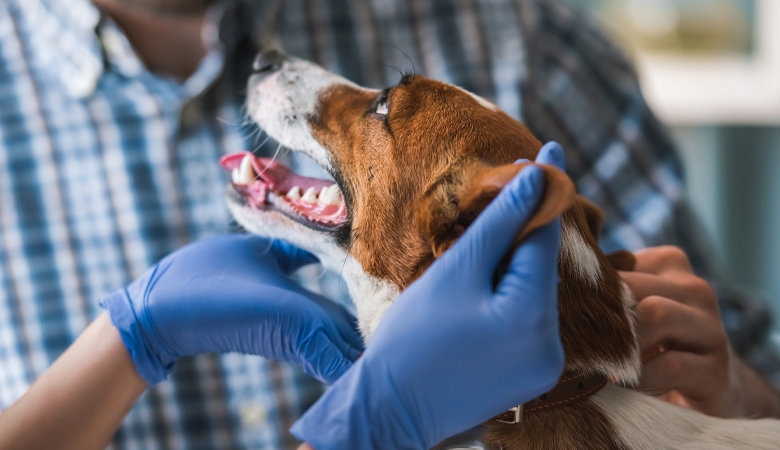
Stay calm and check where your animal has been stung. Carefully cool the sting site with a cold compress or a cloth with cold water. This can help reduce pain and swelling. Keep a close eye on your pet during the first few hours to see whether the swelling increases or whether your animal becomes short of breath.
Has your dog or cat been stung in the mouth, tongue or throat? Contact a vet immediately. The swelling can put pressure on the airways. Fast treatment is also necessary in the case of multiple stings or an allergic reaction.
Can you give your pet anything yourself?
Never give your pet painkillers or antihistamines for humans on your own initiative. Some products are toxic to animals or require a different dosage. If necessary, the vet can prescribe an anti-inflammatory, antihistamine or other treatment.
Supporting the skin after an insect sting
In the case of a mild local reaction, a caring skin product can provide relief.
Products that can be used to care for the skin after an insect sting include:
These products can support the skin, but do not replace treatment by the vet if there is a serious reaction.
How can you prevent a sting?
You can reduce the risk of stings by:
- not allowing your dog to snap at flying insects
- avoiding hornet or wasp nests
- keeping dogs on a lead in areas where a nest has been found
- not removing nests yourself
Do you see an Asian hornet nest? Keep your distance and report it to the designated authority in your municipality or region. Never try to remove a nest yourself.
Are Asian hornets more dangerous than European hornets?
Although the Asian hornet receives a lot of attention, its sting is no more venomous to people and pets than that of the European hornet. The greatest risk arises when an animal is stung several times or when a nest is disturbed.