The Importance of Proper Dental Care in Horses
Written by Astrid |
A healthy equine dentition is essential for good feed intake, comfort during riding, and your horse’s overall well-being. Nevertheless, dental problems often go unnoticed, as horses tend to show pain or discomfort only very subtly. In this blog, you will read why dental care is so important, which signs may indicate problems, and how preventive care can help avoid many issues.
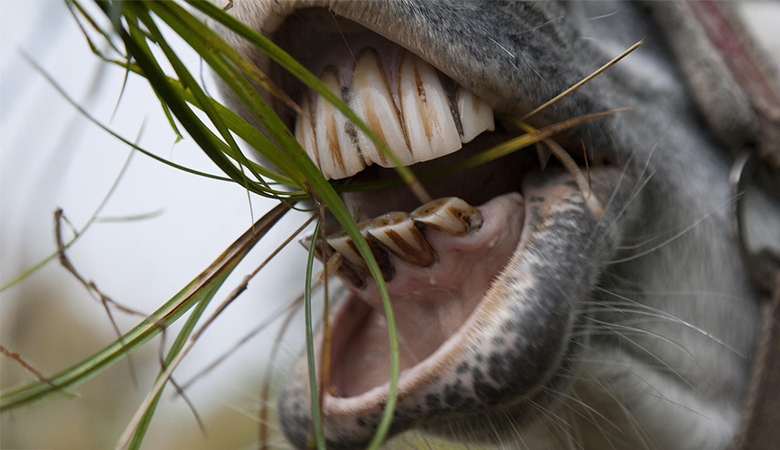
Your horse’s teeth grow and wear down throughout its entire life. In nature, this happens through prolonged chewing of roughage, but our modern methods of housing and feeding can alter this natural wear pattern. As a result, irregularities may develop that can cause discomfort.
The Anatomy of the Equine Dentition
A horse’s dentition is fully adapted to eating roughage. At the front of the mouth are the incisors, which the horse uses to cut grass, while the cheek teeth at the back of the mouth grind the feed finely. Between these areas lies a toothless space known as the bars, where the bit rests during riding. An adult horse usually has between 36 and 44 teeth, depending, among other factors, on sex and the presence of wolf teeth. The cheek teeth have long roots and continue to erupt throughout the horse’s life to compensate for constant wear. The dentition also changes in different phases: young horses shed their milk teeth, while in older horses the length of the teeth gradually decreases. Precisely because of these ongoing changes, regular dental checks are important.