1: Great Tit
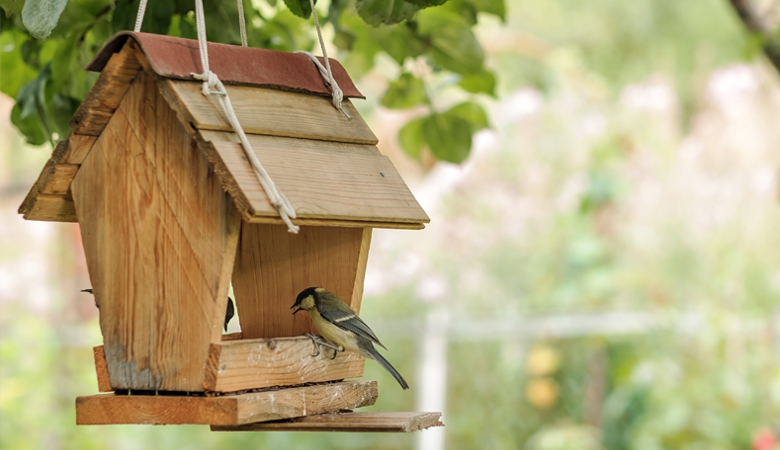
The Great Tit is one of the most common garden birds and often ranks at the top of counts. The bird is easy to recognise by its yellow underside and black head with white cheeks. Great Tits are found in gardens, parks and wooded areas, as long as there is enough food and nesting space available. They often breed in tree holes or nest boxes and make extensive use of them. They feed on insects, seeds and food offered on bird tables, among other things.
2: House Sparrow
The House Sparrow is a very well-known garden bird that often occurs in groups and is frequently seen in gardens and residential areas. The bird has a sturdy build and can be recognised by its large beak and relatively large head. House Sparrows mainly live near buildings and feel at home in an environment with shrubs, shelter and enough food. They often breed in cracks and holes in buildings or under roof tiles, and sometimes also in nest boxes. They feed on seeds, grains, insects and food offered in gardens, among other things.
3: Blue Tit
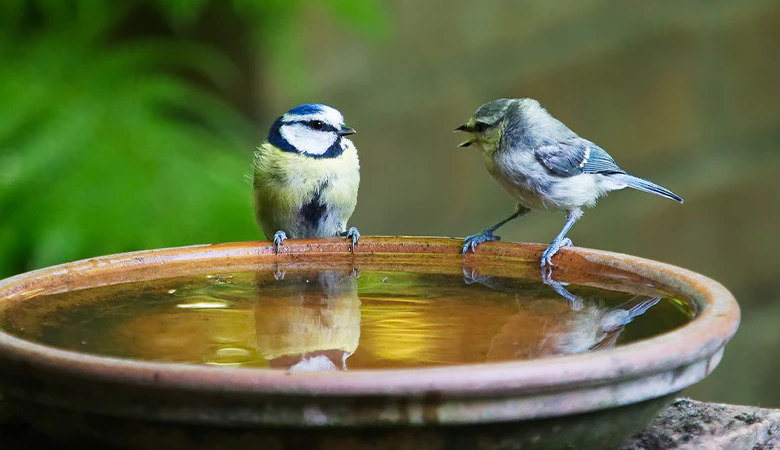
The Blue Tit is a small and common garden bird that has adapted well to the human environment. This bird can be recognised by its blue head, yellow breast and dark eye stripe. Blue Tits are found in gardens, parks and wooded areas and place few demands on their habitat. They often breed in tree holes or nest boxes and gladly make use of them. They feed on insects, seeds and food offered on bird tables, among other things.
4: Blackbird
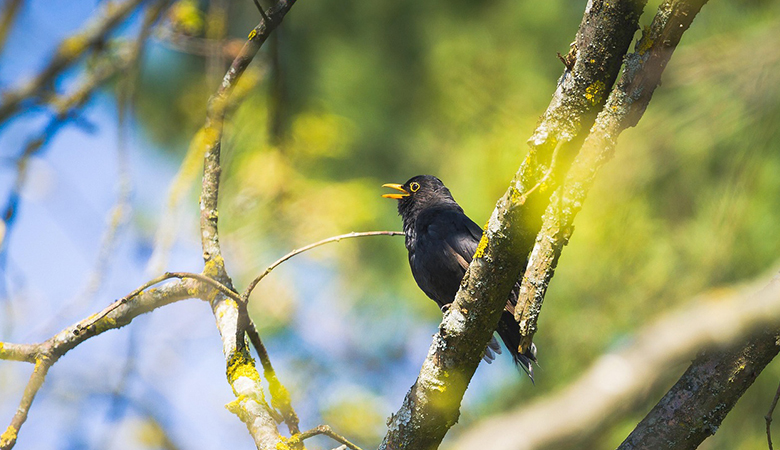
The Blackbird is one of the most common and best-known garden birds and is seen in many gardens. The male is completely black with a yellow beak, while the female is brown in colour. Blackbirds are found in gardens, parks and other green environments where grass, shrubs and trees are present. They often breed in dense shrubs or low trees, where they can hide their nest well. They feed on worms, insects, berries and fruit, among other things.
5: Jackdaw
The Jackdaw is a common bird that is often seen in groups in and around gardens and residential areas. The bird can be recognised by its black plumage with a light grey neck and pale eyes. Jackdaws mainly occur near buildings, where they have adapted well to the human environment. They often breed in cavities in buildings, such as under roof tiles, in chimneys or in other openings. They feed on insects, seeds and food found on the ground, among other things.
6: Chaffinch
The Chaffinch is a common garden bird that is mainly found in gardens, parks and other green environments. The male can be recognised by its blue-grey head and orange-red breast, while the female is less striking in colour. Chaffinches live in areas with enough trees and shrubs, where they find shelter and food. They often breed well hidden in shrubs or trees. They feed on seeds, plant material and also insects during the breeding season, among other things.
7: Wood Pigeon
The Wood Pigeon is a large and common garden bird that is regularly seen in gardens and parks. The bird can be recognised by its grey plumage, pink breast and white patch on the neck and wings. Wood Pigeons occur in green environments with trees, where they also build their nests. They often breed in trees and make a simple nest of twigs there. They mainly feed on seeds, buds and other plant material, which they often find on the ground.
8: Starling
The Starling is a common garden bird that is often seen in groups, especially outside the breeding season. The bird has dark plumage with a striking sheen and pale speckles. Starlings are found in gardens, parks and other areas with lawns, where they search for food. They breed in cavities in trees, nest boxes or buildings. They mainly feed on insects and insect larvae, supplemented with berries and fruit.
9: Robin
The Robin is a well-known garden bird that is often seen alone in gardens and parks. The bird is easy to recognise by its orange-red breast and brown plumage. Robins occur in gardens and other green environments with enough shrubs and shelter. They often breed low to the ground, for example in dense planting or against walls. They feed on insects, small ground animals, berries and seeds, among other things.
10: Dunnock
The Dunnock is a common breeding bird that is unknown to many people because of its hidden existence in and under shrubs and hedges. The bird is brown-grey in colour and resembles a House Sparrow, but can be recognised by its blue-grey head and pointed beak. Dunnocks are mainly found in gardens and other green environments with shrubs and hedges. They breed low in dense planting, usually in shrubs. They feed on insects, small ground animals and, in winter, also on seeds, among other things.
Why do you see garden birds so often?
Garden birds are species that have adapted well to an environment with houses and gardens. Because of the presence of trees, shrubs and planting, gardens closely resemble a natural habitat. This allows birds to hide, find food and build nests. In addition, some species make use of buildings for breeding, for example under roof tiles or in other openings. Because gardens are often one of the few green places in an area with a lot of buildings, they attract many birds.
How do you make your garden attractive to garden birds?
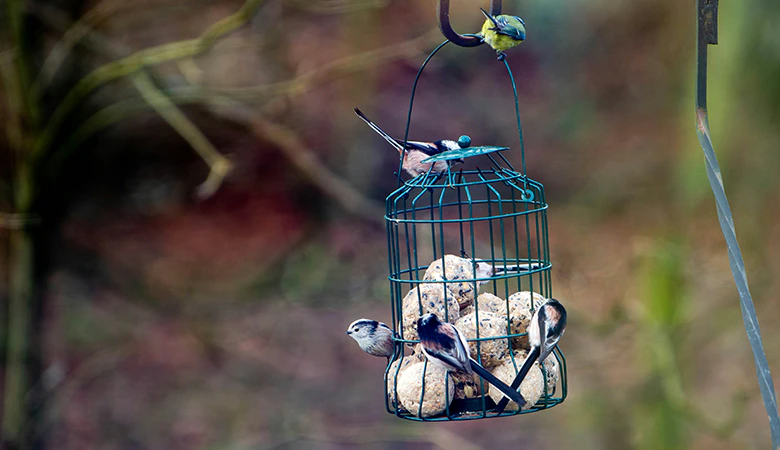
A garden becomes attractive to birds when there is enough shelter, food and water available. Dense shrubs, hedges and trees provide shelter and are suitable for breeding in. Nest boxes can also help, especially in places where there are few natural nesting opportunities. Food plays an important role: birds partly find their own food, such as insects, worms, seeds and berries, but they can also be helped by supplementary feeding. This is especially important in winter, because less food is available then. In addition, water is attractive to birds, both for drinking and for bathing. A simple bowl of water is often already enough. By combining these elements, you increase the chance that different bird species will visit your garden.