When is the best time to start training a young horse?
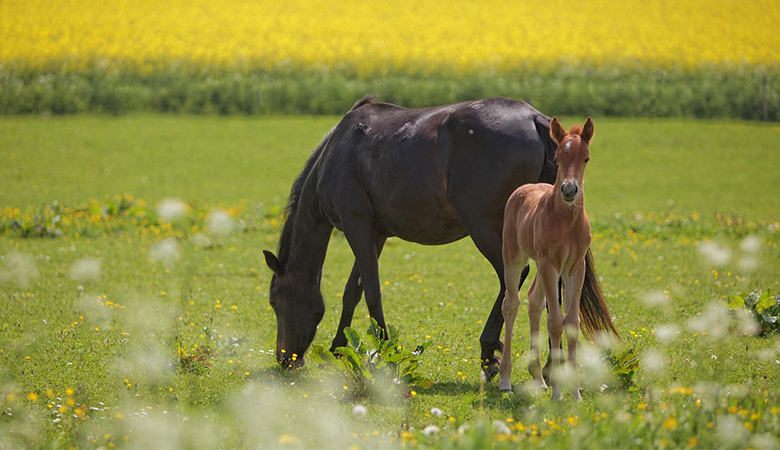
Not so much the calendar age, but the curiosity and mental readiness of the young horse are decisive. When you are around a foal or young horse without expectations, it has the space to seek contact on its own and show interest. This curious behavior is exactly what shows that a horse is open to learning. By respecting this pace and not forcing anything, a natural foundation of trust is created from which further guidance can grow.
The Anatomy of the Horse and Growing to Maturity
When training a young horse, physical development plays a major role. Horses do not grow to maturity all at once; bones, tendons, and joints develop in different phases. The growth plates do not all close at the same time and remain active for several years. Especially in the legs, the growth plates close relatively early, while those in the spine and back close much later.
The back and neck are closely connected to the spine and together form a weight-bearing structure. These areas need more time to fully mature and become capable of bearing load. Research and practical experience show that the growth plates in the spine are on average not fully closed until between the sixth and eighth year of life. Until then, the skeleton continues to adapt and strengthen. This makes the question of when a horse is “fully grown” difficult to answer clearly. A horse may look mature on the outside, while internally the body is still developing rapidly. Understanding this anatomical growth helps to better align training and workload with what the horse can handle at that moment.
It is therefore logical to ask whether riding a horse at a young age is always the best choice. In the horse world, this has been common practice for many years, especially in sport horses, and for many people it is considered normal. At the same time, we are learning more and more about how the horse’s body develops and how long certain parts, such as the back, continue to grow. By taking this into account and looking at what the individual horse can handle, there is room to make conscious and well-considered decisions.
Preparatory Tasks for a Young Horse
The first “training” of a young horse mainly consists of repetition, calmness, and predictability. Daily routines help the horse become accustomed to people, equipment, and new situations in a relaxed way. By offering this step by step, a young horse learns to cope with stimuli without becoming overwhelmed. The goal is not to do everything perfectly right away, but to build understanding, trust, and relaxation.
When a young horse is mentally ready and shows curiosity on its own, the following preparatory tasks can, among others, be introduced:
- Getting used to a halter and calmly having it put on and taken off
- Walking calmly in hand without pulling or tension, while respecting your personal space
- Being touched all over the body, including legs, belly, and head
- Learning to stand still, for example during grooming or tying up
- Giving its feet and getting used to the farrier
- Remaining calm during daily care such as feeding, brushing, and washing
- Getting used to the veterinarian, deworming, and simple check-ups
- Becoming familiar with different materials, sounds, and environments
By teaching these basic skills at a calm pace, the young horse is given the opportunity to build trust and better understand the world. This lays a solid foundation for later training and often makes new steps easier and less stressful, both for the horse and for the handler.
Groundwork and Preparation for Riding
Groundwork forms a valuable bridge between basic education and actual riding. It helps a young horse develop balance, coordination, and confidence, without the addition of rider weight. Here too, everything happens at the horse’s pace and without fixed expectations.
Preparatory steps toward riding may include:
- In-hand and lunging exercises to learn voice aids, rhythm, and relaxation
- Getting used to a saddle pad on the back
- Briefly wearing a bridle without further pressure
- Later: placing a well-fitting saddle
- Moving with saddle and/or bridle, loose or in hand
- Getting used to approach from a mounting block
- Standing calmly next to and around the mounting block
- Experiencing light pressure on the back, for example by leaning over the saddle
These steps help the horse gradually and calmly become accustomed to equipment and to the pressure and communication of a human above it, without immediately experiencing this as stressful or demanding.
Starting to Ride
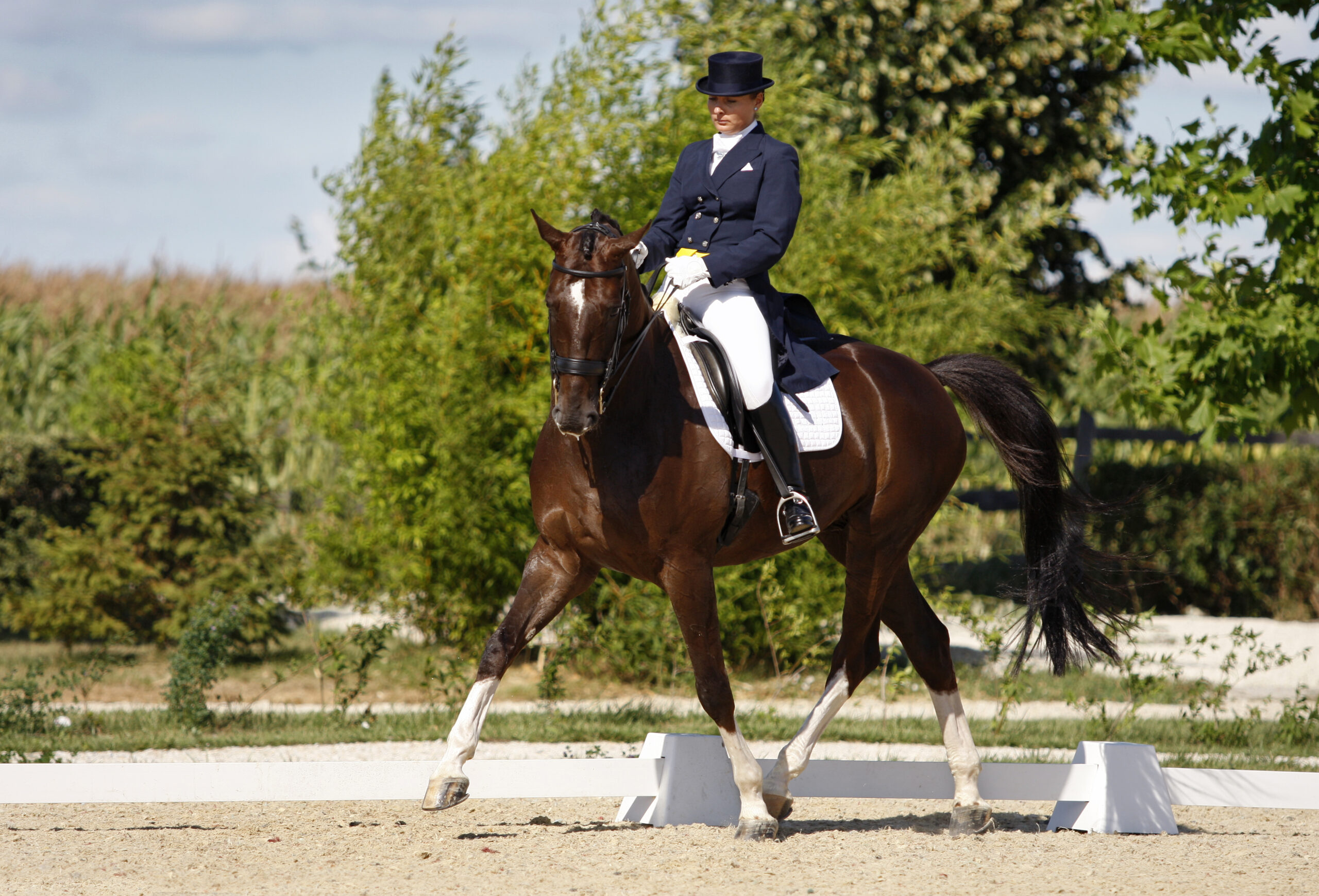
When riding actually begins, both the mental and physical development of the horse play an important role. As discussed earlier, a horse’s growth plates do not all close at the same time; especially those in the spine and back close on average only between the sixth and eighth year of life. This requires a careful and thoughtful build-up of workload.
Ideally, starting to ride is done calmly and in short sessions, with the focus on balance, relaxation, and trust. Many owners choose to have this process guided by an experienced instructor, while others continue training their horse themselves with knowledge of biomechanics and training principles. Whichever route is chosen, the horse’s pace remains leading. By building training gradually and continuing to observe carefully, the horse is given the space to further develop both physically and mentally under saddle.