What determines what a fish eats?
A fish’s diet depends on several factors, such as species, environment and where in the water the fish spends its time. Some fish are naturally adapted to a plant-based diet, while others require animal-based food. In general, fish can be divided into three dietary groups: herbivores, carnivores and omnivores. By knowing which group your fish belongs to, you can better tailor the food to its natural needs.
1. Herbivores: and omnivores with a strong preference for plant-based food mainly eat algae and plant material. These fish benefit from food with a high plant content. Examples:
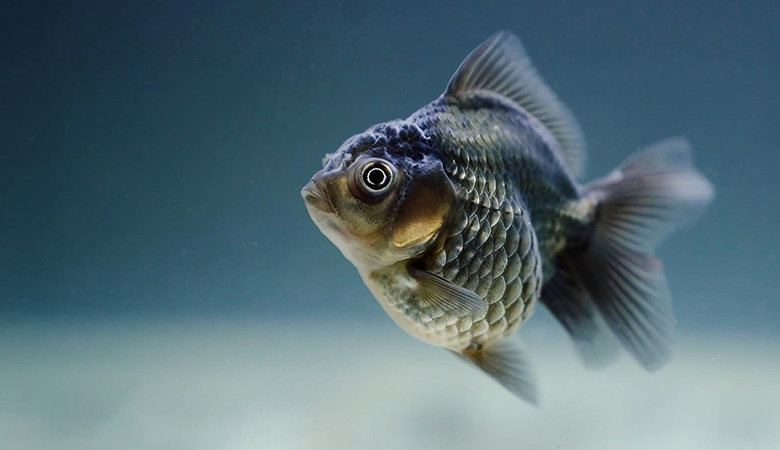
- Goldfish: eat flakes, plant-based food and soft aquatic plants
- Molly: enjoys algae and plant-based flake food
- Pleco (algae eater): feeds on algae and special algae wafers
- Grass carp: eats aquatic plants and other plant material
2. Carnivores: primarily require protein-rich food of animal origin. This matches their natural diet, which often consists of insects, larvae or small aquatic animals. Examples:
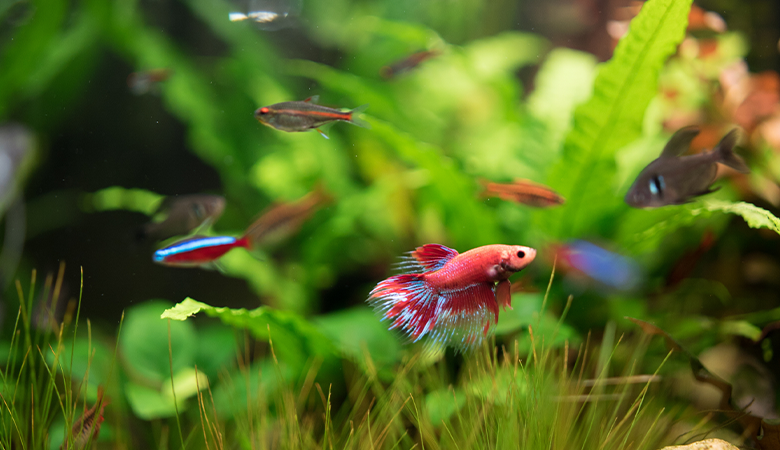
- Betta (Siamese fighting fish): eats insect larvae and specialised betta food
- Cichlids: receive granules, frozen food or specialised cichlid food
- Predatory fish: eat small fish or protein-rich specialised food
- Sturgeon: eats sinking, protein-rich food, small aquatic animals and specialised sturgeon food
3. Omnivores: combine both plant-based and animal-based food. These fish are often flexible in what they eat but benefit from dietary variety. Examples:
- Guppies: eat flakes, small insects and artemia
- Platies: receive flakes, granules and plant-based food
- Swordtails: eat both plant and animal food
- Koi: eat pellets, insects, plant material and specialised koi food, adapted to the season
Where in the water does your fish eat?
It is not only what a fish eats that matters, but also where it looks for food. Taking this into account helps prevent uneaten food from polluting the water. Fish can generally be divided into:
- Surface feeders: These fish take their food from the water surface, such as floating flakes. Examples include bettas and some livebearers.
- Mid-water feeders: These fish eat while swimming freely in the water. Sinking granules or slow-sinking flakes are suitable. Examples include danios and tiger barbs.
- Bottom feeders: Bottom-dwelling fish search for food on or in the substrate. Tablets or wafers that sink to the bottom are ideal. Examples include corydoras and plecos.
Natural behaviour and variety
In the wild, fish rarely eat exactly the same thing every day. Variety in their diet helps stimulate natural foraging behaviour and ensures a broader intake of nutrients.
For example:
- Alternating between flakes, granules and tablets
- Supplementing with frozen or live food (such as artemia or mosquito larvae)
- Plant-based additions such as spirulina
How much and how often should you feed?
Overfeeding is one of the most common mistakes with aquarium and pond fish. A good guideline is to give no more than what is completely eaten within a few minutes. This prevents food from remaining on the bottom and polluting the water.
For most fish, feeding once or twice a day is sufficient. Young, growing fish often need small portions more frequently to support their development. For adult aquarium fish, a fasting day once a week can help prevent overfeeding and give the digestive system a rest. Overfeeding can lead to water pollution and health problems.
Specific nutritional needs by life stage
A fish’s nutritional needs change as it ages:
- Young fish need fine and relatively protein-rich food to grow properly. This is often available as special rearing food in powder or micro-pellet form, tailored to small mouths and rapid growth.
- Adult fish mainly require a balanced maintenance diet suited to their species and activity level. Complete foods are available that are specifically formulated for tropical ornamental fish, goldfish or pond fish.
- Breeding fish may benefit from extra energy-rich or protein-rich food to support their condition. Special breeding foods are also available and can be given temporarily.
By choosing food that matches your fish’s life stage, you ensure it receives exactly the nutrients it needs at that time.
Pay attention to food quality
Good fish food is tailored to the fish’s natural needs and contains carefully selected ingredients. When choosing food, pay attention to the dietary group (herbivore, carnivore or omnivore), the correct pellet size and whether it is suitable for freshwater or saltwater. It is also important to store the food in a dry, well-sealed container to maintain its quality.
After reading this blog, do you still have questions about feeding your fish? Please feel free to contact us at veterinarian@vetsend.co.uk.