Which shrimp are more suitable?
Larger shrimp
Larger shrimp are less likely to be seen as prey. Amano or Japonica shrimp are a good example. Due to their size, they are harder for many fish to catch and therefore better suited for a community aquarium.
Dwarf shrimp
Dwarf shrimp (such as Neocaridina and Caridina species) are much more vulnerable. They are small, more noticeable and easily fit into the mouths of many fish. This makes them harder to combine with fish. Especially baby shrimp are small enough to fit into almost any fish’s mouth.
Which fish should not be combined with shrimp?
Some fish species are clearly not a good match for shrimp:
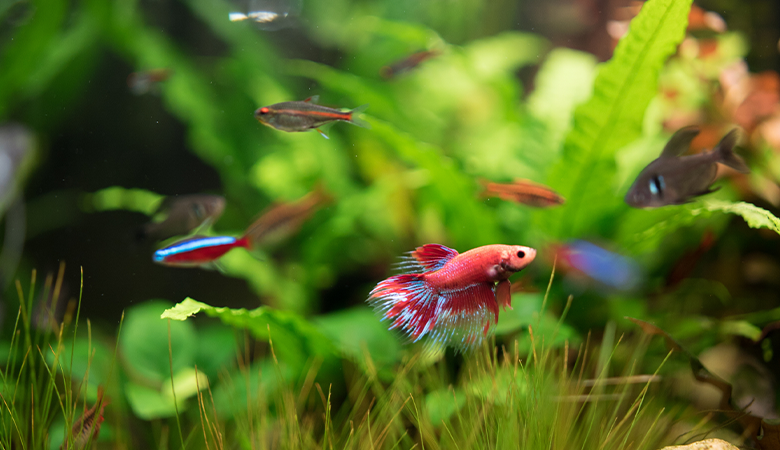
- Bettas (Siamese fighting fish): once they realise shrimp are edible, they will actively hunt them
- Cichlids: territorial and predatory
- Angelfish (scalare): see shrimp as food
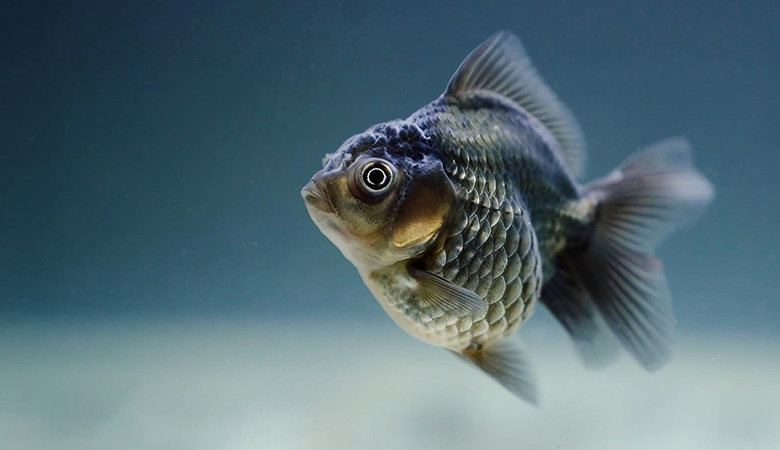
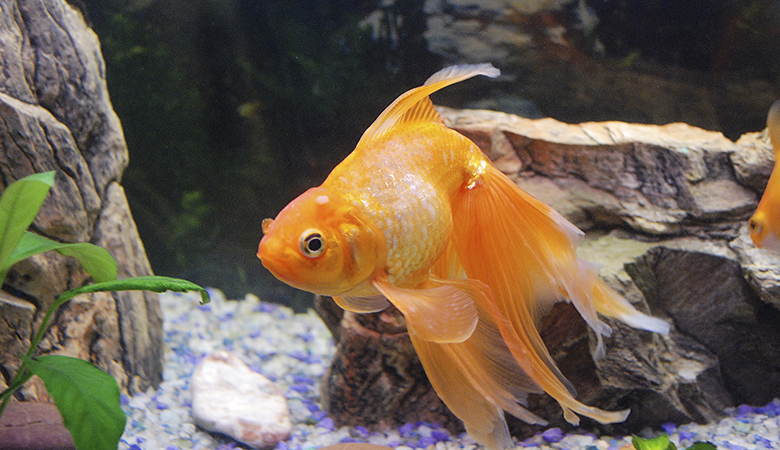
- Goldfish: eat anything that fits into their mouth
- Discus fish: will eat shrimp whenever they get the chance
These combinations almost always end badly for the shrimp.
Shrimp and schooling fish: is it possible?
Even with smaller schooling fish, caution is advised.
Less suitable schooling fish
Schooling fish that are less suitable to keep with shrimp include:
- Cardinal tetras
- Rummy-nose tetras
These fish are large enough to eat shrimp, especially young or smaller ones.
Better (but not risk-free) schooling fish options
Schooling fish with the best chance of living peacefully with (dwarf) shrimp include:
- Neon tetras
- Other nano fish species
These fish are smaller, but even here the rule applies: baby shrimp are almost always eaten.
Why livebearers are not an ideal choice
Livebearing fish such as guppies, mollies and platies will eat shrimp whenever they get the opportunity. In addition, these fish prefer harder water, while most shrimp thrive better in softer water. This makes the combination even less suitable.
How can you increase the chances of success?
If you still want to keep fish and shrimp together, the aquarium setup is crucial.
Provide plenty of hiding places:
- Heavily planted aquariums are essential
- Fine-leaved plants: fish struggle to enter them, shrimp do not
- Mosses (such as Java moss): ideal as shelter and as a nursery for young shrimp
The denser and more varied the aquarium layout, the greater the shrimp’s chances of survival.
Keeping fish and shrimp together is possible, but only with the right choices and realistic expectations. Prefer larger shrimp, calm (small) fish and a heavily planted aquarium. And remember: a completely risk-free combination does not exist.
If you want to be absolutely sure your shrimp are safe, a dedicated shrimp-only aquarium without fish is always the best choice.