Service
Basket
Menu
Up to 20% off Hill's products! Read more

What does a turtle eat?

Written by Meanne |

Turtles have specific nutritional needs that are crucial for their health and lifespan. A well-balanced diet prevents deficiencies, supports the growth of the shell and helps to avoid common disorders. What a turtle needs depends on the species: tortoises mainly eat plant-based food, while aquatic and marsh turtles also need animal-based food. In this blog, you can read what different types of turtles need and how you can adapt their diet to their way of life.
What does a turtle eat?

Nutrition depending on the species

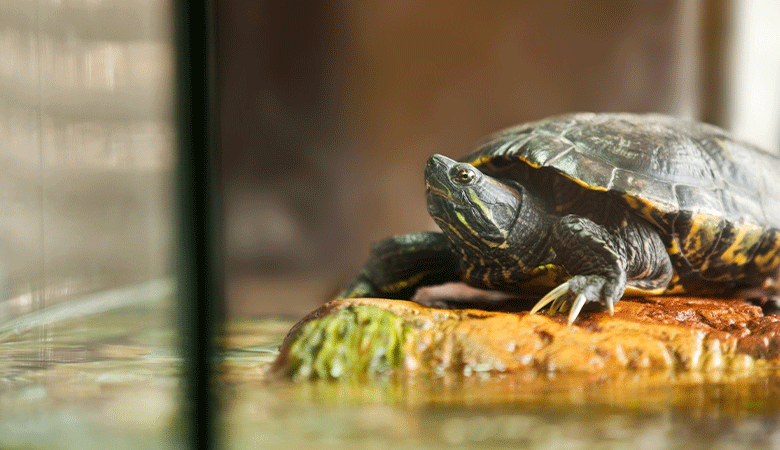
Each turtle species has adapted over the centuries to its natural environment, and this is reflected in their eating behaviour. Tortoises mainly eat grasses, herbs and vegetables that they find on land. Aquatic and marsh turtles look for their food in or around the water and, in addition to aquatic plants, also eat insects and small fish. Sea turtles also have their own feeding pattern, adapted to life in the sea. These natural habits form the basis for the diet of turtles that are kept as pets. By aligning their food as much as possible with that natural way of life, a turtle remains healthy and active.
 

Popular products for turtles

What do tortoises eat

Tortoises are true herbivores. In the wild, they mainly eat grasses, leaves, flowers and herbs that they come across in their environment. Their digestion is geared towards a fibre-rich diet that is low in fat and protein. As pets, they need a diet that resembles this as closely as possible. Leafy greens such as dandelion leaves, endive, plantain and rocket form the basis. Vegetables with a high water content, such as cucumber or tomato, can be given occasionally, but not too often. A small amount of fruit can sometimes be offered as a treat, but too much sugar can disturb the gut flora. Calcium is also important for a strong shell and healthy bones.

What do aquatic and marsh turtles eat

Aquatic and marsh turtles are naturally omnivores, which means they eat both plant-based and animal-based food. In the wild, their diet mainly consists of aquatic plants, algae, insects, snails, worms and small fish. As pets, they need a similar diet. Plant-based food such as aquatic plants and watercress or leaves of lettuce and endive forms an important part of their diet. In addition, they eat animal-based food such as dried or live insects, shrimps or pieces of fish. Offering a varied diet helps to prevent deficiencies and supports healthy growth of the shell and muscles.

What turtles should not eat

Not everything is suitable for turtles to eat. Food that contains too much fat, salt or sugar can disrupt digestion. This can lead to health problems. Processed products such as bread, pasta, dairy or cold cuts therefore do not belong in their diet. Fruit with a high sugar content, such as banana or grapes, is also best given only in moderation. Turtles must not eat plants or flowers that may be poisonous, such as ivy, daffodils or buttercups. By offering only safe, natural food, your turtle stays healthy and in balance.

More blogs about reptiles

Slang op tak

What does a snake eat?

Snakes have specific dietary needs that are closely linked to their way of life and hunting behaviour. In the wild they hunt a range of prey, from insects and rodents to birds, eggs and even other reptiles. Because snakes are cold-blooded animals, they eat less frequently than many other species. Their metabolism is slower and they can store energy efficiently. When a snake is kept as a pet, it is important to match its diet as closely as possible to its natural feeding pattern. In this blog you will learn what snakes eat in the wild, which foods are suitable for pet snakes, and what they should not be fed.

reptile

Types of reptiles: which reptiles are there?

Reptiles are fascinating animals that have been roaming our planet for millions of years. They belong to the group of cold-blooded vertebrates, have scaly skin, usually lay eggs, and depend on their environment to regulate their body temperature. Reptiles are popular as pets, but they are also incredibly diverse in the wild. In this blog, you will learn which types of reptiles exist and what their main characteristics are.

How old does a turtle get?

How old does a turtle get?

Turtles are known for their calm nature, slow movements and impressive lifespan. While some species can live for several decades, others can even approach one hundred years of age. However, the age a turtle can reach varies greatly depending on the species and its way of life. Tortoises generally live significantly longer than aquatic turtles, partly because of their diet and environment. In this blog, you can read about the life expectancy of different turtles and which factors influence it.

More tips