Aquarium plants: how many do you need and which should you choose?
Written by Kelsey |
Aquarium plants are very important for a healthy aquarium. They not only create a beautiful natural look, but also contribute to the quality of the water and the health of your fish. In this blog, you will learn why aquarium plants are important and which types are suitable.
Why are aquarium plants important?
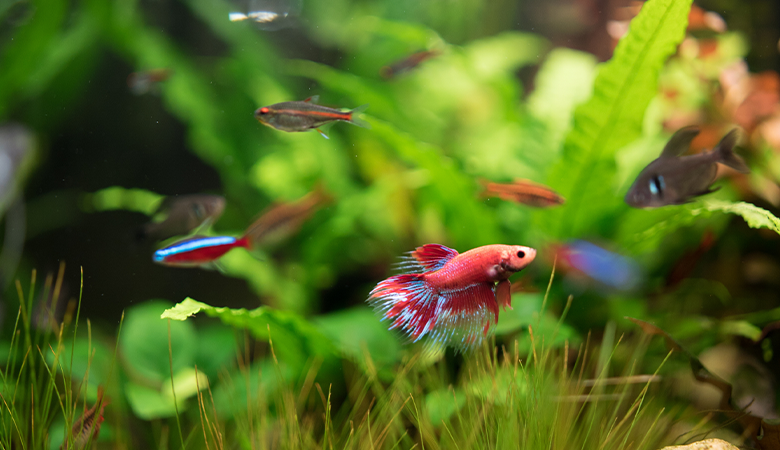
Aquarium plants are not only decorative, they also serve important functions. They produce oxygen, which is essential for fish. In addition, they absorb waste substances such as nitrate and ammonium, helping to maintain stable water quality. Aquarium plants also provide hiding places for fish and other aquarium inhabitants, where they can rest or hide when needed.
How many plants do you need in an aquarium?
The number of plants you need depends on the size of the aquarium and the type of layout. A good guideline is to plant about 60 to 70% of the substrate. This ensures plenty of greenery while still leaving enough swimming space. In a smaller aquarium, it is best to choose smaller plant species so they do not take over the entire tank.
Which plants are suitable for a small aquarium?
In a small aquarium, it is best to choose smaller plants that grow slowly or stay compact. They take up little space and are easy to maintain.
These plants work well in smaller aquariums:
- Anubias: a strong plant that requires little light
- Java fern: this plant grows slowly
- Cryptocoryne: this plant stays very compact
Popular and easy aquarium plants
For beginners, there are many plant species that are easy to maintain. These plants grow well in standard aquarium conditions and require less lighting and nutrients.
Some popular aquarium plants include:
- Vallisneria: grows quickly and is suitable for the background of the aquarium
- Java fern: grows slowly and can easily be attached to wood or stones
- Anubias: grows well in low light and requires little maintenance
Artificial plants in an aquarium
Besides real plants, you can also choose artificial plants. These require no maintenance and always look good. Artificial plants are a good option when there is little time for maintenance or when real plants struggle to grow in the aquarium. The downside is that artificial plants do not produce oxygen and therefore do not contribute to water quality. For this reason, many people choose a combination of real and artificial plants.